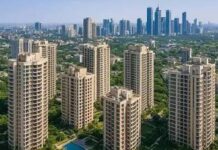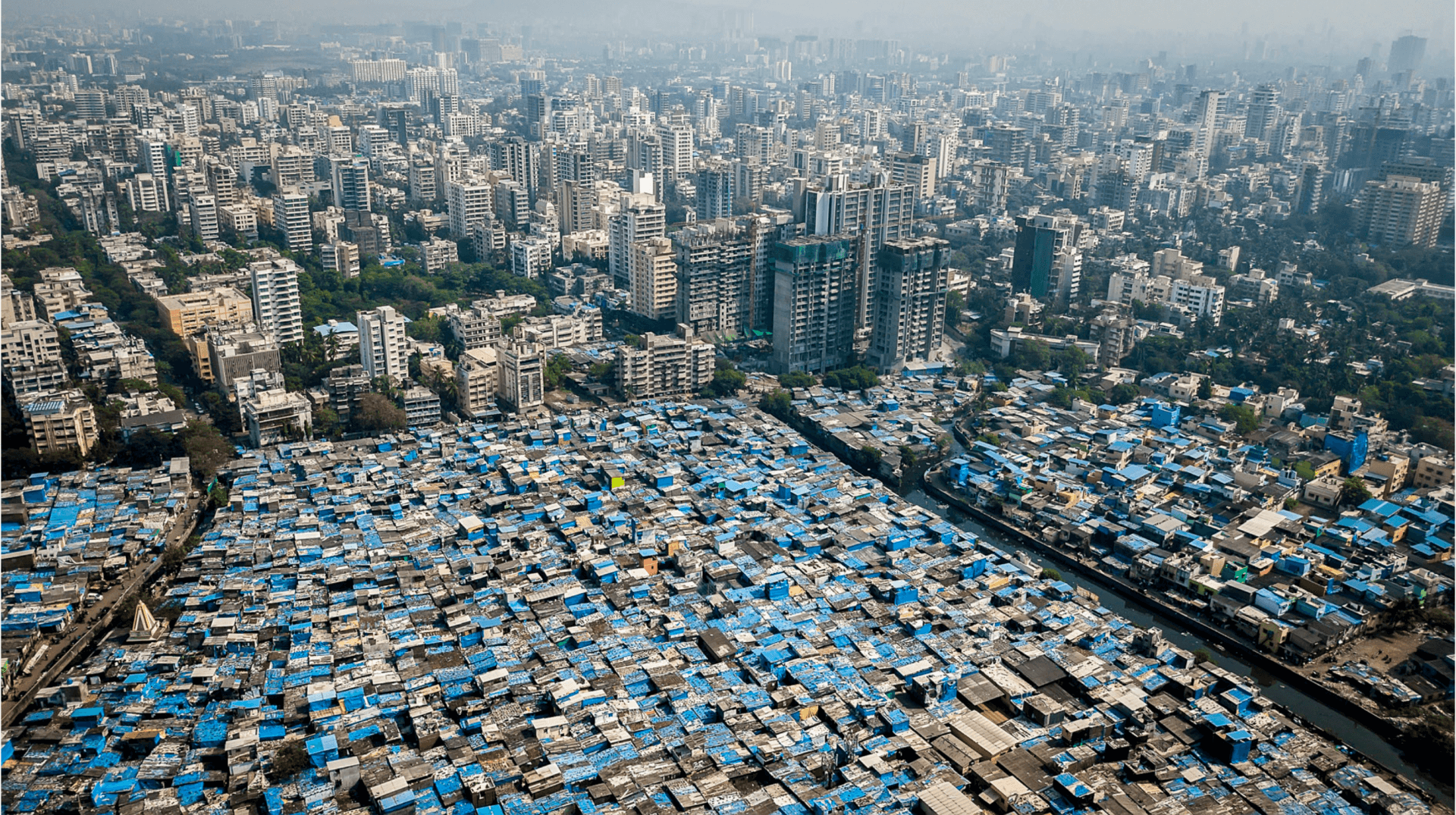
Mumbai has taken a decisive step towards large-scale urban renewal with the state government approving a new Slum Cluster Redevelopment framework for land parcels exceeding 50 acres. Announced in the legislative council, the policy aims to fast-track redevelopment across some of the city’s most densely populated informal settlements, addressing housing shortages while unlocking land for planned growth.
The initiative marks a shift from fragmented, project-by-project slum rehabilitation towards a consolidated cluster-based approach. Urban development officials say the move is designed to overcome long-standing challenges of stalled redevelopment, fragmented land ownership, and infrastructure gaps that have limited the impact of earlier housing schemes in India’s financial capital. Under the proposed framework, large contiguous slum pockets will be redeveloped as single integrated projects. This is expected to enable better planning of roads, open spaces, utilities, and social infrastructure, rather than retrofitting amenities into already congested neighbourhoods. An urban policy expert noted that scale is critical in Mumbai, where piecemeal redevelopment often fails to improve liveability despite new housing stock. The scheme is also expected to encourage greater private sector participation by improving project viability. Larger land parcels allow developers to balance rehabilitation obligations with commercial and residential components, making projects financially sustainable while delivering free or subsidised homes to eligible residents. Industry observers believe this could revive interest in redevelopment across older industrial and eastern suburban belts, where land parcels are sizable but complex.
Housing advocates, however, stress that execution will determine success. Past redevelopment efforts have faced resistance over eligibility disputes, delayed handovers, and inadequate temporary housing. A senior urban planner said transparent consent mechanisms and time-bound rehabilitation would be essential to build trust among residents, many of whom have lived in these settlements for decades. From a sustainability perspective, the policy presents an opportunity to embed climate-resilient design into Mumbai’s redevelopment pipeline. Integrated planning can support energy-efficient buildings, improved stormwater management, and access to public transport, aligning redevelopment with the city’s long-term climate adaptation goals. Experts argue that cluster redevelopment, if done well, can reduce urban sprawl while improving quality of life within existing city limits. The move also has broader economic implications. Construction activity at this scale is expected to generate employment, stimulate allied industries, and improve formal housing supply in a city where affordability remains a pressing concern. At the same time, planners caution that redevelopment must remain inclusive, ensuring that original residents are not displaced to peripheral locations far from livelihoods.
As Mumbai grapples with ageing infrastructure, climate risks, and housing inequality, the success of the Slum Cluster Redevelopment policy could shape how Indian cities approach large-scale urban renewal. If implemented with transparency, sustainability, and community participation, it may offer a replicable model for equitable city transformation.
Also Read: Mumbai To Transform Mahalaxmi Racecourse Into 295 Acre Largest Central Park