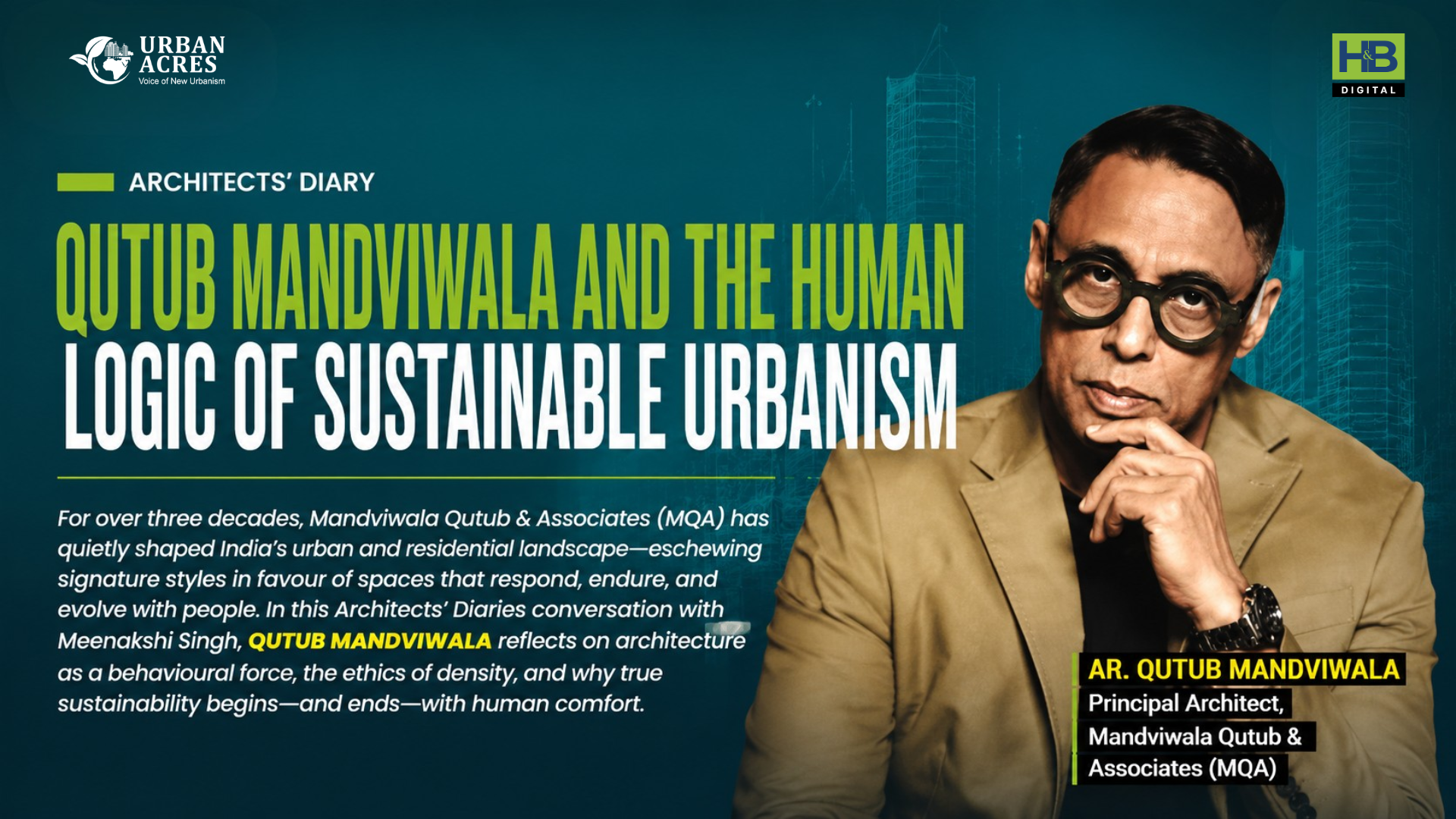
For over three decades, Mandviwala Qutub & Associates (MQA) has quietly shaped India’s urban and residential landscape—eschewing signature styles in favour of spaces that respond, endure, and evolve with people. In this Architects’ Diaries conversation with Meenakshi Singh, Qutub Mandviwala reflects on architecture as a behavioural force, the ethics of density, and why true sustainability begins—and ends—with human comfort.
Space Before Style
From the outset, Mandviwala is unequivocal: what remains permanent is space.
‘Architecture influences behaviour—this is something we are taught early on—but its real impact is felt in daily life’, he says. Whether designing a compact 350 sq ft home or an expansive 3,500 sq ft residence, MQA begins with how people actually live, move, and interact.
Homes, he believes, are not products but environments of comfort and continuity. User-centric planning shapes not just lifestyle, but mindset and long-term wellbeing. ‘When space is designed right’, he notes, ‘it quietly supports life without demanding attention’.
From Functions to Frameworks
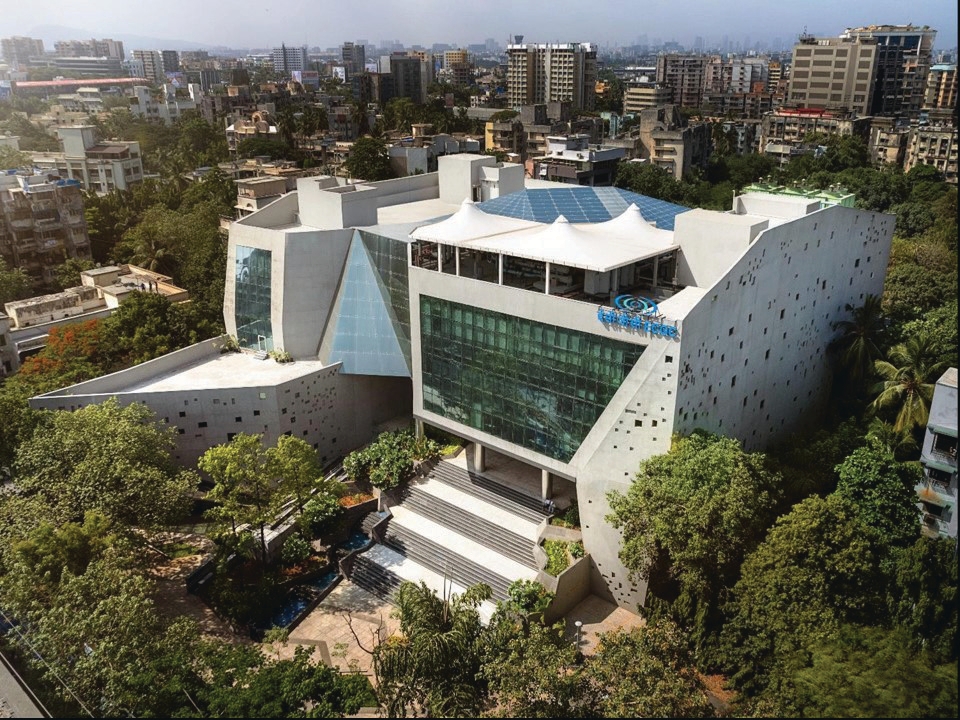
While MQA is widely recognised today for its residential work in Mumbai, Mandviwala is quick to point out that the practice has always operated across complex typologies—hospitals, schools, hotels, campuses, and mixed-use developments—well before residential architecture became its most visible output.
Projects ranging from hospitals in Mumbai (as early as 2000) to institutional campuses in Ahmedabad and schools in Bhopal informed a layered design sensibility. As Mumbai’s residential boom accelerated post-2004, MQA’s experience across sectors naturally fed into its housing work, bringing institutional rigour and urban sensitivity into the residential realm.
Why MQA Has No Signature Style
In an era where architectural branding often equals recognisable aesthetics, MQA’s resistance to a fixed style is intentional.
‘A signature style can limit contextual thinking’, Mandviwala explains. ‘Mumbai, Ahmedabad, Pune—each city has its own climate, culture, and expectations’.
Instead, climate, site conditions, sustainability, and user behaviour become the real drivers of form. The result is architecture that looks different from project to project, yet feels inherently appropriate—an approach that privileges relevance over recognition.
Designing Density with Dignity
As Indian cities build upward, Mandviwala emphasises that tall buildings need not sacrifice comfort. Orientation, not façade, is where performance begins.
At a building scale, MQA prioritises north and east-facing living spaces to maximise daylight while reducing heat gain, cutting energy loads and improving comfort. Glass is used judiciously, not decoratively, to maintain a strong inside–outside connection.
At a township scale, the logic expands. Bungalows, row houses, and apartment towers are strategically placed based on climate and orientation. Streets, open spaces, and building massing are treated as a single environmental system—an approach that sees sustainability not as an add-on, but as planning intelligence.
One Constant Across All Typologies
Whether it is a hospital, home, office, or campus, one principle remains non-negotiable: space planning.
Every project begins with the site—its contours, water bodies, views, or limitations. The function then defines the specifics, but the goal remains unchanged: architecture that is user-centric, climatically comfortable, and timeless.
For Mandviwala, this is the essence of sustainability—not technology alone, but architecture that continues to work, age gracefully, and remain valued decades later.
Rethinking Sustainability
‘Sustainability is not a checklist’, Mandviwala says plainly.
Drawing from the emotional comfort of ancestral homes and villages, he reframes sustainability as continuity—spaces that people want to return to.
A building that is uncomfortable, regardless of its green ratings, will ultimately fail. He points to small but critical details, such as glare on a classroom blackboard, as examples of how design can either support or sabotage usability. True sustainability, he argues, lies in enduring comfort and human connection.
Heritage, Height, and Sensitivity
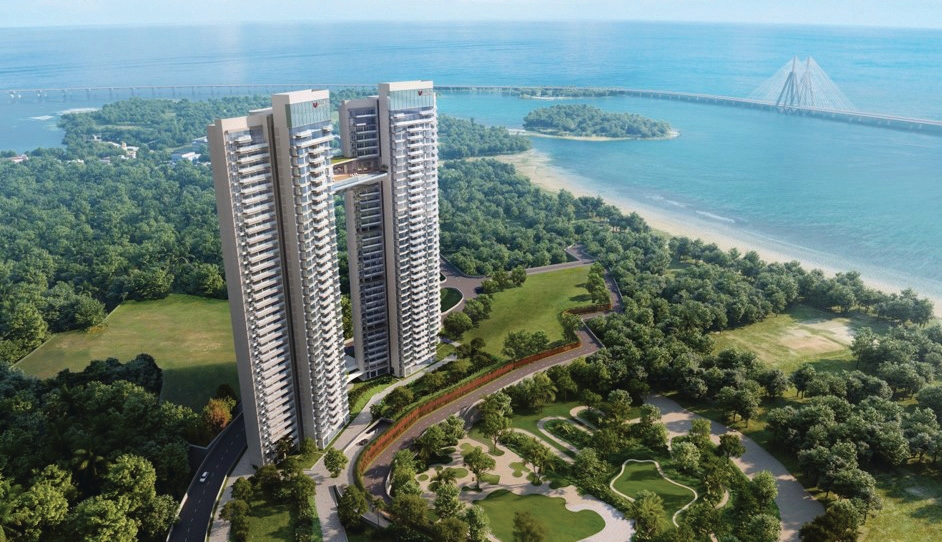
In Mumbai’s redevelopment-heavy context, MQA often works alongside existing heritage structures. Mandviwala advocates restraint rather than mimicry.
Tall buildings, he explains, should not overplay heritage aesthetics. Instead, they should respect scale at the lower levels, up to the eye line, by continuing the architectural language of their surroundings. Beyond that, a clean, contemporary expression allows the building to be honest about its time and function, without overwhelming its context.
Architecture Beyond Plots
For Mandviwala, the future of Indian cities depends on architects engaging beyond individual land parcels. Cities, he says, are experienced at ground level—through streets, pavements, plazas, and public spaces.
‘When architects shape pedestrian environments and public realms, they create the memories people carry of a city’, he reflects. Buildings may define skylines, but it is the quality of public space that defines urban life.
Looking Towards 2030
As population pressures intensify, Mandviwala sees two parallel responsibilities for architects. One is to design better, denser cities. The other is to strengthen rural and small-town development, reducing the compulsion for migration by improving infrastructure and habitability outside metros.
In the immediate future, architects must think holistically, by integrating tall buildings, landscapes, streetscapes, and open spaces into climate-resilient, people-first urban systems.
MQA’s Vision 2030
MQA’s vision extends beyond buildings to the urban fabric itself. Wherever possible, the firm engages with infrastructure and landscape, seeking to elevate the overall environment around its projects.
Sustainability, Mandviwala reiterates, is about how buildings function and feel over time. Equally central is emotional impact—architecture that brings comfort to a child in school, reassurance to a patient, or joy to a family entering a new home. This human-first lens defines MQA’s journey towards 2030.
Projects as Philosophy
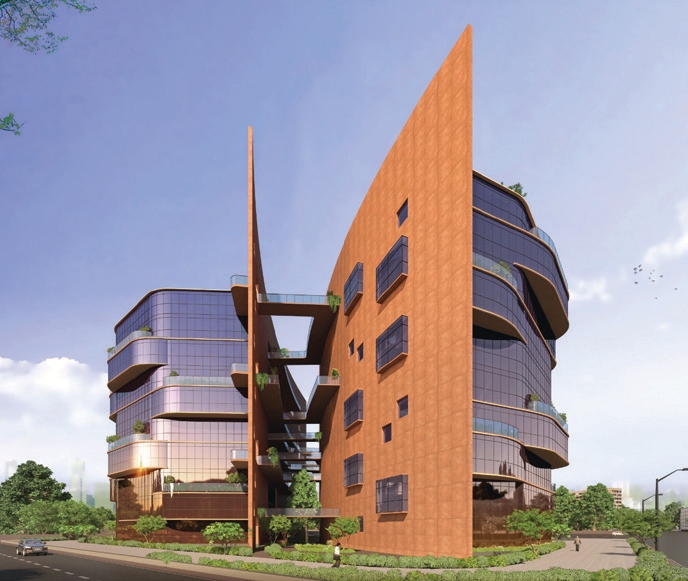
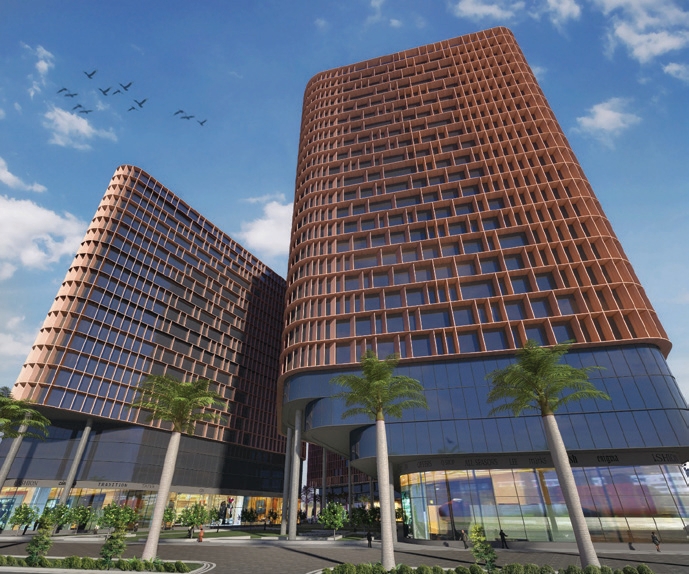
When asked to single out a project that best represents MQA’s philosophy, Mandviwala resists naming just one. Child-centric schools, high-density inclusive developments like, and compact residential units all reflect the same underlying ethos: understand the user first.
Even in the smallest homes, MQA has challenged conventional layouts by studying real family dynamics and multi-generational living. Today, the practice is extending this philosophy into a health city project grounded in biophilic design—where healing is supported by architecture and nature together.
Closing Reflection
Across scales and typologies, Qutub Mandviwala’s work argues for a quieter, more enduring form of architectural leadership—one rooted not in visual identity, but in lived experience. In an age of rapid urbanisation, his voice is a reminder that architecture’s true legacy lies not in how it looks on day one, but in how it continues to serve people for generations.