In this evolving landscape, Rajashree Shetty, Director at Keev International Parking Technology, shares how the company is addressing real-world parking challenges through engineering-led solutions, disciplined execution, and a deep understanding of urban realities.
Q Keev International has been working closely with developers on real, on-ground challenges. How did your journey into automated parking begin, and what gap were you solving?
“Hare Krishna”
Our journey began with a consistent pattern across projects—developers were struggling to accommodate increasing vehicle density within limited land. Conventional parking systems were inefficient and consumed valuable real estate without delivering long-term usability.
We identified this gap early and focused on engineered solutions that optimise space while ensuring safety and convenience. Our approach has always been rooted in real-world application—understanding site constraints, user behaviour, and project requirements before designing a system.
Q In dense cities like Mumbai, what structural issues do you see in current parking ecosystems?
The issue is not just scarcity of land, but the absence of structured planning. Parking is often treated as an afterthought, leading to inefficient layouts, internal congestion, and conflicts among users. There is also a consistent underestimation of parking demand. With rising vehicle ownership, especially multiple vehicles per household, this gap becomes more evident over time. As a result, parking turns into a daily operational challenge rather than a seamless experience.
Q Space is the biggest constraint today. How do your systems redefine space utilisation within tight project footprints?
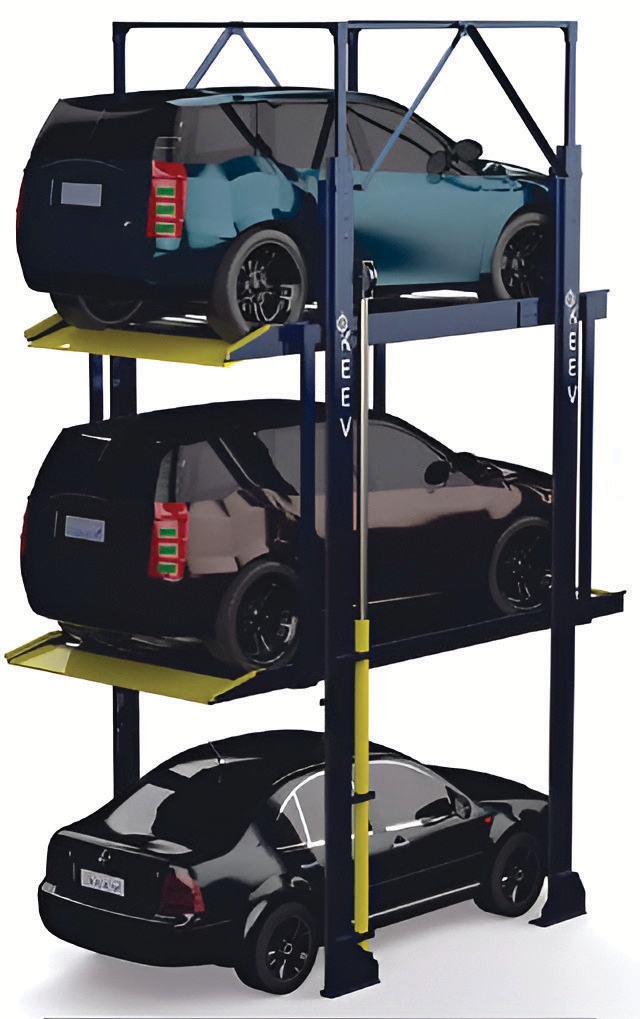
In high-density environments, vertical optimisation is the only viable solution. Our systems eliminate ramps and redundant circulation areas, allowing us to significantly increase parking capacity within the same footprint. This not only enhances efficiency but also frees up valuable ground space for better planning, whether for amenities or additional saleable area. In essence, automated parking transforms parking from a space consumer into a space optimiser.
Q Developers often hesitate before adopting automated parking. What are the underlying concerns?
The most common concerns revolve around reliability, maintenance, user adaptability, and initial investment. There is often a perception that automated systems are complex and difficult to manage. However, once developers see live installations and understand lifecycle performance, the perception changes. The decision becomes driven by efficiency, long-term value, and execution reliability.
 Q How should developers evaluate automated parking in terms of cost and long-term value?
The evaluation must go beyond upfront cost. Automated parking unlocks value by enabling better utilisation of space, improving project viability, and enhancing market positioning. In dense developments, parking directly impacts sales potential, making it a strategic investment rather than a cost.
Q With the rise of SUVs and larger vehicles, how has your engineering approach evolved?
Vehicle profiles have changed significantly, and our systems have evolved accordingly. We design for higher load capacities, larger dimensions, and stricter safety parameters.
This includes structural reinforcement, advanced interlocks, load sensors, and controlled operations to ensure stability and reliability. Safety is not an added feature—it is the foundation of our engineering philosophy.
Q How is technology reshaping the parking experience for users?
User expectations today are driven by convenience and speed. We integrate automation, RFID-based access, and app-enabled interfaces to minimise human intervention and enhance efficiency. The goal is to create a seamless experience where the system operates efficiently in the background while the user experiences simplicity and control.
Q What are the key execution challenges in implementing automated parking systems?
Execution is where complexity truly emerges. Each project presents unique site constraints, coordination requirements with civil teams, and strict timelines. Our strength lies in anticipating these variables early and aligning engineering with execution discipline to ensure timely and efficient delivery.
Q How do you ensure long-term reliability and minimal downtime?
Reliability is built through process. We focus on preventive maintenance, trained service teams, and structured response mechanisms. Every system undergoes rigorous validation before deployment, ensuring consistent performance. Post-installation, quick response and disciplined servicing ensure minimal downtime and sustained efficiency.
Q How do automated parking systems contribute to sustainability?
Automated parking reduces unnecessary vehicle movement within developments, directly lowering fuel consumption and emissions. By optimising space vertically, it also reduces excessive construction and improves overall environmental efficiency. It is a practical step towards more sustainable urban development.
Q Are you seeing demand expand beyond metro cities?
Yes, demand is clearly expanding into Tier 2 and emerging cities. As urbanisation spreads and real estate becomes more structured, the need for efficient parking solutions is increasing across residential, healthcare, and commercial developments.
 Q What can we expect from Keev International in terms of future innovation?
Our focus is on advancing automation, improving system intelligence, and integrating parking with broader building ecosystems.
We are also scaling manufacturing capacity and strengthening our R&D capabilities to meet the next phase of demand for efficient and reliable parking systems.
Q Can you share a project that reflects your capabilities and execution strength?
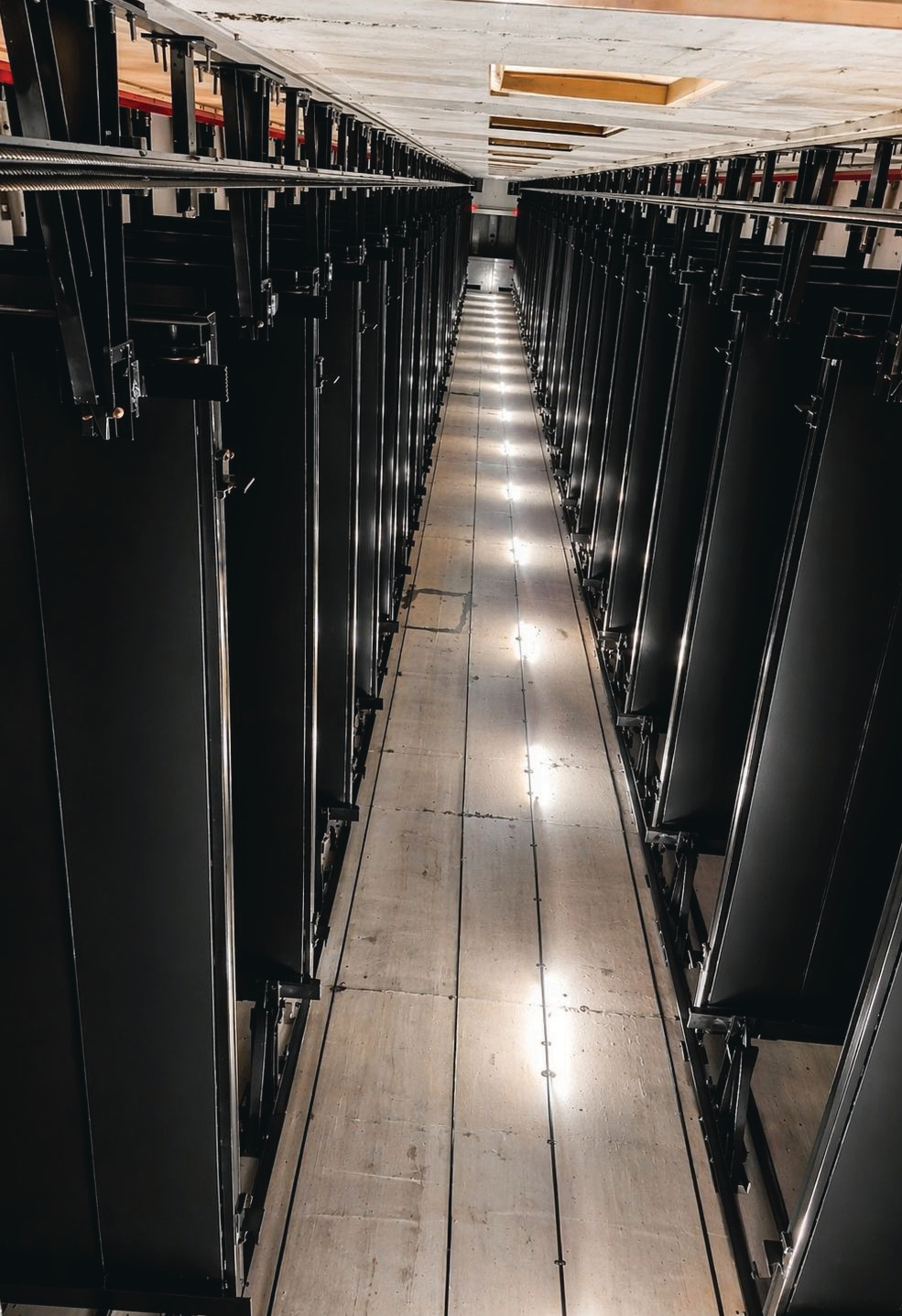
The Kedar Darshan Project in Borivali West is a strong example of our capabilities. It was a high-density mixed-use development with significant space constraints and a requirement to accommodate a large number of SUVs.
This was in close collaboration with Mr Rakesh Singh, Chief Promoter and Managing Director of Mumbai-based Kosmos Developers, who shared, ‘We are glad to have chosen KEEV as our partner for providing a mechanized parking solution for our prestigious project, where timely completion was the biggest challenge. KEEV completed the parking tower with 64 spaces—most of them for SUVs—in a record time of 4 months after our machine room was ready. We truly appreciate the professional approach exhibited by the KEEV team. The system has shown almost zero breakdown in the last 8 months’.
Keev International operates on three defining pillars: Safety, Integrity, and Strong Process-Driven Execution. These principles guide every stage from design to delivery and ensure consistency across projects.
The parking industry is at a decisive inflection point—urban density is rising, and conventional solutions are no longer viable. At Keev, we are focused on delivering systems that are efficient, reliable, and engineered for scale.