HomeLatestIndia Property Growth Raises Affordability Questions

India Property Growth Raises Affordability Questions

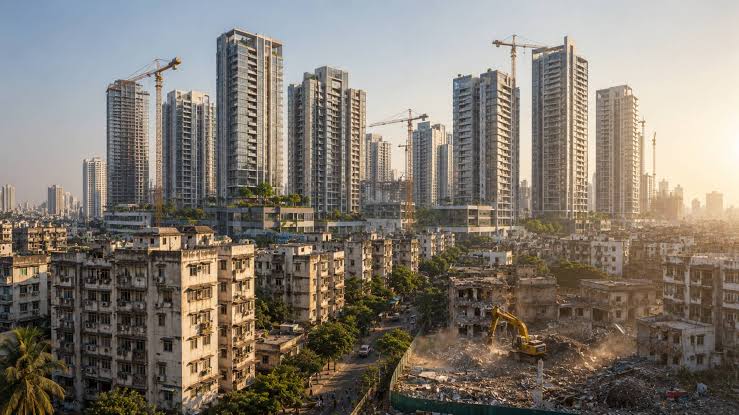
India’s leading listed residential developers are projected to generate combined pre sales of about ₹1.82 lakh crore in FY27, up 22.3% from ₹1.49 lakh crore in FY26. The forecast points to continued strength in organised housing, but the scale of expansion also exposes a widening question for Indian cities: whether rising property values and developer growth are translating into homes that remain accessible to a broad section of urban households.

Pre-sales refer to the value of homes booked by buyers before completion and are widely used as an indicator of future revenue. The projected increase suggests that established developers expect housing demand to remain firm, supported by new project launches, urbanisation, household income growth and continued preference for formally regulated developers.
However, the headline growth needs to be read alongside the changing composition of housing supply. Recent industry data shows a pronounced shift towards higher-value homes. Across India’s major markets, properties priced above ₹2.5 crore accounted for 20% of new launches in 2025, compared with only 3% in 2020. Homes below ₹40 lakh, meanwhile, fell to 14% of launches from 30% over the same period.That shift creates a tension between market growth and housing inclusion.Premium homes can generate higher sales values with fewer units, allowing developers to grow pre-sales without an equivalent increase in the number of homes delivered.

For households with moderate incomes, however, stronger property markets can mean longer commutes, smaller living spaces or movement towards peripheral locations where transport and civic infrastructure may lag behind.The geography of demand is equally important. Mumbai Metropolitan Region and Bengaluru continue to account for substantial shares of housing activity, while infrastructure-led development is strengthening other large urban markets. The expansion of employment centres and transport corridors is creating new development zones, but it also places pressure on roads, public transport, water systems, drainage and energy networks.The latest projections also come at a time when the wider residential market is showing signs of becoming more balanced. Data for the second quarter of 2026 showed housing sales across India’s top seven cities falling 6% year on year to about 90,715 units, even as new launches increased 7% to nearly 1.06 lakh units. Prices remained resilient, rising 7% annually.

For developers, maintaining growth will increasingly depend on disciplined land acquisition, construction execution and inventory management. For cities, the priority is broader: ensuring that private housing expansion is matched by infrastructure and climate-resilient services.The India housing market therefore enters FY27 with strong financial expectations but a more complicated social test. The India housing market can sustain higher pre-sales only if demand remains genuine and supply keeps pace with changing household needs. The next phase of growth will be measured not simply by sales value, but by whether new housing contributes to connected, affordable and resilient urban communities.

Also Read : Pune Real Estate Sees Stronger Urban Demand
India Property Growth Raises Affordability Questions
RELATED ARTICLES

LEAVE A REPLY

Please enter your comment!
Please enter your name here

- Advertisment -spot_img

Most Popular

Recent Comments

India Steel Prices Climb As Construction Demand Returns

India Steel Prices Climb As Construction Demand Returns

India’s steel market is entering a firmer phase, with prices of scrap, ingots, rebar and sponge iron moving higher across key trading centres. The...

UltraTech Pushes Cleaner Power Into Cement Production

UltraTech Pushes Cleaner Power Into Cement Production

UltraTech Cement’s integrated unit in Chhattisgarh has been meeting its full monthly electricity requirement through renewable power and waste heat recovery since April 2026,...
India Industrial Transition Reshapes Cement Sector

India Industrial Transition Reshapes Cement Sector

India’s industrial landscape is seeing a fresh push towards restructuring, with coal resources being assessed for fertiliser production and a major cement consolidation moving...
Dalmia Cement Shifts Tamil Nadu Freight Electric

Dalmia Cement Shifts Tamil Nadu Freight Electric

Tamil Nadu is seeing a shift in how industrial freight moves, with Dalmia Cement deploying 24 heavy-duty electric trucks on the roughly 140-kilometre corridor...

Hyderabad RERA Refund Ends Plot Booking Dispute

Hyderabad RERA Refund Ends Plot Booking Dispute

A Telangana real estate dispute over a ₹1 lakh booking payment has ended after the money was returned to the buyer and the complainant...