HomeBricks & MortarIndia Sponge Iron Costs Rise On Coal Pressure

India Sponge Iron Costs Rise On Coal Pressure

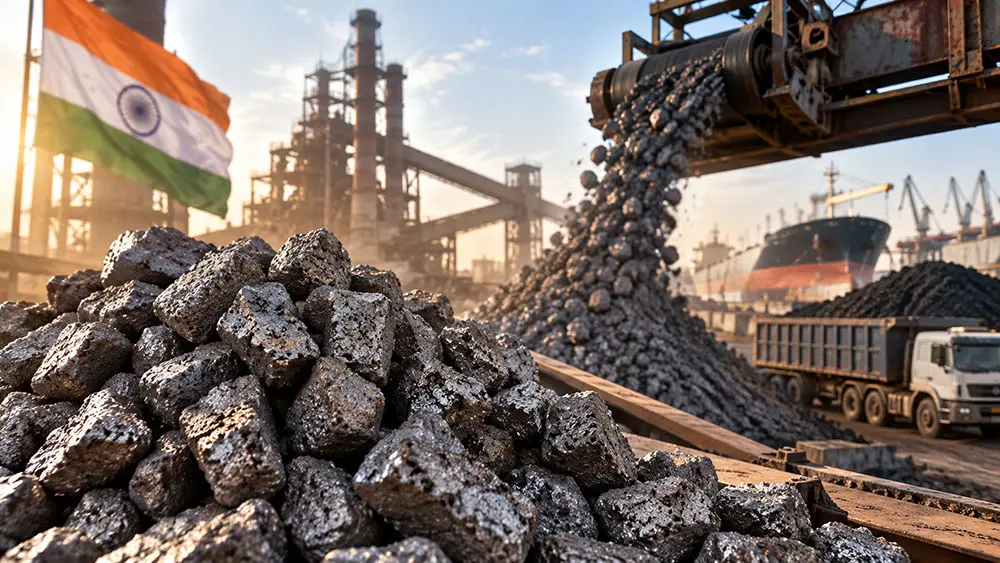
India’s sponge iron market has climbed to its strongest price levels in two years, with Bellary and Raipur seeing sustained gains through September. The rise is being driven mainly by expensive thermal coal, freight pressures and tighter domestic supply. For steelmakers, the shift raises raw-material costs and could eventually feed into billet and finished steel prices, with wider implications for construction and infrastructure costs.

Sponge iron, also known as direct reduced iron, is a key feedstock for induction furnaces and electric arc furnaces. India relies heavily on the coal-based rotary kiln route to produce it, making the sector particularly exposed to movements in thermal coal prices. In Bellary, sponge iron prices reached about ₹31,300 a tonne by September 17, up from around ₹26,600 a month earlier. Raipur prices rose to roughly ₹29,500 a tonne over the same period, while local billet prices also recorded a substantial increase. The simultaneous movement suggests that producers are passing a significant share of higher production costs through the steelmaking chain.

Coal has become the central pressure point. Imported thermal coal from Indonesia, Russia and South Africa has become more expensive in recent months, while higher freight and insurance costs have increased landed costs. Domestic availability has also been constrained by seasonal mining and rail disruptions during the monsoon. The squeeze matters because sponge iron producers compete with other large industrial users for coal. Power generation receives priority during periods of strong electricity demand, leaving smaller industrial consumers more exposed when domestic supplies tighten. Yet demand has not disappeared. Induction furnace and electric arc furnace operators are continuing to buy sponge iron because it remains economically attractive compared with scrap in several markets. This has helped maintain trading activity despite higher prices.

The current market also carries a supply-management risk. Producers and buyers have generally avoided holding large inventories while coal remains expensive. However, some buyers have begun replenishing stocks after delaying purchases earlier in the year. If that restocking accelerates, prices could receive another short-term lift. Conversely, a fall in international coal prices or improved domestic availability could quickly reduce the pressure.For cities, the implications extend beyond steel yards. Steel is embedded in housing, transport systems, bridges, utilities and industrial construction. A prolonged increase in upstream costs can therefore affect project budgets and the pace at which infrastructure is delivered. The next phase will depend on coal availability, freight rates and the price difference between sponge iron and scrap. A more predictable domestic raw-material supply could reduce volatility, while greater efficiency in material use and recycling would offer steelmakers additional resilience.

Also Read : India Steel Prices Rise as Demand Stays Firm
India Sponge Iron Costs Rise On Coal Pressure
RELATED ARTICLES

LEAVE A REPLY

Please enter your comment!
Please enter your name here

- Advertisment -spot_img

Most Popular

Recent Comments

Hyderabad TG RERA Freezes Two Flats in Dispute

Hyderabad TG RERA Freezes Two Flats in Dispute

The Telangana Real Estate Regulatory Authority has temporarily blocked the sale or transfer of two flats in the Suryodaya Abode project after two homebuyers...

Hyderabad Senior Living Expands As Families Shrink

Hyderabad Senior Living Expands As Families Shrink

Hyderabad’s housing market is seeing a gradual shift as senior-living communities emerge as a distinct residential segment, driven by smaller families, overseas migration and...
India Steel Prices Rise as Demand Stays Firm

India Steel Prices Rise as Demand Stays Firm

India’s steel market is entering a stronger pricing phase as domestic demand holds up and benchmark steel prices climb to multi-year highs. The movement...

UltraTech Cement Valuation Holds Despite Market Reset

UltraTech Cement Valuation Holds Despite Market Reset

UltraTech Cement’s valuation is back in focus after HSBC maintained a ₹14,200 target for the company, arguing that recent price increases could help absorb...

JSW Cement Expansion Reshapes Its Growth Outlook

JSW Cement Expansion Reshapes Its Growth Outlook

JSW Cement’s expansion into northern India is becoming an important test of how quickly new cement capacity can translate into sustainable volumes and lower...