JSW Cement’s expansion into northern India is becoming an important test of how quickly new cement capacity can translate into sustainable volumes and lower operating costs. A fresh brokerage assessment has raised its valuation view, citing stronger utilisation at the company’s Nagaur plant in Rajasthan and potential efficiency gains. The shift also has wider implications for construction costs, infrastructure delivery and the resource footprint of future urban growth.
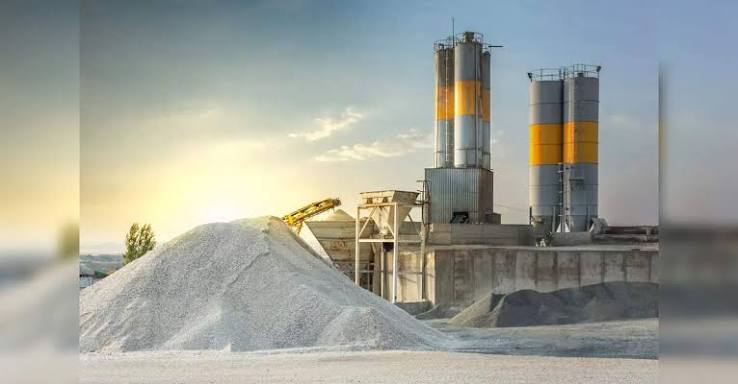
The company began production at Nagaur in March 2026, taking its installed grinding capacity to 24.1 million tonnes per annum (MTPA). The site initially includes 2.5 MTPA of grinding capacity and 3.3 MTPA of clinker capacity, with another 1 MTPA grinding unit under development. According to Motilal Oswal Financial Services, cement industry volumes increased by about 10–12% year-on-year during July and August 2026. JSW Cement’s comparable operations broadly tracked the market, while the addition of Nagaur lifted its overall volume growth to around 23–25%. The brokerage estimates Nagaur utilisation at about 70% during the second quarter so far, compared with an average of roughly 55% in the first quarter.
The JSW Cement expansion is part of a much larger capacity strategy. Company plans indicate grinding capacity of about 35.25 MTPA by 2028 and 46 MTPA in the longer term, alongside an increase in clinker capacity. An additional 2.5 MTPA grinding unit at Nagaur has also been approved, with an estimated investment of ₹430 crore. For urban markets, however, capacity growth is only one part of the equation. Cement demand is closely tied to housing, roads, metro systems, industrial construction and other infrastructure. Greater geographical coverage can reduce dependence on long-distance movement of materials, but new plants also create additional requirements for energy, water, transport and land. The environmental cost of construction therefore remains relevant alongside financial returns.Cost control will be another key variable. The brokerage expects alternative fuels, renewable power, waste-heat recovery and logistics improvements to lower variable costs as the Rajasthan operation matures. JSW Cement already reports renewable and waste-heat recovery systems at some facilities, while its broader expansion programme is designed to increase manufacturing scale.
Motilal Oswal has projected roughly 20% annualised revenue and EBITDA growth and 15% PAT growth between FY26 and FY28, while raising its rating from Neutral to Buy and retaining a ₹146 target price. These are brokerage estimates, not company guidance or guaranteed outcomes.The JSW Cement expansion will ultimately be judged not only by capacity utilisation but also by whether additional production can be delivered efficiently while managing emissions, resource use and infrastructure impacts. For India’s rapidly expanding cities, that balance will become increasingly important as construction demand grows.