HomeLatestIndia Steel Demand Signals Room For Faster Growth

India Steel Demand Signals Room For Faster Growth

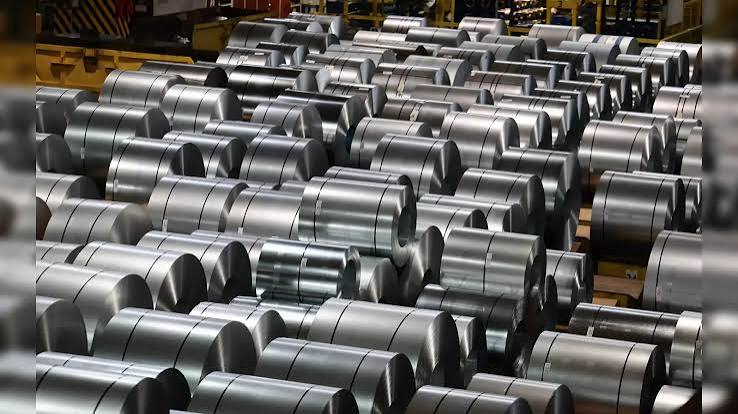
India’s steel market has significant room to expand as domestic consumption remains below global levels, creating potential demand for new production capacity across infrastructure, housing and manufacturing. The opportunity is substantial, but the next phase of expansion also faces a harder test: how to supply more steel while reducing the sector’s carbon intensity.

India is already the world’s second-largest steel producer and consumer of finished steel. Government data shows finished steel consumption reached 163.7 million tonnes in 2025-26, more than double its 2014-15 level of 77 million tonnes. The increase has been closely linked to urbanisation, infrastructure investment and manufacturing growth. The National Steel Policy provides a longer-term benchmark for this expansion. It envisages 300 million tonnes of crude steel capacity by 2030-31, alongside production of 255 million tonnes and finished steel consumption of about 158 kg per person. These figures are policy projections rather than a forecast of actual demand. For India’s cities, higher steel consumption is closely tied to the physical expansion of the built environment. Steel is embedded in metro systems, bridges, railway infrastructure, industrial facilities, high-rise buildings and housing. Rising demand can therefore support industrial employment and infrastructure delivery, while also increasing pressure on raw materials, energy systems and logistics networks.

The environmental equation is more difficult. Steelmaking remains highly energy-intensive, with coal-based processes accounting for much of the sector’s emissions. The government has therefore established a green-steel taxonomy and a decarbonisation roadmap aimed at reducing emissions through energy efficiency, renewable power, scrap recycling, green hydrogen and other emerging technologies. Green hydrogen is being tested for direct reduced iron production, while carbon capture and utilisation is being considered as part of the sector’s longer-term transition. The government has allocated ₹455 crore through FY2030 for pilot projects involving hydrogen use in steelmaking.

Domestic demand also provides a potential buffer against changes in international trade conditions. A larger internal market could absorb additional output as infrastructure and manufacturing investment grows. Yet producing more steel does not automatically translate into better economic outcomes if capacity expansion increases energy costs, environmental impacts or infrastructure pressures. The more important question for the coming decade is therefore not simply how much steel India can make. It is whether additional capacity can be matched with cleaner production, efficient material use and infrastructure planning that delivers value over decades. For a rapidly urbanising country, that distinction matters. Steel demand growth can support the next generation of infrastructure, but the carbon footprint of that infrastructure will increasingly depend on how the material is produced.

Read More: India Core Industries Gain On Cement Strength
India Steel Demand Signals Room For Faster Growth
RELATED ARTICLES

LEAVE A REPLY

Please enter your comment!
Please enter your name here

- Advertisment -spot_img

Most Popular

Recent Comments

Pune Homebuyers Shift Towards Emerging Housing Corridors

Pune Homebuyers Shift Towards Emerging Housing Corridors

Rising housing costs are pushing more Pune buyers to examine neighbourhoods beyond the city’s established residential belts. Punawale, Mahalunge, Hinjewadi-Maan, Wagholi and parts of...

Coal India Target Raised As Thermal Demand Recovers

Coal India Target Raised As Thermal Demand Recovers

Coal India’s shares rose sharply on Tuesday after Morgan Stanley upgraded the stock and lifted its target price, reflecting expectations of stronger thermal power...

Sambhv Steel Tubes Raipur Plant Visit Draws Investor Focus

Sambhv Steel Tubes Raipur Plant Visit Draws Investor Focus

Sambhv Steel Tubes is set to bring 14 institutional investors and analysts to its manufacturing facilities in Raipur on September 24, putting production efficiency,...
India Coal Stocks Tighten as Power Demand Climbs

India Coal Stocks Tighten as Power Demand Climbs

India’s electricity system is facing renewed pressure as coal inventories at thermal power plants fall sharply while demand remains elevated. Central Electricity Authority data...
Cement Production Price Hikes Impact Urban Infrastructure Growth

Cement Production Price Hikes Impact Urban Infrastructure Growth

MUMBAI — Rising global energy prices, fueled by ongoing Middle East conflicts, are driving a surge in fuel costs for India’s primary cement manufacturers....