HomeBricks & MortarIndia Steel Policy Targets Greener Growth Through 2047

India Steel Policy Targets Greener Growth Through 2047

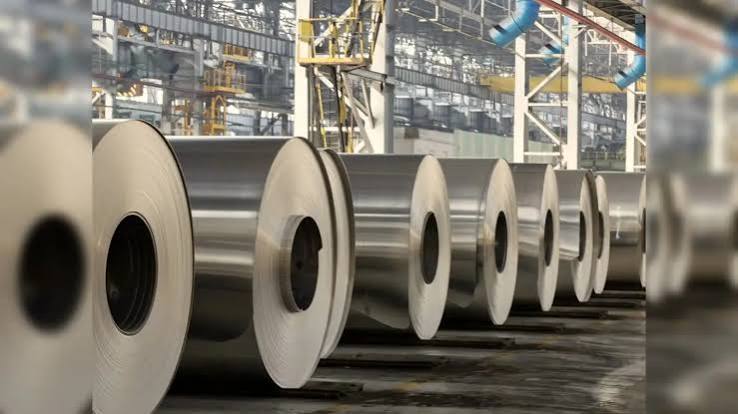
India is preparing a new long-term steel policy that could take annual steelmaking capacity beyond 600 million tonnes by 2047, alongside domestic consumption above 500 million tonnes. The proposed shift matters well beyond heavy industry: steel is fundamental to housing, transport, bridges, utilities and urban expansion, making the carbon intensity and resource demands of future construction increasingly important.

The draft National Steel Policy is expected to enter public consultation shortly, extending the planning horizon of the 2017 policy from 2030-31 to 2047. The proposed framework targets more than 600 million tonnes of capacity and over 500 million tonnes of consumption, with about 45 million tonnes linked to exports either directly or through steel embedded in manufactured goods.  India currently has roughly 222 million tonnes of crude steelmaking capacity, according to recent government data. Finished steel consumption has also expanded rapidly, reaching 163.7 million tonnes in 2025-26 as infrastructure, construction, manufacturing and urbanisation continued to support demand. 

That trajectory places steel at the centre of India’s future urban investment cycle. More metro systems, rail corridors, renewable-energy infrastructure, industrial facilities, housing and water networks will require large quantities of structural steel. But expanding physical infrastructure without reducing material and energy intensity could increase pressure on India’s emissions budget and raw-material supply chains. The proposed policy therefore puts greater emphasis on value-added and special steel, while also seeking to address cheaper and sub-standard imports through measures such as safeguard and anti-dumping provisions. For cities and consumers, stronger domestic supply could support infrastructure delivery, but quality, affordability and environmental performance will remain important alongside production volumes.  A proposed ₹5,000 crore programme for smaller steel producers is another significant element. Incentives are expected to be connected to production as well as reductions in carbon emissions, with cleaner technology, improved raw materials and renewable energy identified as potential routes to lower emissions. 

The climate challenge is substantial. Government data indicates that India’s steel sector accounts for around 10–12% of national greenhouse-gas emissions, while its emissions intensity remains above the global average. This makes decarbonisation a central condition for any credible long-term expansion.  The government is also moving towards emissions requirements for larger producers through the Carbon Credit Trading Scheme. At the same time, a Steel Industry Safety Council has been constituted to strengthen accident prevention and workplace standards across the sector.  For India’s cities, the next phase of steel growth will therefore be measured not only in tonnes produced, but also in how efficiently those tonnes support durable, safer and lower-carbon infrastructure.

Also Read : Nuvoco Links Cement Power To Rajasthan Renewables
India Steel Policy Targets Greener Growth Through 2047
RELATED ARTICLES

LEAVE A REPLY

Please enter your comment!
Please enter your name here

- Advertisment -spot_img

Most Popular

Recent Comments

Nuvoco Links Cement Power To Rajasthan Renewables

Nuvoco Links Cement Power To Rajasthan Renewables

Nuvoco Vistas is moving to secure more renewable electricity for its Rajasthan cement operations through a 46.4 MW wind-solar hybrid project at Bhikamkhore, adding...

JSW Cement Merger Links Odisha Capacity With Expansion

JSW Cement Merger Links Odisha Capacity With Expansion

JSW Cement’s board has approved the proposed amalgamation of listed subsidiary Shiva Cement into the parent, bringing a 1.32 million-tonne-a-year clinker facility in Sundargarh,...

Ramco Cements Expands Jayanthipuram Capacity For Local Demand

Ramco Cements Expands Jayanthipuram Capacity For Local Demand

Ramco Cements has completed capacity upgrades at its Jayanthipuram works in NTR district, increasing clinker production capacity to 5.62 million tonnes a year and...

India Cement Sector Outlook Puts Construction Costs Under Watch

India Cement Sector Outlook Puts Construction Costs Under Watch

India’s cement industry is entering a more difficult earnings phase as higher energy and freight costs meet a wave of new capacity. The pressure...

Prestige Real Estate Outlook Points To Stronger Launches

Prestige Real Estate Outlook Points To Stronger Launches

India’s listed real estate sector is entering the second quarter of FY27 with a large pipeline of residential launches, offering a potential lift to...