Home Blog Page 420

Housing Prices at Noida Expressway Rise 66% in 5 Years

    0
    Housing Prices at Noida Expressway Rise 66% in 5 Years
    Housing Prices at Noida Expressway Rise 66% in 5 Years

    Housing Prices at Noida Expressway Rise 66% in 5 Years

    Housing prices along the Noida Expressway in Delhi-NCR have seen a remarkable 66% increase over the past five years, according to recent data by real estate consultant Anarock. The surge in property values reflects the growing demand for residential spaces in this prime location, driven by enhanced connectivity, infrastructure development, and increasing investments in both residential and commercial real estate.*

    In the September 2024 quarter, the average housing price on Noida Expressway reached Rs 8,400 per square foot, a sharp rise from Rs 5,075 per square foot in 2019. This surge is part of a wider trend in the National Capital Region (NCR), where peripheral areas such as Sohna and Dwarka Expressway also experienced significant price increases. Sohna, for instance, saw a 43% rise in average prices, climbing to Rs 5,900 per square foot, while Dwarka Expressway witnessed an astounding 93% increase, reaching Rs 10,350 per square foot. The Noida-Greater Noida Expressway, a key residential hub, strikes a perfect balance between affordability and growth potential, making it an attractive destination for mid-segment buyers and investors, said Vishal Raheja, Founder and MD of InvestoXpert.com. Despite the price rise, Noida remains a competitive option compared to more expensive markets like Gurugram and central Delhi, with average property prices now standing at Rs 1.05 crore.

    Raheja pointed out that the region’s price growth is expected to continue, with annual increases of 10-15%, bolstered by infrastructural developments like metro extensions, expressways, and the upcoming Jewar International Airport. These upgrades are expected to further enhance the area’s connectivity and accessibility, driving continued demand for housing. The Noida-Greater Noida Expressway has solidified its position as one of NCR’s most prominent luxury residential destinations in recent years. According to Salil Kumar, Director (Marketing & Business Management) at CRC Group, the region’s strategic location—close to Noida, Greater Noida, the Yamuna Expressway, and the forthcoming Noida Airport—has spurred massive interest from both buyers and investors, contributing to significant price hikes.

    Sunil Sisodiya, Founder of Geetanjali Homestate, attributes the price appreciation along the Noida Expressway to ongoing infrastructure development and seamless connectivity to major hubs. These improvements have made the area an increasingly attractive option for both end-users and investors. The trend of rising property prices is not confined to Delhi-NCR. In Bengaluru, the peripheral location of Gunjur has witnessed a 69% increase in housing prices over the last five years, with the average price rising from Rs 5,030 per square foot to Rs 8,500 per square foot. Bhavesh Kothari, Founder & CEO of Property First, highlighted that improved connectivity, affordability, and availability of large land parcels are driving demand in Bengaluru’s peripheral areas, prompting developers to launch premium residential projects with luxury amenities.

    The sharp rise in property prices in both Noida and Bengaluru’s peripheral areas underscores the growing appeal of these locations, which offer value-for-money options compared to more established, expensive regions. For investors, areas like Noida Expressway and Bengaluru’s Gunjur present significant opportunities for capital appreciation, with improving infrastructure and strategic positioning fueling the growth. Harinder Dhillon, Senior Vice President of Sales at BPTP, noted that investing in emerging hotspots like the Dwarka Expressway is now a well-calculated decision, supported by consistent growth and infrastructure development. As both Noida and Bengaluru continue to expand and modernise their infrastructure, these areas are set to remain strong performers in the real estate market.
    Star Cement Shares Surge 3% After UltraTech Stake Acquisition

    Star Cement Backs Indian Football League Growth
    Star Cement Backs Indian Football League Growth

    Star Cement Shares Surge 3% After UltraTech Stake Acquisition

    Shares of Star Cement experienced a notable uptick on Friday, rising 3.31% to ₹237.35 at 11:10 AM on the BSE. The surge in the stock price follows news that UltraTech Cement, India’s largest cement producer and a part of the Aditya Birla Group, has acquired an 8.69% stake in the company for ₹851 crore.

    UltraTech’s acquisition of 3.70 crore equity shares at ₹235 per share is seen as a strategic move to reinforce its dominance in the Indian cement market. This transaction signals UltraTech’s commitment to enhancing its market position, particularly in the growing North-Eastern region where Star Cement is a leading player. Star Cement, with a current production capacity of 5.7 million tonnes per annum (MTPA), is in the midst of a significant capacity expansion. The company aims to increase its capacity to 9.7 MTPA by the 2025-26 fiscal year, with plans to further raise this to 12 MTPA by 2027. This expansion strategy positions Star Cement for continued growth, particularly as demand for cement rises in the region.

    The company also reported an 8% growth in revenue for the previous fiscal year, reaching ₹2,911 crore, up from ₹2,705 crore the previous year. This growth highlights Star Cement’s strong operational performance despite the competitive nature of the cement industry. In addition, Star Cement announced the closure of its trading window, which will remain closed from January 1, 2025, until 48 hours after the approval of its unaudited financial results for the third quarter and nine months ending December 31, 2024. The date for the Board meeting to approve these results will be disclosed in due course. The stock of Star Cement hit a 52-week high of ₹255.95 on May 25, 2024, and reached a low of ₹169.80 on January 18, 2024, reflecting some volatility over the past year. However, with UltraTech Cement’s strategic acquisition, Star Cement’s growth prospects remain promising, and its stock is poised to benefit from the long-term expansion plans.

    Adani’s Entry Spurs Big Moves in Cement Sector

    Adani’s Entry Spurs Big Moves in Cement Sector
    Adani’s Entry Spurs Big Moves in Cement Sector

    Adani’s Entry Spurs Big Moves in Cement Sector

    The cement sector in India has witnessed a flurry of strategic acquisitions and mergers, largely sparked by the entry of the Adani Group in 2022. As major players like UltraTech Cement and Ambuja Cements continue to expand their footprints, the industry has seen a series of high-profile deals, signalling growing consolidation driven by increased government spending on infrastructure. Here’s a look at the major moves that have reshaped the landscape of India’s cement sector since Adani’s entry.

    Adani Group-Holcim AG, May 2022
    The most significant deal to date remains the Adani Group’s acquisition of Ambuja Cements and ACC from Swiss construction giant Holcim for a massive $10.5 billion. This deal marked Adani’s entry into the cement sector and has been the largest transaction in the industry to date, enabling the conglomerate to instantly become one of India’s largest cement players.

    Dalmia Bharat-Jaiprakash Associates, December 2022
    In December 2022, Dalmia Bharat strengthened its presence in central India by acquiring cement and other assets of Jaiprakash Associates for $687 million. This strategic move allowed Dalmia Bharat to increase its share in the growing central market, further intensifying competition in the sector.

    Sagar Cements-Andhra Cements, February 2023
    Sagar Cements made headlines in February 2023 with its $9.2 billion bid to acquire Jaypee Group’s Andhra Cements, as approved by a company tribunal. This acquisition was another significant development in the consolidation of India’s regional cement markets.

    Ambuja Cements-Sanghi Industries, August 2023
    In August 2023, Ambuja Cements, now part of the Adani Group, acquired an 83% stake in Sanghi Industries for $295 million. This deal was a notable move for Adani after the short-seller Hindenburg report in January 2023, marking the group’s commitment to expanding its footprint despite earlier setbacks.

    UltraTech Cement-Kesoram Industries, November 2023
    UltraTech Cement, India’s largest cement manufacturer, continued its aggressive expansion by acquiring Kesoram Industries’ cement assets for $645 million in November 2023. The deal strengthened UltraTech’s position in southern India, a key region for cement consumption and production.

    Ambuja Cements-Penna Cement Industries, June 2024
    In June 2024, Ambuja Cements acquired Penna Cement Industries for $1.25 billion, a deal that analysts believe cemented Ambuja’s place among the top three cement companies in southern India. The acquisition further consolidated Adani Group’s dominance in the region.

    UltraTech Cement-India Cements, July 2024
    UltraTech followed up its acquisition of Kesoram with a deal in July 2024, buying a controlling stake in India Cements for $472 million. After initially purchasing a 23% stake for $228 million, UltraTech completed the full acquisition, expanding its capacity and influence in the country’s southern markets.

    Ambuja Cements-Orient Cement, October 2024
    In October 2024, Ambuja Cements made another significant acquisition, agreeing to purchase nearly 47% of Orient Cement for $451 million. However, analysts have raised concerns about the regulatory approval for this deal, given its potential market impact.

    UltraTech Cement-Star Cement, November 2024
    The latest acquisition in the cement sector involves UltraTech Cement’s decision to purchase an 8.69% stake in Star Cement, valued at approximately ₹851 crore ($100 million). This deal further solidifies UltraTech’s position as the leader in India’s cement industry, adding another key asset to its extensive portfolio.

    These deals highlight the aggressive strategies of both the Adani Group and UltraTech Cement, with both players focusing on expanding capacity and market share. As the cement sector continues to grow, bolstered by infrastructure initiatives, further consolidation seems inevitable, setting the stage for more high-value transactions in the near future.

    Private Indian Airports to Invest Rs 60,000 Crore in Infrastructure by 2027

      0
      Private Indian Airports to Invest Rs 60,000 Crore in Infrastructure by 2027
      Private Indian Airports to Invest Rs 60,000 Crore in Infrastructure by 2027

      Private Indian Airports to Invest Rs 60,000 Crore in Infrastructure by 2027

      Private airports in India are embarking on a major expansion plan, committing to invest over Rs 60,000 crore by fiscal 2027, according to a recent report by CRISIL Ratings. This investment surge comes in response to the increasing demand for air travel, with an additional 65 million passengers expected annually. The growth of both domestic and international air traffic is anticipated to continue at a steady pace, further driving this large-scale infrastructure development.

      The report highlights that this planned investment represents a 12% increase over the previous period, where private airports committed Rs 53,000 crore between 2022 and 2024. The expansion is geared towards managing the rising passenger numbers, which are projected to grow at a compound annual growth rate (CAGR) of 8-9% between fiscal years 2025 and 2027. Much of this demand will be driven by business and leisure travel, alongside government initiatives like the Ude Desh ka Aam Naagrik (UDAN) scheme, aimed at making air travel more accessible to the masses.

      Manish Gupta, Senior Director and Deputy Chief Ratings Officer at CRISIL Ratings, explained that domestic air traffic, which accounts for over 80% of total passenger volume, will be a key factor in driving growth. He also noted that the UDAN scheme, which has already facilitated the operationalisation of 84 airports and 579 routes as of July 2024, will play an important role in expanding regional connectivity. This has allowed smaller regional airports to become feeders to larger metropolitan hubs, contributing significantly to the overall growth in passenger traffic. Revenue projections for private airports during the 2025-2027 period are promising. A 17% increase is expected, driven by higher passenger numbers, tariff adjustments, and the expansion of airport services. Specifically, revenue from aeronautical activities is projected to rise by 24%, while non-aeronautical revenue—which includes retail, parking, and other services—should increase by 10%. Regulatory tariff increases are expected to play a role in this growth, with aeronautical charges set to rise by 15% in the next two fiscal years.

      Ankit Hakhu, Director at CRISIL Ratings, noted that while approximately 70% of the capital expenditure (capex) will be financed through debt, the financial outlook for private airports remains strong. The anticipated revenue growth, coupled with regulated tariff increases and the expansion of non-aeronautical income streams, will support the creditworthiness of these airports. The debt service coverage ratio (DSCR), a key measure of financial health, is expected to improve to 1.45 times, a significant recovery from the lower levels seen during the pandemic. While the outlook for private airports is generally optimistic, there are potential challenges. The availability of aircraft, geopolitical tensions affecting fuel prices, and potential fluctuations in passenger volumes remain concerns for the industry. However, the increasingly stable and predictable regulatory environment offers investors greater confidence in the long-term prospects of India’s aviation sector.

      The investment in airport infrastructure reflects a broader vision for India’s aviation industry to position itself as a leading global aviation hub. Private airport operators are not only focused on increasing capacity to handle more passengers but are also prioritising enhancements in passenger experience. Upgrades to lounges, retail outlets, parking spaces, and other facilities will significantly improve the overall travel experience, making air travel more comfortable and convenient for the growing number of passengers. These investments in airport infrastructure are also expected to support India’s economic growth by improving connectivity and accessibility, ultimately benefiting both business and tourism sectors. As the aviation industry continues to grow, India’s airports are set to play an increasingly important role in fostering the country’s economic development. With the ongoing expansion of both infrastructure and services, India’s private airports are well-positioned to meet the growing demands of air travel, helping to make the country a key player in the global aviation market.

      VA Tech WABAG Wins Rs 700 Crore Order for Wastewater Treatment Plants in Zambia

        0
        VA Tech WABAG Wins Rs 700 Crore Order for Wastewater Treatment Plants in Zambia
        VA Tech WABAG Wins Rs 700 Crore Order for Wastewater Treatment Plants in Zambia

        VA Tech WABAG Wins Rs 700 Crore Order for Wastewater Treatment Plants in Zambia

        VA Tech WABAG, a global leader in water treatment technology, has been awarded a significant order worth Rs 700 crore (Euro 78 million) to design, build, and operate two advanced wastewater treatment plants (WWTPs) in Zambia. The project, funded by the European Investment Bank (EIB) and Germany’s Kreditanstalt für Wiederaufbau (KfW), marks a significant step in WABAG’s expansion into the African market. This milestone not only strengthens WABAG’s position but also contributes to the much-needed improvement in Zambia’s water and sanitation infrastructure.

        The order was issued by the Lusaka Water Supply and Sanitation Company (LWSC), with the plants being constructed in Ngwerere and Chunga. The Ngwerere plant will have a capacity of 54 million litres per day (MLD), while the Chunga plant will handle 19 MLD. The project is set to play a crucial role in improving water and sanitation in Zambia, addressing the increasing demand for clean water and effective wastewater treatment solutions. The Engineering, Procurement, and Construction (EPC) phase of the project is slated to take 36 months to complete, with a further 24 months allocated for operation and maintenance (O&M) to ensure the plants’ sustainability. A key highlight of these plants is their focus on sustainable and green energy solutions, with biogas and solar power meeting most of the energy needs of the facilities. This commitment aligns with WABAG’s broader mission to reduce the carbon footprint of water treatment processes and promote sustainability across its projects.

        Guhan Kandasamy, Head of Sales and Marketing for Africa at WABAG, expressed pride in securing the project, saying, “Through this project, WABAG is proud to contribute significantly to the Zambian government’s mission to enhance water and sanitation infrastructure, positively impacting countless lives.” The project not only aligns with Zambia’s national development goals but is expected to create lasting improvements in public health and environmental quality. Government officials in Zambia have long recognised the need for modern and sustainable sanitation solutions, particularly to combat the risks posed by waterborne diseases. The completion of these wastewater treatment plants is expected to help safeguard water quality, improve hygiene, and reduce disease transmission. Moreover, the plants are part of Zambia’s broader vision to expand access to clean water and sanitation, particularly in underserved communities.

        This development also signifies WABAG’s ongoing expansion into Africa, solidifying its position as a trusted global player in the water treatment sector. With over 1,500 water and wastewater treatment plants successfully designed and built worldwide, WABAG’s expertise is widely recognised. Through partnerships with international financial institutions such as EIB and KfW, WABAG is well-positioned to continue leading the way in providing sustainable water solutions across emerging markets. The Zambia wastewater treatment plants project is an important step forward in meeting the growing demand for clean water and effective sanitation in Africa. As WABAG continues to deliver innovative and reliable solutions, it is helping to improve public health, create a cleaner environment, and contribute to sustainable development across the continent. This project is a prime example of how technological expertise and green energy solutions can shape the future of water treatment in Africa.

        UltraTech’s ₹851 Crore Bet on Star Cement

        UltraTech’s ₹851 Crore Bet on Star Cement
        UltraTech’s ₹851 Crore Bet on Star Cement

        UltraTech’s ₹851 Crore Bet on Star Cement

        UltraTech Cement, India’s largest cement manufacturer, has moved forward with a strategic acquisition, purchasing an 8.69% minority stake in Star Cement for a sum of ₹851 crore. This acquisition comes as UltraTech seeks to expand its footprint and consolidate its position in the competitive cement market.

        The stake, to be acquired from the Chamaria family, part of Star Cement’s promoter group, is part of UltraTech’s broader strategy to enhance its market presence in eastern India, particularly in the north-eastern markets where Star Cement holds a dominant position. The Chamarias, who control approximately 13-14% of the company, have gradually begun to reduce their holdings, sources close to the deal revealed. However, other promoters, including Century Ply’s co-promoters Sajjan Bhajanka and Sanjay Agarwal, are not part of the sale. Star Cement, a leading player in the north-eastern cement market, has been expanding its reach, notably through a planned greenfield plant in Silchar, Assam, which will add 2 million tonnes to its production capacity. The company, which currently has an installed capacity of 7.7 million tonnes per annum (MTPA), aims to reach a manufacturing capacity of 25 MTPA by 2030.

        Star Cement’s strong regional presence, particularly in Meghalaya and surrounding areas, coupled with its plans for expansion, makes it an attractive acquisition target. For UltraTech Cement, this acquisition fits into its aggressive growth strategy. The company recently acquired a controlling stake in India Cements Ltd, further solidifying its leadership in the cement industry. UltraTech, part of the Aditya Birla Group, is aiming for an installed capacity of 200 MTPA by FY27, which is a significant leap from its current capacity of 156.66 MTPA. This acquisition also highlights the ongoing consolidation in India’s cement sector, as both UltraTech and Adani Cement, which recently crossed a 100 MTPA capacity mark, seek to expand their control. Adani Cement has been acquiring smaller players like Sanghi Industries, Penna Industries, and Orient Cement, in line with its aggressive inorganic growth strategy.

        Star Cement’s latest financial performance, with a turnover of ₹2,910 crore and a profit after tax of ₹295 crore in FY24, further supports its appeal. As UltraTech continues to expand its portfolio, this deal strengthens its position against competitors like Adani Group’s Ambuja Cement, which is also scaling up its capacity. UltraTech’s stock has shown stability, with its shares trading at ₹11,492.40, a slight increase from the previous close, while Star Cement’s shares saw a 3.94% uptick following the announcement, trading at ₹238.80 on the Bombay Stock Exchange. As the cement industry experiences significant consolidation, UltraTech’s acquisition of a stake in Star Cement is a pivotal move in the race to dominate the Indian market ahead of its competitors.

        Pune Metro Line III Completion Likely Delayed to September 2025 Due to Construction Hurdles

          0
          Pune Metro Line III Completion Likely Delayed to September 2025 Due to Construction Hurdles
          Pune Metro Line III Completion Likely Delayed to September 2025 Due to Construction Hurdles

          Pune Metro Line III Completion Likely Delayed to September 2025 Due to Construction Hurdles

          The much-anticipated Pune Metro Line III project, which is set to connect Hinjawadi to Shivajinagar, will likely face a significant delay, with the completion now expected to be pushed back to September 2025. This delay comes after the concessionaire requested an extension beyond the original target date of March 2025. Pune Metropolitan Region Development Authority (PMRDA) officials confirmed that ongoing construction challenges, compounded by heavy traffic congestion along the route, are major contributors to the postponement.

          The 23-kilometre Metro corridor, which is crucial for alleviating traffic in Pune, has made substantial progress, with 74% of the overall construction completed. However, one of the critical components, the integrated flyover between University Chowk and E-Square junction, is only 65% finished. This flyover is vital for the Metro’s seamless functioning, as it includes essential ramp and deck slabs that are still under construction.

          Delays in obtaining necessary permits for various stretches, such as the installation of steel girders at Savitribai Phule Pune University (SPPU) Chowk, have further hindered the progress. These delays have been exacerbated by traffic disruptions, particularly during busy periods such as election seasons and Diwali, when construction work is often suspended. Despite the continuous review meetings and additional manpower being deployed, the lack of sufficient clearances and traffic congestion have significantly slowed down progress. Local residents have voiced their frustration over the delays, as they continue to face significant traffic disruptions due to ongoing construction activities. The situation has become even more stressful as road-widening projects and traffic diversions, though planned, have not provided enough relief for commuters.

          A key issue that has been impeding progress is the need for multiple clearances for construction, including the shifting of utilities and obtaining right-of-way approvals. In particular, the University Chowk stretch has faced challenges in removing utility poles and widening the road, further delaying the work. The state government, led by Chief Minister Devendra Fadnavis and Deputy Chief Minister Ajit Pawar, is actively reviewing the revised timeline. While the government has previously stressed the urgency of completing the project, especially ahead of upcoming elections, they have acknowledged the challenges posed by the ongoing construction. The new deadline for the completion of the 1.7-km flyover, which is crucial for the functioning of the Metro, is now set for April 2025.

          In the interim, Metro stations between Maan and Balewadi High Street are expected to be operational by April 2025, offering some relief to commuters in these areas. However, the real hurdles remain in the University Chowk stretch, where road widening and utility removal are still underway. Despite these setbacks, the central government has continued to support the project, approving an additional Rs 200 crore in viability gap funding, bringing the total released amount to Rs 600 crore out of the Rs 1,200 crore initially committed for the Metro project. The completion of Pune Metro Line III is seen as a game-changer for the city, helping ease traffic woes and provide much-needed public transportation options. However, with significant logistical and infrastructural hurdles yet to be overcome, it remains to be seen how quickly the project can be brought to completion.

          200 MMR Projects on Hold After NGT Directive

          0
          200 MMR Projects on Hold After NGT Directive
          200 MMR Projects on Hold After NGT Directive

          200 MMR Projects on Hold After NGT Directive

          A recent ruling by the National Green Tribunal (NGT) has disrupted approximately 200 real estate projects in the Mumbai Metropolitan Region (MMR), as developers now face a bureaucratic impasse following the tribunal’s directive. The order, which mandates that all projects within a 5-kilometre radius of eco-sensitive zones secure environmental clearance from the central government, has created a severe bottleneck in the region’s development sector.

          The NGT ruling, passed on August 9, applies nationwide, targeting projects exceeding a built-up area of 20,000 square metres within designated green zones, wildlife sanctuaries, or heavily polluted areas. In MMR, this affects several high-profile projects near the Sanjay Gandhi National Park, the Flamingo Bird Sanctuary in Thane and Navi Mumbai, and the Tungareshwar Wildlife Sanctuary in Vasai-Virar. While the directive affects both ongoing and new projects, the major concern for developers lies in the absence of clear guidelines from the Union Ministry of Environment, Forests and Climate Change (MoEFCC).

          Developers report confusion, with state agencies unable to grant the necessary approvals, citing lack of jurisdiction post-NTG ruling. Meanwhile, central agencies, tasked with issuing clearances, have yet to establish a framework for evaluating these projects. Industry bodies like the National Real Estate Development Council (NAREDCO) have expressed frustration over the lack of an efficient system to implement the order, which has left developers with mounting costs and prolonged timelines. Builders have raised concerns over how this uncertainty affects not just ongoing projects but also potential launches, as many of these developments, including amendments to existing plans, require fresh environmental clearances.

          The impact is not limited to developers but extends to homebuyers, as delays push back delivery dates. The issue has reached the Supreme Court, with CREDAI-MCHI—an association of real estate developers in Mumbai—seeking a stay on the order until a central appraisal committee is constituted to process these projects. The court is set to hear the case on January 21, with the MoEFCC directed to respond to the petitions. While state-level environmental authorities previously handled such clearances, the shift to centralised oversight has resulted in administrative chaos, exacerbating the situation for Mumbai’s already strained real estate market.

          Severe Snowfall Impacts Property Accessibility and Travel Connectivity in Jammu & Kashmir

            0
            Severe Snowfall Impacts Property Accessibility and Travel Connectivity in Jammu & Kashmir
            Severe Snowfall Impacts Property Accessibility and Travel Connectivity in Jammu & Kashmir

            Severe Snowfall Impacts Property Accessibility and Travel Connectivity in Jammu & Kashmir

            Jammu and Kashmir is currently grappling with significant transportation disruptions as heavy snowfall blankets the region, marking its first major snowstorm of the season. The adverse weather has brought air and rail services to a standstill in key areas, leaving residents and travellers facing considerable inconvenience.

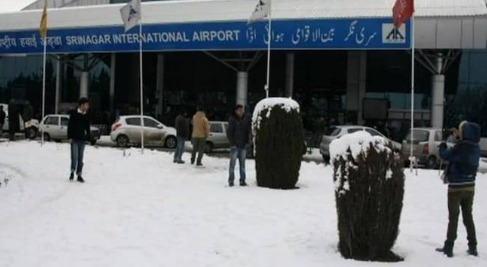
            Srinagar International Airport, the primary air gateway to the region, was completely shut down on Saturday due to reduced visibility and snow accumulation on the runway. This led to the suspension of all flight operations, with both arrivals and departures being put on standby. Passengers were stranded at the airport, awaiting updates. An airport official explained, “The safety of passengers and crew is our top priority. While we are working to clear the runway, flight operations are entirely dependent on the weather conditions.”

            IndiGo Airlines issued a travel advisory via social media, stating that while conditions were improving, flights would gradually resume. The airline advised passengers to confirm the status of their flights before heading to the airport due to the unpredictable nature of the weather. Road travel also faced complications, with the Srinagar-Jammu National Highway partially closed due to icy conditions, further exacerbating travel issues. The Meteorological Department has warned of continued snowfall over the next 24 hours, with more snow expected in higher-altitude regions, suggesting that more disruptions could follow.

            In addition to the flight cancellations, train services on the Banihal-Baramulla rail line were suspended due to heavy snow accumulation on the tracks. Railway officials confirmed that the suspension would last until at least 1 PM on Saturday, as crews worked to clear the snow and ensure the safety of train services. A WDM locomotive equipped with a snow cutter was deployed to help clear the tracks. The Banihal-Baramulla line, a critical rail corridor for the Kashmir Valley, often experiences disruptions during the harsh winter months, and this latest interruption underscores the challenges of maintaining infrastructure in the region’s extreme weather conditions. With air, rail, and road networks all affected, the region’s transport infrastructure is once again under strain, highlighting the difficulties faced by Jammu and Kashmir during the winter season. The snowstorm not only disrupts essential services for passengers but also affects the transportation of goods, putting additional pressure on supply chains.

            Despite the difficulties, the severe snowfall has also brought attention to the need for better infrastructure capable of withstanding such extreme weather events. Local authorities are actively monitoring the situation, working to restore normalcy while prioritising the safety of both residents and travellers. Given the forecast of continued snowfall, the public is urged to exercise caution and stay updated on the latest information from airlines, road authorities, and railway services. While the weather has caused disruptions, it has also enhanced the region’s charm, as the snowfall creates a winter wonderland. Many tourists have braved the snow to witness the Valley’s snow-clad beauty, adding a layer of resilience to the region’s economy despite the transport challenges. As officials work tirelessly to restore services, there is a renewed focus on improving infrastructure to better handle future snowstorms and reduce the impact of such weather-related disruptions on daily life. In the face of this snowstorm, Jammu and Kashmir continues to balance safety measures with the goal of keeping its transport networks functional, ensuring that both residents and visitors can continue to enjoy the region’s unique beauty.

            Ashwini Vaishnaw to Inaugurate Charlapalli Railway Station’s New Terminal and Second Entry

              0
              Ashwini Vaishnaw to Inaugurate Charlapalli Railway Station’s New Terminal and Second Entry
              Ashwini Vaishnaw to Inaugurate Charlapalli Railway Station’s New Terminal and Second Entry

              Ashwini Vaishnaw to Inaugurate Charlapalli Railway Station’s New Terminal and Second Entry

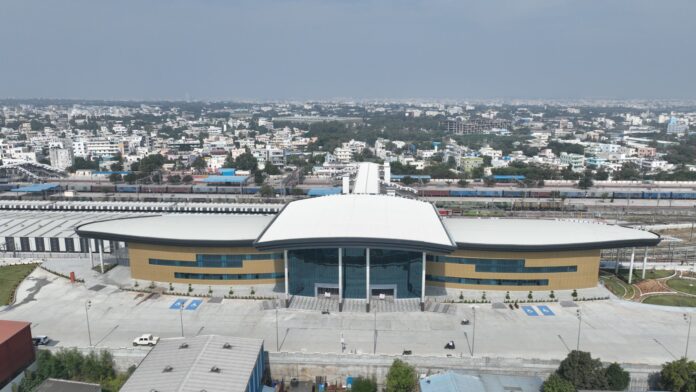
              The urban transport infrastructure in Hyderabad, Railway Minister Ashwini Vaishnaw is set to inaugurate the new terminal and second entry at Charlapalli Railway Station. The event will be attended by G. Kishan Reddy, Minister of Coal & Mines, and other senior officials, marking a milestone for the city’s transport system as the station prepares to accommodate the growing number of passengers with enhanced facilities and greater capacity.

              The redevelopment of Charlapalli Railway Station, costing an estimated Rs. 413 crore, is a crucial initiative designed to ease congestion at existing stations like Secunderabad, Hyderabad, Kacheguda, and Lingampalli. Located strategically in the rapidly developing eastern part of Hyderabad near the Outer Ring Road, Charlapalli has been identified as a key location to handle the rising demand for better connectivity in the city and its surrounding areas. The newly revamped station features state-of-the-art amenities to improve passenger experience. The new terminal building combines modern design with functional spaces. The ground floor houses six booking counters, separate waiting halls for men and women, an upper-class waiting area, and an executive lounge. On the first floor, passengers will find a cafeteria, a restaurant, and well-maintained restrooms. In terms of transport capacity, the station will now boast nine platforms, with new high-level platforms and extended existing platforms to accommodate full-length trains. Additionally, ten new tracks will be added, bringing the total to 19 lines, which will facilitate an additional 15 pairs of trains, alleviating pressure on other terminals in the region.

              Accessibility is a key focus of the redevelopment. Seven lifts and six escalators will be installed across all platforms to support ease of movement for passengers, including those with reduced mobility. To ensure smooth connectivity between platforms, the station will feature two spacious Foot Over Bridges (FoBs) — one 12 metres wide and the other 6 metres wide. The new station also includes ample parking space for four-wheelers, three-wheelers, and two-wheelers, along with a dedicated bus bay to further improve connectivity. Safety and convenience have been prioritised with round-the-clock CCTV surveillance, public announcement systems, and digital display boards that provide real-time updates on train schedules. These measures will help Charlapalli Railway Station maintain its status as a significant transport hub in the Hyderabad-Secunderabad region.

              The redevelopment of Charlapalli Railway Station is a testament to the government’s commitment to modernising urban infrastructure and improving public transport. Railway Minister Ashwini Vaishnaw expressed confidence that the upgraded station will alleviate congestion at existing terminals, enhance overall connectivity, and offer passengers a more comfortable and efficient travel experience. As Hyderabad continues to grow, the new terminal and second entry at Charlapalli Railway Station are set to play a vital role in shaping the city’s future urban mobility, making it a critical asset for the region’s transport infrastructure.