Home Blog Page 428

Nagpur Airport’s Flight Path Compromised by Over 60 Obstructing Buildings

    0
    Nagpur Airport's Flight Path Compromised by Over 60 Obstructing Buildings
    Nagpur Airport's Flight Path Compromised by Over 60 Obstructing Buildings

    Nagpur Airport is grappling with a pressing issue that poses significant risks to flight safety and operational efficiency. Recent revelations indicate that 63 buildings surrounding the airport remain as obstructions to the designated flight path, complicating air traffic control communications and endangering passengers. This situation underscores the critical need for immediate remedial action, particularly given that the number of obstructions has been reduced from an alarming 68, with only five structures removed to date.

    RTI activist Abhay Kolarkar’s inquiry to the Airports Authority of India (AAI), which was responded to by Mihan India Limited (MIL), highlighted that many of these buildings violate height restrictions outlined in a carefully curated colour-coded zoning map. The red zone, where height limitations are particularly stringent, is crucial for ensuring that aircraft can maintain consistent contact with air traffic control during descent, a process vital for safe landings. The dangers posed by these obstructions are not merely hypothetical; they have the potential to disrupt vital communication links, causing brief yet critical lapses in connectivity as aircraft navigate their final approach.

    While the situation may initially appear manageable, it has broader implications for sustainability and urban planning. Constructing buildings that disregard airspace regulations not only jeopardizes flight safety but also demonstrates a lack of foresight in urban development. The impact on local communities is significant; flight delays and safety risks can erode public trust in aviation infrastructure, making it essential for authorities to enforce compliance among builders. Holding property owners accountable is crucial, but this situation also raises questions about regulatory enforcement. The absence of proactive measures to prevent such obstructions, especially in a rapidly developing urban landscape, necessitates a reevaluation of building permissions and compliance checks. As Nagpur Airport moves forward, prioritizing sustainable development must remain central to planning efforts. By fostering a collaborative approach involving local authorities, builders, and the community, it is possible to strike a balance between urban growth and flight safety, ensuring that the skies remain clear and safe for all. Addressing these challenges requires not only regulatory oversight but also a commitment to fostering a culture of safety and sustainability within the aviation sector, ultimately safeguarding the future of air travel in Nagpur.

    India’s affluent flock to luxury real estate

    0
    India’s affluent flock to luxury real estate
    India’s affluent flock to luxury real estate

    India’s premium real estate sector is witnessing an unprecedented boom, fuelled by growing demand for opulent living spaces and high-end investments. As disposable incomes rise and the aspirations of the neo-middle class soar, the market for luxury homes is expanding rapidly. According to a CBRE report, the sale of properties priced above Rs 4 crore surged by 75% in 2023. This shift towards upscale properties has led to a doubling of the market share of luxury homes, showcasing robust buyer sentiment.

    The growth of premium housing has even outpaced the affordable segment. ANAROCK reports that in the first half of 2024, luxury homes priced above Rs 1.5 crore contributed to 25% of residential sales across India’s top seven cities. Builders are responding to this surge by launching several high-end projects, from penthouses and independent homes to sprawling villas in green, gated communities. As a result, India is solidifying its reputation as a leading destination for luxury living, offering both residents and investors an exceptional lifestyle and financial opportunity. Indian Millennials, driven by newfound affluence and lifestyle aspirations, are flocking to premium residences in elite neighbourhoods. For this demographic, amenities such as spa facilities, yoga decks, and sports zones are essential, marking a shift in their definition of homeownership. High-net-worth individuals (HNIs) and ultra-high-net-worth individuals (UHNIs) prefer the exclusivity and privacy that luxury properties offer, further driving demand for such homes.

    Non-resident Indians (NRIs) are also actively investing in India’s premium housing market, drawn by the appeal of international-standard residences and the attractive exchange rate. A JLL report shows that NRIs contributed $13.1 billion to the luxury real estate sector in 2023, with this figure expected to grow as they increasingly view Indian properties as valuable investment assets. Wealthy Indian investors are increasingly focused on premium real estate, particularly seeking capital appreciation and rental income. While ready-to-move homes are popular, there is growing interest in premium plots for their long-term growth potential and portfolio diversification. ANAROCK data reveals that land deals rose by 14% in FY 2023-24, with over 2,250 acres of land transactions earmarked for residential and township projects.

    The India Sotheby’s International Realty Survey 2024 highlights that 43% of UHNIs and HNWIs are seeking to consolidate their portfolios with premium, rent-yielding assets. With 71% of affluent Indians planning to invest in real estate over the next two years, this trend is likely to strengthen. As the market for luxury homes expands, sustainability is becoming a central theme. Builders are integrating eco-friendly practices into their projects, from using energy-efficient designs to creating green spaces that promote holistic living. This focus on sustainable luxury is not only appealing to environmentally conscious buyers but also adds long-term value to the properties, contributing to the sector’s overall growth.

    Ajmera Realty’s Luxury Projects Drive Growth

      0
      Ajmera Realty's Luxury Projects Drive Growth
      Ajmera Realty's Luxury Projects Drive Growth

      Mumbai, India (October 10, 2024): Ajmera Realty & Infra India Ltd (ARIIL) has announced its financial performance for the second quarter of fiscal year 2025 (Q2FY25), reporting a stable sales value of Rs 254 crore and collections of Rs 133 crore. This represents a growth of 1% and 20% respectively compared to the same period last year.

      Ajmera Realty’s diverse portfolio contributed to its consistent performance during Q2FY25, with strong sales across various projects. The luxury offerings, Ajmera Manhattan and Ajmera Prive, continued to attract significant interest from buyers. Additionally, Ajmera Vihara, a new launch in Bhandup, achieved 49% sales in its first phase, demonstrating strong market demand.

      Collections rose significantly by 20% year-over-year (YoY) to Rs 133 crore, indicating improved operational efficiency and robust customer demand. Dhaval Ajmera, director of Ajmera Realty & Infra India Ltd, expressed satisfaction with the company’s performance, highlighting the success of Ajmera Vihara and the continued sales momentum of Ajmera Manhattan and Ajmera Prive. Ajmera Realty’s strategic approach, including pre-leased units at its commercial project Ajmera Nucleus in Bengaluru, also contributed to its sales performance. The company’s ability to meet market expectations and deliver quality projects has been a key factor in its success.

      Tellado Realty Sells Hospitality Business to StayVista in Strategic Move

        0
        Tellado Realty Sells Hospitality Business to StayVista in Strategic Move
        Tellado Realty Sells Hospitality Business to StayVista in Strategic Move

        Tellado Realty has divested its hospitality business to villa rental brand StayVista. Known for its high-end projects like Tellado Villas in Siolim and Baia Villas in Mandrem, Tellado Realty aims to concentrate on developing Goa’s premier luxury villas while StayVista will take over the operations and management of its hospitality offerings.

        StayVista plans to enhance the guest experience at Tellado’s villa establishments located in Assagao, Siolim, Mandrem, and Aldona, with its fully-serviced stays. This partnership marks a significant step for StayVista, which aims to establish a robust B2B vertical by providing facility management, design consultancy, and sales services to developers across India. The co-founder of StayVista, expressed enthusiasm about the collaboration, stating that Tellado’s commitment to luxury aligns perfectly with their brand ethos. “We are excited to partner with Tellado and maintain the same values in hospitality that guests have come to expect through the StayVista experience at each Tellado villa,” he noted.

        The founder and managing director of Tellado, noted that divesting its hospitality business allows the company to focus on developing luxury villas in Goa. This partnership with StayVista underscores a trend in real estate where developers outsource operational functions to specialists, enhancing service quality. Additionally, it promotes sustainability by aligning both companies towards efficient resource management and sustainable tourism practices, benefiting Goa’s local community and environment.

        MahaRERA Warns of 314 Insolvent Housing Projects

        0
        MahaRERA Warns of 314 Insolvent Housing Projects
        MahaRERA Warns of 314 Insolvent Housing Projects

        Mumbai, India (October 10, 2024): In a significant development, the Maharashtra Real Estate Regulatory Authority (MahaRERA) has revealed that 314 housing projects registered with it are currently facing insolvency proceedings at the National Company Law Tribunal (NCLT). To safeguard homebuyers’ interests, MahaRERA has made a comprehensive list of these projects publicly available on its website.

        The insolvency proceedings have been initiated by various financial institutions and creditors due to the financial distress faced by these real estate projects. MahaRERA Chairman Manoj Saunik emphasized the organization’s commitment to protecting homebuyers’ investments and urged them to exercise caution when considering property purchases. Of the 314 projects listed, a significant number have received substantial investments. Among the ongoing projects, 56 have an average registration rate of over 34%, while 194 lapsed projects have an average registration rate of over 61%.

        Additionally, 64 completed projects have an 84% registration rate. MahaRERA has been actively monitoring real estate projects and has taken measures to ensure transparency and protect homebuyers’ interests. The authority has verified information provided by developers and has compiled the list of projects facing NCLT proceedings based on data from various sources. The situation is particularly concerning for homebuyers who have invested in lapsed projects. In suburban Mumbai, 88 projects are under scrutiny, with 56 showing over 70% investment. Similar trends are evident in other regions of Maharashtra, including Pune, Thane, Palghar, Solapur, Nagpur, Chhatrapati Sambhajinagar, Mumbai City, Nashik, and Raigad. While 314 projects are undergoing insolvency proceedings, it remains unclear whether they are still accepting new customers. MahaRERA’s publication of the list aims to alert potential homebuyers and encourage them to exercise due diligence before making any investment decisions.

        Bengaluru’s BBMP Digitizes 2.2 Million Properties with Launch of Draft e-Khatas

        0
        Bengaluru's BBMP Digitizes 2.2 Million Properties with Launch of Draft e-Khatas
        Bengaluru's BBMP Digitizes 2.2 Million Properties with Launch of Draft e-Khatas

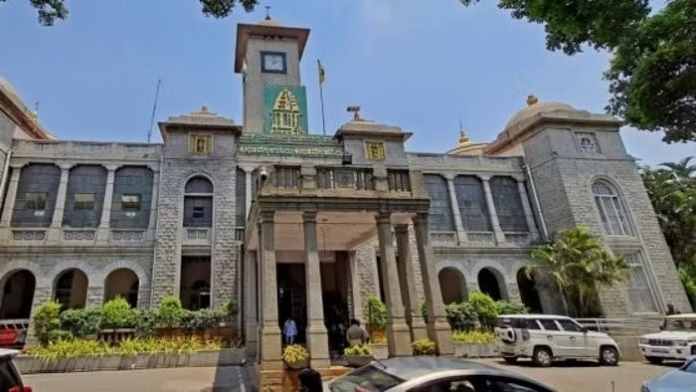
        Bengaluru’s civic body, the Bruhat Bengaluru Mahanagara Palike (BBMP), has taken a significant step towards digitising municipal services by releasing approximately 2.2 million draft e-Khatas online. This pioneering move marks the first deployment of technology in citizen-facing municipal services among Indian metros, aiming to streamline property ownership documentation and enhance transparency.

        BBMP Special Commissioner (Revenue) Munish Moudgil highlighted the uniqueness of Bengaluru’s property management system, stating that unlike many other states where property records are maintained by the Revenue department, the city corporation retains ownership records. This allows for more localised control and quicker access for property owners. Deputy Chief Minister has endorsed this ambitious initiative, which is part of BBMP’s ongoing efforts to modernise municipal administration. Moudgil, who oversees the conversion of traditional paper khatas into e-Khatas, urged citizens to complete their e-Khata requests over the next two to three months unless immediate property transactions necessitate expedited processing. The e-Khata system not only promises to improve transparency but also aims to prevent fraud and streamline the mutation process during property transactions. Citizens can easily access their draft e-Khatas online by visiting BBMP’s eAasthi portal, where property owners can find their details ward-wise, enhancing user experience and accessibility.

        To support the transition to e-Khatas, BBMP has set up help desks at Assistant Revenue Officer (ARO) offices and will soon offer e-Khatas at Bangalore One Centres. The process enables property owners to submit details like sale deed numbers and Aadhaar eKYC online. However, any discrepancies may necessitate in-person interactions. This move not only simplifies property management but also reflects BBMP’s commitment to sustainability by reducing paper usage and enhancing digital accessibility.

        AI: The Future of Commercial Real Estate

        AI: The Future of Commercial Real Estate
        AI: The Future of Commercial Real Estate

        Mumbai, India (October 10, 2024): Artificial Intelligence (AI) is rapidly transforming the commercial real estate landscape, offering innovative solutions that enhance site selection, optimize space utilization, and create more responsive and sustainable buildings. As AI technologies continue to advance, real estate professionals are embracing this paradigm shift to gain a competitive edge in the industry.

        Traditionally, site selection in commercial real estate involved extensive research, site visits, and often relied on intuition and experience. AI has revolutionized this process by providing data-driven insights that help identify high-potential locations. By analyzing vast datasets, AI can uncover hidden trends and opportunities that may be overlooked by human analysis. Beyond site selection, AI is also playing a crucial role in optimizing space usage within commercial properties. Intelligent systems can monitor occupancy rates, track foot traffic, and analyze tenant behavior to identify areas for improvement.

        This data-driven approach enables property managers to make informed decisions about space allocation, layout, and amenities. One of the most exciting applications of AI in commercial real estate is its ability to create intelligent, adaptive spaces. AI-powered systems can adjust lighting, temperature, and even seating arrangements in real-time based on occupancy and tenant preferences. This not only enhances the user experience but also contributes to energy efficiency and sustainability. As AI technologies continue to evolve, we can expect to see even more innovative applications in the commercial real estate sector. From predictive maintenance to personalized tenant experiences, AI has the potential to revolutionize the way we design, build, and manage commercial spaces.

        Arvind SmartSpaces Launches Exciting New Residential Project in Bengaluru

        Arvind SmartSpaces Launches Exciting New Residential Project in Bengaluru
        Arvind SmartSpaces Launches Exciting New Residential Project in Bengaluru

        Arvind SmartSpaces Ltd (ASL), a prominent player in the Indian real estate market and part of the Lalbhai group, has announced a significant joint development agreement for a residential project located along ITPL Road in Bengaluru. This development, with an estimated saleable area of approximately 4.2 lakh square feet, boasts a projected revenue potential of around Rs 600 crore.

        The Managing Director and CEO of Arvind SmartSpaces, expressed optimism regarding the venture, stating, “With this project addition, our cumulative new business development topline potential for the year stands at Rs 1,010 crore.” This indicates a robust growth trajectory for the company, reflecting strong confidence in the current real estate market dynamics. This new undertaking marks the company’s twelfth overall project and eighth high-rise initiative in Bengaluru, a city renowned for its flourishing IT sector and cosmopolitan lifestyle. Singal highlighted that the brand ‘Arvind’ continues to resonate strongly with homebuyers and landowners alike, underlining the firm’s commitment to enhancing its presence in this rapidly developing market.

        The decision to expand in Bengaluru follows the successful acquisition of a high-rise project in Bannerghatta earlier in FY24, reinforcing ASL’s strategy to capture lucrative opportunities in high-demand areas. Bengaluru’s real estate landscape has been characterised by increasing demand for residential spaces, particularly due to its status as a tech hub and its attractive living conditions. Arvind SmartSpaces is committed to integrating sustainability into its new residential project in Bengaluru, aligning with the increasing demand for eco-friendly living. By incorporating energy-efficient building practices, the company aims to promote sustainable lifestyles. As urbanisation accelerates in India, this development not only meets rising housing needs but also establishes a benchmark for sustainable living, particularly with its strategic location near ITPL Road, appealing to professionals seeking convenient housing options.

        DLF Sets New Luxury Standard with The Dahlias

        0
        DLF Sets New Luxury Standard with The Dahlias
        DLF Sets New Luxury Standard with The Dahlias

        Gurugram, India (October 10, 2024): Real estate giant DLF Ltd is set to launch The Dahlias, touted as the most expensive residential project in India. Located on Golf Course Road in Gurugram, this ultra-luxury development is poised to redefine the standards of luxury living in the country. Spread across 17 acres, The Dahlias will offer 400 residences with a starting price of Rs 80,000 per square foot.

        The apartments range in size from 9,500 square feet to 16,000 square feet, with an average sale ticket size estimated at Rs 100 crore. The project also includes a massive two million square feet clubhouse, offering world-class amenities to its residents. According to PropEquity, The Dahlias project has a revenue potential of around Rs 34,000 crore, surpassing the revenue of its predecessor, The Camellias, by nearly 2.5 times. This underscores the immense demand for luxury real estate in India, particularly in prime locations like Gurugram.

        DLF has a long-standing reputation for developing premium luxury properties in India. With The Dahlias, the company aims to further elevate the standards of luxury living by providing exceptional amenities, services, and ultra-large apartments. As the launch of The Dahlias draws closer, there is immense anticipation in the real estate market. The project is expected to attract discerning buyers seeking the pinnacle of luxury and exclusivity.

        MHADA Opens Applications for 6,294 Flats in Pune

        0
        MHADA Opens Applications for 6,294 Flats in Pune
        MHADA Opens Applications for 6,294 Flats in Pune

        Pune residents are presented with a significant opportunity as the Maharashtra Housing and Area Development Authority (MHADA) launches applications for a total of 6,294 flats across various regions. Beginning today, 10th October 2024, interested citizens can submit their applications via the MHADA website. This initiative reflects the ongoing efforts to address housing shortages in Pune, Pimpri-Chinchwad, the Pune Metropolitan Region Development Authority (PMRDA) areas, as well as in the neighbouring districts of Solapur, Kolhapur, and Sangli.

        Among the flats available, 2,340 units fall under MHADA’s first-come, first-served scheme, while 93 flats are designated across different MHADA schemes. Additionally, 418 flats are included in the first-come, first-served scheme under the Pradhan Mantri Awas Yojana, aimed at providing affordable housing to economically weaker sections. Furthermore, a substantial portion of the allotments—3,312 flats—will be offered under a 20% comprehensive housing scheme, alongside 131 flats allocated for a 15% social housing scheme. This diverse range of options is designed to cater to varying income levels and housing needs, emphasising inclusivity in urban development.

        The availability of these flats is particularly significant given Pune’s rapidly expanding population and urban sprawl, which has intensified the demand for affordable housing. As property prices continue to soar, government initiatives like these aim to provide respite to middle and lower-income groups, enabling them to secure a foothold in the city. Moreover, the allotment process is designed to be transparent and accessible, fostering a sense of trust and confidence among potential applicants.