Home Blog Page 432

Odisha Real Estate Regulatory Authority Launches ORERA Version 2.0 for Greater Transparency

    0
    Odisha Real Estate Regulatory Authority Launches ORERA Version 2.0 for Greater Transparency
    Odisha Real Estate Regulatory Authority Launches ORERA Version 2.0 for Greater Transparency

    In a significant step towards improving transparency and accountability within the state’s real estate sector, the Odisha Real Estate Regulatory Authority (ORERA) launched Version 2.0 of its website on December 20. The new website, designed to enhance user experience, was inaugurated by ORERA Chairperson Siddhant Das, in the presence of key team members and officials. The launch represents a major milestone for the authority in its mission to streamline processes and create a more accessible platform for real estate stakeholders, including promoters, homebuyers, agents, and legal professionals.

    The updated website boasts several advanced features designed to improve functionality and ease of use. Key additions include an intuitive dashboard and a chatbot powered by high-end technology, aimed at resolving user queries promptly. The site, developed by the Bhubaneswar-based IT company CSM Technology, seeks to simplify the process of registration, application submission, and transaction tracking, offering a more seamless experience for all users. Chairperson Das expressed his satisfaction with the swift rollout of the new software, lauding the efforts of the ORERA team and highlighting its role in fostering greater efficiency within the system.

    With the new platform in place, ORERA is poised to enhance its regulatory capabilities. The website serves as a centralised hub for stakeholders to engage with the authority, file complaints, track project registrations, and access real-time updates. Additionally, ORERA has introduced a dedicated helpline and a help desk to assist users, ensuring that all queries are addressed promptly. This digital upgrade aligns with the state government’s focus on leveraging technology to drive better governance and service delivery in urban sectors like housing and real estate.

    Sustainability is another area where ORERA has integrated forward-thinking initiatives. The platform encourages digital transactions, reducing the need for paper-based processes and contributing to environmental conservation. The user-friendly interface is designed with accessibility in mind, ensuring that the system is not only efficient but also sustainable in the long term. As Odisha continues to urbanise, such digital solutions are crucial for developing an accountable, sustainable, and future-ready real estate ecosystem that meets the demands of all stakeholders while aligning with broader sustainability goals.

    Chennai Sees 25% Growth in GCCs and Real Estate Surge in 2023-24

    0
    Chennai Sees 25% Growth in GCCs and Real Estate Surge in 2023-24
    Chennai Sees 25% Growth in GCCs and Real Estate Surge in 2023-24

    Chennai has firmly established itself as a key destination for Global Capability Centres (GCCs), registering a remarkable 25% growth in headcount during the 2023-24 period. This growth rate not only outpaces other cities in India but also underscores the city’s growing stature as a business hub. The demand for large campuses to accommodate expanding GCC operations is reaching unprecedented levels, with the requirement for commercial real estate intensifying across the city and beyond. This trend, which was limited to a few hundred seats in the past, now calls for expansive campuses capable of supporting thousands of employees.

    The exponential rise in GCC presence has translated directly into significant demand for high-quality office spaces. In 2023, GCCs in Chennai witnessed an addition of 1.5 lakh seats, a figure that is expected to rise to 1.9 lakh in 2024. With such an influx, developers and investors are now eyeing opportunities in larger commercial properties to accommodate these global operations. As Vikram Ahuja, Co-Founder of ANSR and CEO of Talent500, pointed out, Chennai is set to continue its growth as a GCC hub, with projections indicating further expansion through 2025.

    Real estate experts like Jerry Kingsley from Jones Lang LaSalle (JLL) suggest that the shift towards larger campuses is driven by the need for scalability. Many GCCs are now seeking office spaces that can grow alongside their evolving business requirements. Sustainability has also become a priority, with increasing numbers of firms opting for green buildings that align with their environmental commitments. The first nine months of 2024 alone saw an absorption of approximately 2.5 million sq.ft. of office space, with more expressions of interest expected to close by year-end.

    From a sustainability perspective, the surge in GCCs has not only fuelled economic growth but also brought about a paradigm shift in the real estate sector. Developers are responding to the growing demand for eco-friendly office spaces, with green building certifications becoming a vital criterion for GCC operations. This shift contributes positively to urban sustainability, making Chennai’s real estate market more aligned with the global trend of sustainable urban development. In a city that continues to grow both in infrastructure and business potential, this blend of economic growth and environmental consciousness marks an exciting phase for Chennai.

    Digital Marketing’s Role in Shaping the Future of Indian Real Estate

      0
      Digital Marketing’s Role in Shaping the Future of Indian Real Estate
      Digital Marketing’s Role in Shaping the Future of Indian Real Estate

      The Indian real estate and infrastructure sector has witnessed a transformative shift, largely driven by the digital revolution. With technological advancements rapidly altering the way properties are bought, sold, and marketed, digital marketing has become the backbone of real estate strategies. The industry’s embrace of online platforms and digital tools has empowered real estate professionals to reach a wider audience, showcase properties more creatively, and close deals with unprecedented efficiency.

      Previously reliant on traditional marketing methods such as print ads and in-person meetings, real estate professionals now leverage digital platforms like social media, websites, and targeted advertising to increase visibility. This shift has not only made property listings more accessible but also allowed for the creation of immersive experiences through virtual tours, drone photography, and video walkthroughs. As a result, buyers and investors can explore multiple properties from the comfort of their homes, making informed decisions faster and more confidently.

      The shift towards digital marketing also brings substantial economic and environmental benefits. With the growing focus on online interactions, property transactions have become more transparent, reducing the need for unnecessary travel and paperwork. This not only improves efficiency but also reduces the environmental footprint associated with traditional property dealings. In addition, digital marketing enables the wider adoption of sustainable building practices as developers can showcase green and eco-friendly properties to an audience that is increasingly environmentally conscious.

      From a sustainability perspective, the integration of digital marketing in the real estate sector is a step towards more sustainable urban development. By enabling better-informed decisions, digital tools can drive demand for energy-efficient and environmentally friendly properties. As urbanisation continues to rise in India, the real estate sector’s adoption of digital solutions plays a crucial role in promoting smarter, more sustainable cities that balance economic growth with environmental stewardship. This transformation signals a promising future where technology and sustainability go hand in hand in reshaping the Indian landscape.

      Madhu Mantena’s ₹25.75 Crore Real Estate Acquisition in Juhu

      0
      Madhu Mantena’s ₹25.75 Crore Real Estate Acquisition in Juhu
      Madhu Mantena’s ₹25.75 Crore Real Estate Acquisition in Juhu

      Film producer Madhu Mantena, known for his impactful contributions to Indian cinema, has recently made a noteworthy entry into Mumbai’s competitive real estate sector. Documents reveal that Mantena, through his company Big Bang Mediaverse Private Limited, has acquired three luxury apartments in the prestigious Juhu locality, with a combined value of ₹25.75 crore. This acquisition highlights the growing trend of high-net-worth individuals investing in real estate, particularly in celebrity-favored areas like Juhu, which offers exceptional connectivity to other key Mumbai neighborhoods such as Andheri and Bandra.

      The properties, located within the Jeevan Estates Co-operative Housing Society Ltd in Juhu, offer a glimpse into the city’s premium housing market. The largest of the three apartments spans an impressive 1,550 square feet and was purchased for ₹10.95 crore, inclusive of stamp duty fees. The second apartment, a more modest 1,250 square feet, cost ₹8.8 crore, while the smallest, at 851 square feet, was bought for ₹6 crore. These acquisitions, registered in December 2024, also reflect the increasing stamp duty charges in Mumbai, with total fees amounting to lakhs for each property.

      Beyond the financial transaction, Mantena’s move reflects a broader trend where entrepreneurs and celebrities are diversifying their investment portfolios into real estate, particularly in areas that offer both luxury and convenience. Juhu remains one of Mumbai’s most coveted localities, owing to its proximity to entertainment hubs, cultural hotspots, and a community of prominent individuals. This purchase comes at a time when the real estate market, particularly in prime urban zones, is witnessing an upswing in demand for high-end properties.

      From a sustainability perspective, the increasing interest in luxury real estate could have broader implications for urban development in Mumbai. With limited land availability in established areas like Juhu, it is crucial that developers and investors focus on integrating sustainable design principles. Green building certifications, energy-efficient infrastructure, and environmentally-conscious building materials can play a pivotal role in ensuring these luxury properties don’t just cater to the affluent but also support the city’s long-term environmental goals. Urban sustainability demands that luxury investments don’t overshadow the need for responsible and eco-friendly development, ensuring that the city’s growth does not come at the cost of its ecological balance.

      REITs to Revolutionize India’s Real Estate Market

        0
        Embassy REIT Raises ₹1400 Crore Via Bonds
        Embassy REIT Raises ₹1400 Crore Via Bonds

        REITs to Revolutionize India’s Real Estate Market

        India’s real estate sector is undergoing a massive transformation, driven by robust economic growth, urban expansion, and increasing demand for both residential and commercial properties. As the country inches closer to becoming the world’s largest real estate investment hub in the next two decades, industry experts are advising investors to consider Real Estate Investment Trusts (REITs) as the safest and most strategic route to stake a claim in this booming market.

        At the recent Money Conclave 2024, experts stressed the growing significance of REITs, which are companies that own, operate, and manage income-generating real estate properties such as office buildings, malls, and residential complexes. REITs allow investors to hold a share in real estate without the complexities of direct ownership, making them an attractive option for those looking to tap into the sector’s potential while maintaining a degree of safety and liquidity. According to Ganesh Parameswaran, Head of Real Estate at Google India, India’s real estate sector is poised to be the most lucrative in the world within the next 20 years.

        With an increasing number of large institutional investors eyeing India for its dynamic growth, REITs are emerging as an effective tool for diversifying portfolios while mitigating the risks associated with traditional real estate investments. The safety of REITs stems from their regulatory framework, which mandates companies to distribute at least 90% of their income as dividends to investors. Furthermore, the transparency and liquidity offered by REITs make them a compelling choice for both seasoned and novice investors, especially in a market known for its volatility.

        However, this growth narrative should also be viewed through the lens of sustainability. As cities grow, the strain on infrastructure, environmental resources, and urban development intensifies. REITs, with their focus on high-quality, income-generating assets, have a unique opportunity to integrate sustainable practices into their development strategies. Investing in green buildings, renewable energy solutions, and efficient waste management systems can set a precedent for sustainable real estate development, which is crucial for India’s long-term growth. Sustainable real estate also addresses civic concerns about urban sprawl, pollution, and resource management, aligning with the country’s broader goals of achieving carbon neutrality and improving the quality of urban living.

        As India gears up for its real estate revolution, REITs offer a compelling investment avenue, one that blends financial returns with sustainability, making them not just a wise choice, but a necessary one for the future of both investors and the planet.

        India’s Steel Imports from China Reach Record High, Raising Concerns

        0
        India’s Steel Imports from China Reach Record High, Raising Concerns
        India’s Steel Imports from China Reach Record High, Raising Concerns

        India’s Steel Imports from China Reach Record High, Raising Concerns

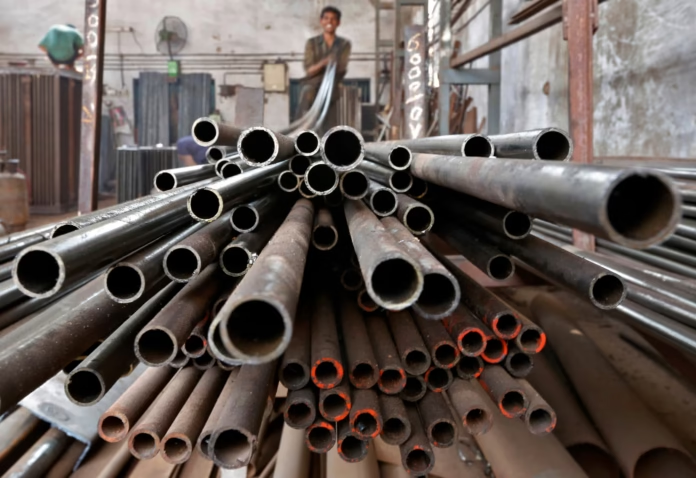
        India has seen a dramatic rise in finished steel imports from China, reaching an all-time high during the first eight months of the fiscal year leading up to March 2025. Provisional government data shows that India, the world’s second-largest crude steel producer, has now become a net importer of steel, with imports surging to levels not seen in eight years.

        India imported a total of 6.5 million metric tons of finished steel, marking a 26.6% year-on-year increase. Among these imports, China was a dominant player, exporting 1.96 million metric tons of finished steel to India, up 22.8% from the previous year. The steel products shipped included stainless steel, hot-rolled coils, plates, electrical sheets, and galvanized sheets, among others. The significant increase in steel imports from China has sparked concerns within India’s domestic steel industry. Smaller mills, particularly, are struggling to compete with the influx of cheaper Chinese steel, forcing many to reduce production and even consider job cuts. The growing competition from Chinese imports has prompted the Indian government to launch a probe to determine whether to impose a safeguard duty of up to 25% to protect domestic producers. In addition to China, Japan and South Korea have also seen notable increases in exports to India. Finished steel imports from Japan reached a six-year high, more than doubling to 1.4 million metric tons during the same period. Together, China, Japan, and South Korea accounted for 79% of India’s total steel imports from April to November 2024.

        India’s steel demand remains robust due to strong economic growth and ongoing infrastructure projects. However, this demand is being met in part by imports, which have steadily increased since India became a net steel importer in the financial year 2023-24. On the export side, India’s finished steel shipments have declined, reaching an eight-year low during the same period. The country’s largest steel export market, Italy, saw a 31.8% drop in imports, though exports to Britain and Belgium showed slight increases. As India navigates the challenges posed by growing steel imports, the government’s actions in investigating potential safeguard duties will be key to protecting its domestic steel industry while maintaining its strong economic trajectory.

        Bombay HC Dismisses Plea Against Adani Group’s Dharavi Redevelopment Tender

        Bombay HC Dismisses Plea Against Adani Group’s Dharavi Redevelopment Tender
        Bombay HC Dismisses Plea Against Adani Group’s Dharavi Redevelopment Tender

        Bombay HC Dismisses Plea Against Adani Group’s Dharavi Redevelopment Tender

        Bombay High Court dismissed a petition challenging the award of the Dharavi Redevelopment Project tender to the Adani Group. The petition had been filed by a private firm that contested the award, which followed the cancellation of a previous tender in 2019. The firm had called for a fresh tender process, but the court ruled in favor of the Adani Group, granting them a crucial victory in this high-profile urban renewal project.

        The Dharavi Redevelopment Project, one of India’s largest urban renewal efforts, has attracted both attention and controversy. The involvement of the Adani Group has sparked debates, with some questioning the impact on the local community. However, the Adani Group maintains that the project is about more than just urban development—it aims to restore dignity to over one million residents of Dharavi. The project is also seen as a key step in transforming one of the world’s largest slums into a sustainable, livable community. The redevelopment is valued at Rs 23,000 crore and aims to provide eligible Dharavi residents with new homes, offering flats of at least 350 square feet, which is 17% larger than the average in Mumbai’s other slum redevelopment projects. The Adani Group, in collaboration with the Maharashtra government, has ensured that no residents will be displaced. Tenants residing in Dharavi before January 1, 2000, will be rehabilitated in-situ, while others will be provided housing under the Pradhan Mantri Awas Yojana outside Dharavi.

        Despite opposition alleging that the project would disproportionately benefit the Adani Group, sources close to the Dharavi Redevelopment Project (DRPPL) clarified that the land for the project was acquired at a premium of 170% above market rates. The project also follows strict Environmental, Social, and Governance (ESG) standards, with a focus on sustainability, including planting millions of trees. Additionally, the project has faced scrutiny over land allocation and survey processes. DRPPL has assured that the land will be managed by the Dharavi Redevelopment Project and not directly transferred to the Adani Group. The survey process will be conducted impartially with third-party experts, ensuring that it adheres to government standards. The Bombay High Court’s dismissal of the petition paves the way for the project’s continued progress, marking a step forward in transforming Dharavi and addressing the housing needs of its residents.

        Tata Steel UK Partners with JCB to Produce Green Steel for Decarbonisation

        0
        Tata Steel UK Partners with JCB to Produce Green Steel for Decarbonisation
        Tata Steel UK Partners with JCB to Produce Green Steel for Decarbonisation

        Tata Steel UK Partners with JCB to Produce Green Steel for Decarbonisation

        Tata Steel UK has partnered with JCB to supply low-CO2, or “green” steel, marking a significant milestone in both companies’ decarbonisation strategies. This agreement, the first of its kind since Tata Steel’s announcement of a major investment in low-carbon steel production, will see JCB incorporate this sustainable steel into its construction equipment range.

        The green steel will be sourced from Tata Steel’s Port Talbot plant once its transformation is complete. Supported by a £1.25 billion joint investment with the UK Government, this project will see the construction of a new electric arc furnace (EAF), one of the largest in the world. This technology aims to dramatically reduce carbon emissions by replacing traditional blast furnace methods with a cleaner, more sustainable process. The new EAF at Port Talbot will utilize scrap metal sourced from the UK to produce new steel, eliminating the need for iron ore and coal. Tata Steel estimates that this shift will reduce CO₂ emissions by up to 90% at the site and cut the UK’s overall carbon emissions by approximately 1.5%. This major move is part of Tata Steel’s broader vision to make Port Talbot a European hub for green steel manufacturing. Anil Jhanji, Chief Commercial Officer at Tata Steel UK, emphasized that the transition to green steel is not just about cutting emissions at their plant, but about supporting customers like JCB in their own decarbonisation efforts. JCB, one of the world’s leading manufacturers of construction equipment, has long been committed to sustainability, having developed the first electric mini-digger in 2018 and the first hydrogen-powered machine in 2021. The company continues to lead in clean energy innovation, currently testing hydrogen combustion engine-powered construction machines. Wayne Asprey, JCB’s Group Purchasing Director, expressed strong support for Tata Steel’s investment plans, describing the agreement as a crucial next step in the decarbonisation of JCB’s supply chain. He highlighted the importance of sourcing British-made green steel to meet JCB’s sustainability goals.

        This partnership reflects the growing trend of UK manufacturers working together to create a circular economy, where resources are reused and emissions are minimized. Tata Steel’s £1.25 billion investment includes a significant UK Government grant of up to £500 million, marking one of the most significant capital investments in UK steel production in decades. The transformation at Port Talbot is set to begin in summer 2025 with Tata Steel collaborating with Tenova for the installation of the new electric arc furnace. Once complete, the project will not only make a substantial environmental impact but will also bolster the UK’s steel self-sufficiency, increasing the use of locally sourced raw materials in steel production from 10% to 75%. This shift will strengthen the UK’s resilience in the face of global steel production disruptions. With companies like Tata Steel and JCB leading the charge, the UK is poised to become a global leader in green steel manufacturing, contributing to a more sustainable and resilient industrial future.

        Two99’s Data-Driven Approach to Real Estate Growth

          0
          Two99’s Data-Driven Approach to Real Estate Growth
          Two99’s Data-Driven Approach to Real Estate Growth

          In the face of unprecedented challenges in the real estate sector, Two99 has emerged as a transformative force in India and Dubai’s property markets. The company is leveraging cutting-edge, AI-driven marketing strategies to tackle issues such as buyer distrust, underutilized channel partners, and the evolving digital landscape. These strategies are not only driving measurable growth for developers but also creating a more buyer-centric, transparent, and efficient real estate market.

          One of the major hurdles developers face is waning buyer trust. A 2023 ANAROCK report revealed that almost 30% of Indian homebuyers delay their purchases due to a lack of confidence in developers’ promises and project timelines. A similar issue exists in Dubai, where over 20% of potential buyers show hesitancy towards projects lacking transparency. Two99’s approach addresses these concerns directly, utilising deep buyer insights and AI-enabled algorithms to craft highly personalised marketing campaigns, thereby building trust and engagement. By tailoring digital content to specific buyer personas, Two99 ensures prospective buyers feel valued, significantly improving lead conversions.

          Another challenge faced by the sector is the disconnect between developers and channel partners. A survey by NAREDCO highlighted that 40% of real estate agents feel underutilised and ill-equipped to effectively market properties. In response, Two99 has created training modules, digital tools, and incentive programmes that empower channel partners to perform at their best. By providing continuous support, Two99 ensures channel partners can contribute to sales more effectively, thus improving overall market efficiency.

          Sustainability also plays a key role in Two99’s strategy. As urban development accelerates, the company incorporates eco-friendly marketing practices and promotes green properties, enhancing the sector’s alignment with global sustainability trends. With the increasing demand for sustainable, energy-efficient housing, Two99’s focus on responsible, environmentally-conscious marketing solutions is helping developers meet the growing consumer appetite for green living.

          As the real estate market continues to evolve, Two99’s innovative, data-driven strategies are setting new benchmarks for success. By enhancing buyer engagement, empowering channel partners, and leveraging digital tools, Two99 is helping developers across India and Dubai navigate industry challenges, fostering trust, transparency, and growth.


          Worldwide Realty Unveils Rs 3.2 Billion Project in Manesar

            0
            Worldwide Realty Unveils Rs 3.2 Billion Project in Manesar
            Worldwide Realty Unveils Rs 3.2 Billion Project in Manesar

            Worldwide Realty, a prominent player in India’s real estate sector, has made a significant move by committing Rs 3.2 billion towards a major 22-acre housing project in Manesar. This investment marks the company’s continued focus on the rapidly growing National Capital Region (NCR), which has emerged as a hotspot for residential development, particularly in towns like Manesar, located in the outskirts of Gurgaon. The new housing development is expected to transform the local real estate landscape, creating much-needed residential space for the rising urban population.

            The project, which spans across 22 acres of prime land, aims to offer a mix of modern residential units tailored to the needs of young professionals and growing families. The development is strategically located, capitalising on Manesar’s proximity to Gurgaon and the upcoming infrastructural improvements in the region. With enhanced connectivity through expressways and the expected growth of commercial hubs, the demand for residential properties in this area is set to rise. The developer is confident that the project will meet the growing demand for affordable yet modern housing in the NCR.

            The shift towards suburban developments like Manesar is not only driven by the increasing demand for housing but also by the growing trend of sustainability in real estate. Worldwide Realty plans to incorporate eco-friendly building materials, renewable energy sources, and water conservation measures into the project, aligning with global green building standards. The project will feature energy-efficient systems, waste management solutions, and green spaces, providing residents with a sustainable living environment. This approach reflects a broader trend in the real estate market towards incorporating sustainability into residential developments.

            From a civic and urban perspective, this investment in Manesar underscores the growing importance of urban decentralisation. While cities like Delhi and Gurgaon face challenges related to congestion, high living costs, and inadequate infrastructure, developments like this one offer a more balanced approach to urban growth. By providing affordable housing in emerging areas, Worldwide Realty is playing a crucial role in addressing the housing crisis, creating jobs, and contributing to the long-term development of the NCR. As the project progresses, it will be interesting to see how it influences the overall real estate market in this region and the demand for sustainable urban developments.