Home Blog Page 465

Steel Imports Under Scrutiny as Govt Enforces Quality Controls

0
Steel Imports Under Scrutiny as Govt Enforces Quality Controls

In a significant move to protect the integrity of the domestic steel industry, the Indian government has ramped up its efforts to tackle the issue of substandard steel imports. The Bureau of Indian Standards (BIS), in collaboration with the Ministry of Steel, has introduced a Quality Control Order (QCO) aimed at ensuring that only steel products conforming to national standards are available in the Indian market.

The QCO, which applies to both domestic manufacturers and imported steel, is designed to safeguard consumers by ensuring high-quality steel across various sectors. According to the Ministry of Steel, any steel products that do not meet the relevant BIS standards will be prohibited under the new order. Union Minister for Steel and Heavy Industries, H.D. Kumaraswamy, clarified in a statement to the Rajya Sabha that the QCO is not intended to hinder steel imports but to guarantee that all imported steel meets the same stringent quality requirements as domestic steel. He further explained that steel grades not covered under BIS standards may still be imported, provided a No Objection Certificate (NOC) is obtained from the Ministry of Steel.

The QCO initiative underscores the government’s commitment to maintaining high quality standards in the steel sector. The BIS formulates these quality benchmarks in consultation with industry stakeholders, ensuring they are aligned with global standards and industry needs. To date, the Ministry of Steel has issued 151 QCOs, demonstrating a continuous, proactive approach to quality control. The introduction of these stringent measures comes as part of a broader effort to curb the dumping of substandard steel into India. By enforcing compliance with BIS standards, the government aims to protect consumers, particularly in sectors such as construction and infrastructure, where the quality and safety of steel products are paramount.

With India’s rapid industrialisation and growing infrastructure needs, the government’s focus on ensuring access to quality steel is expected to play a pivotal role in the country’s continued development. By strengthening quality assurance measures, the Ministry of Steel is working to safeguard the future of India’s steel market and ensure its growth remains sustainable and reliable.

Steel Cutting Ceremony for India’s Second Fleet Support Ship Held

0
Steel Cutting Ceremony for India’s Second Fleet Support Ship Held

On December 11, 2024, the steel cutting ceremony for the second of the five Fleet Support Ships (FSS) ordered by the Indian Navy took place at M/s L&T Shipyard, Kattupalli. The ceremony was attended by Rear Admiral Vishal Bishnoi, Assistant Controller of Warship Production & Acquisition, alongside senior officials from the Indian Navy, Hindustan Shipyard Limited (HSL), and L&T.

The Indian Navy signed a contract with HSL in August 2023 to acquire five Fleet Support Ships, with deliveries set to begin in mid-2027. This strategic collaboration between public and private sectors highlights the strength of India’s shipbuilding capabilities. HSL has contracted part of the construction work for two of the five FSS to L&T Shipyard to optimize national shipbuilding resources and ensure adherence to stringent timelines. The Fleet Support Ships will significantly enhance the Indian Navy’s blue-water capabilities by providing at-sea replenishment of fleet ships. With a displacement of 40,000 tons, these vessels will be equipped to carry essential supplies such as fuel, water, ammunition, and other stores, enabling the fleet to operate for extended periods without needing to return to port. This enhances the Navy’s reach and mobility, critical for strategic operations across vast maritime domains.

In addition to their primary role, the ships will also be capable of Humanitarian Aid and Disaster Relief (HADR) operations. Their design will include provisions for evacuating personnel and delivering relief materials efficiently during natural disasters, adding a versatile humanitarian dimension to their function. Fully designed and constructed with indigenous technology, this project aligns with the Indian Government’s initiatives of Aatmanirbhar Bharat (self-reliant India), Make in India, and Make for the World. It will provide a significant boost to the Indian shipbuilding industry, fostering self-sufficiency in naval capabilities and contributing to the country’s maritime security.

India to Award 50% More Highway Projects This Fiscal Year, Aims for 12,900 km

    0
    India to Award 50% More Highway Projects This Fiscal Year, Aims for 12,900 km
    India to Award 50% More Highway Projects This Fiscal Year, Aims for 12,900 km

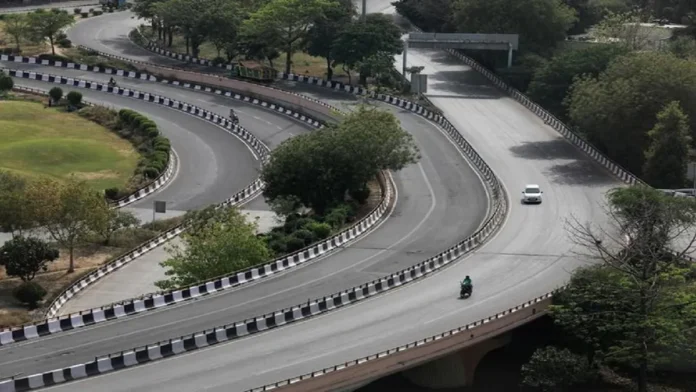
    The Indian government has set an ambitious target of awarding 12,900 kilometers (km) of highway projects in the current financial year, aiming for a 50% increase over last year’s figure. This goal is part of an effort to address a slowdown in construction activity, with officials working to make up for the gap created by delays earlier in the year.

    Despite the challenge, which saw awards of less than 3,000 km by mid-year, progress has picked up since then. In the first quarter, only 95 km of highways were awarded. However, in subsequent months, the pace of awarding accelerated, with over 600 km awarded monthly, and November seeing 773 km of highway projects being given out. The government expects the bulk of the awards to be made in March, as is customary, with a substantial portion of last year’s total being awarded in the final month. In the 2023-24 fiscal year, 8,581 km of highways were awarded, falling short of the 13,290 km target. This shortfall was partly due to a halt in fresh contracts under the Bharatmala highway development program, which impacted awards by the National Highways Authority of India (NHAI).

    ICRA’s Vinay Kumar G expressed that the ambitious target for this year may align more closely with last year’s levels, given the challenges faced. Last year, NHAI achieved only 3,339 km of awards, falling well below its 6,000 km target. The government had temporarily paused new projects under the Bharatmala program, affecting overall awards. However, the roads wing of the Ministry of Road Transport and Highways (MoRTH), responsible for expressways and critical highways, is expected to lead the awarding of national highway projects this year.

    This year’s focus will shift toward creating additional capacity on existing highways, rather than launching entirely new ones, especially in areas like the Golden Quadrilateral and Naxalite-affected regions. The Public Works Department of various states and Union Territories executes the majority of these works.

    The government has also set a provisional target of constructing 10,400 km of national highways, which is 15% lower than last year due to delays in state clearances caused by prolonged elections. So far, 4,761 km of highways have been built, and NHAI has been tasked with constructing 5,000 km of the total. By November, NHAI had completed 2,563 km of construction and awarded contracts for 776 km.

    As the government pushes forward with its plans, the focus will remain on improving infrastructure and streamlining the award process, ensuring the delivery of essential road projects that will drive India’s economic growth.

    SC Criticizes Maharashtra Government for Arbitrary Land Allotment to Housing Society

      0
      SC Criticizes Maharashtra Government for Arbitrary Land Allotment to Housing Society
      SC Criticizes Maharashtra Government for Arbitrary Land Allotment to Housing Society

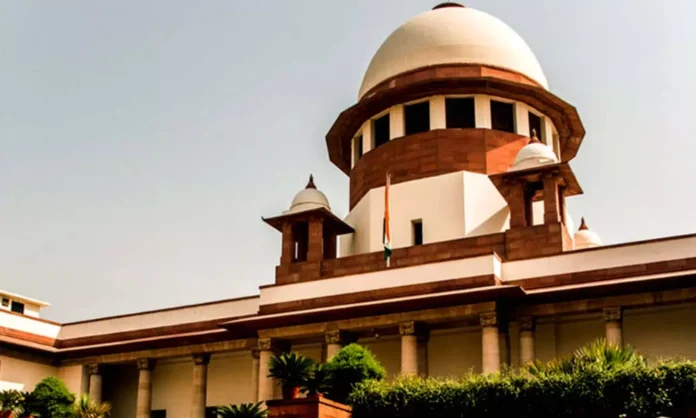
      The Supreme Court has set aside a Bombay High Court order, criticizing the state’s handling of a land allotment for the proposed Medinova Regal Co-operative Housing Society (MRCHS). The court expressed concerns over the lack of transparency in the distribution of a precious resource like land, deeming the allotment process arbitrary and unjust.

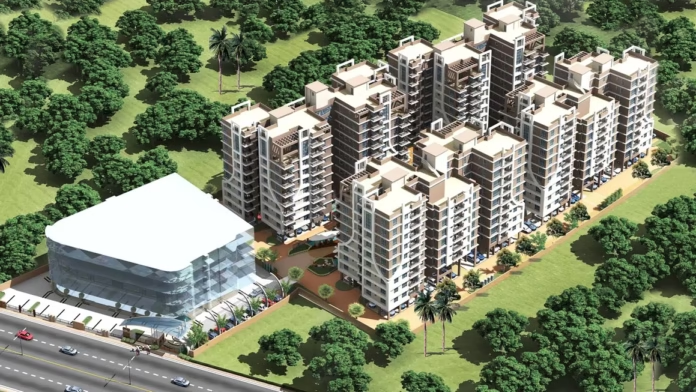
      A bench of Justices Sudhanshu Dhulia and Ahsanuddin Amanullah, while overturning the High Court’s decision, said the land allotment to MRCHS demonstrated “nepotism and favouritism,” noting that the society was not even eligible for such an allotment in the first place. “Land is a precious material resource of the community, and the least that is required from the state is transparency in its distribution,” the Supreme Court stated. The bench further remarked that the allotment was in clear violation of procedural norms and eligibility criteria. It pointed out that not a single member of MRCHS was a doctor at Tata Memorial Hospital, contrary to the original claim made when applying for the land. The case dates back to 2000 when MRCHS applied for land allotment at Bandra, mentioning that its members worked at the Tata Memorial Centre, a prestigious cancer hospital, and faced long commute times. The application also claimed that none of the members owned a house, and they had been living in distant locations for years. Despite these claims, the Supreme Court found that the society had changed its composition and failed to meet the criteria originally outlined.

      The Court stressed that if the land was allotted under the discretionary powers of the government, the authorities must provide written reasons justifying the decision. However, the bench found that the allotment process lacked the required transparency and adherence to rules, calling it a “complete violation” of prescribed procedures. With this ruling, the Supreme Court has emphasized the need for stricter scrutiny and transparency in land allotment processes, especially when dealing with valuable public resources.

      Guwahati’s Real Estate Landscape Set for Transformation by 2025

        0
        Guwahati’s Real Estate Landscape Set for Transformation by 2025
        Guwahati’s Real Estate Landscape Set for Transformation by 2025

        Guwahati, often referred to as the gateway to Northeast India, is witnessing a dynamic shift in its real estate market. The city’s strategic importance, combined with infrastructure expansion and urbanisation, is driving demand for both residential and commercial properties. As developments unfold, the city’s property market is positioned for robust growth, offering opportunities for diverse buyer groups.

        Central Locations vs. Emerging Peripheries
        Prime areas such as Pan Bazaar and Fancy Bazaar command premium property prices due to their central location and access to essential services. These neighbourhoods remain the first choice for buyers seeking convenience and connectivity. Meanwhile, peripheral localities like Dharapur and Kahilipara are gaining traction, with prices expected to rise as infrastructure improves. This trend highlights a shift towards more inclusive urban growth, accommodating both luxury and affordable housing options.

        The Appeal of Diverse Housing Options
        Guwahati’s real estate caters to varying demographics. Young professionals gravitate towards compact studio apartments, while families prefer spacious 3 BHK and 4 BHK units in gated communities. Premium projects such as The Majesty by Uttarayan Group showcase luxury living with high-end amenities. Despite this, affordable housing for middle-income families continues to dominate the market, reflecting a balanced growth trajectory in Guwahati’s property landscape.

        Sustainability and Infrastructure Growth
        Guwahati’s inclusion in the Smart City Mission has catalysed sustainability initiatives, focusing on green urban planning and enhanced connectivity. Infrastructure projects, including the expansion of Guwahati International Airport and improved public transport systems, are fostering accessibility while promoting eco-friendly urban development. These efforts not only enhance property values but also ensure that environmental considerations remain at the forefront of growth.

        A Promising Investment Horizon
        Prospective buyers are encouraged to evaluate long-term investment factors, including location, resale potential, and compliance with regulations like RERA. With Guwahati’s real estate market set for exponential growth by 2025, this is an opportune moment for investors and homebuyers to explore this vibrant city’s offerings.

        Alibaug New Epicentre of Luxury Realty Near Mumbai

        0
        Alibaug New Epicentre of Luxury Realty Near Mumbai
        Alibaug New Epicentre of Luxury Realty Near Mumbai

        Once known as a serene coastal retreat, Alibaug has transformed into a hotspot for luxury real estate. Located just 90 minutes from Mumbai via ferry, the region is now attracting high-net-worth individuals (HNIs), celebrities, and investors seeking bespoke second homes or private retreats. The rise in demand for premium properties in Alibaug can be attributed to its idyllic beaches, lush greenery, and proximity to the financial capital.

        Alibaug’s real estate boom has been fuelled by significant infrastructure development. Projects such as the Mumbai Trans Harbour Link and upgraded ferry services have drastically reduced commute times, making it an attractive alternative for luxury living. Developers are capitalising on this trend, introducing upscale projects that feature villas, sea-facing bungalows, and exclusive gated communities. Recent data indicates property prices in Alibaug have surged by 25-30% over the past three years, cementing its reputation as a premier real estate destination.

        The sustainability factor plays a crucial role in Alibaug’s appeal. Many luxury developments incorporate eco-friendly designs, including solar energy systems, rainwater harvesting, and expansive green spaces. Such features cater to the growing demand for sustainable and responsible living, a key priority for modern buyers. Alibaug’s environment-conscious development ensures the region retains its natural charm while addressing the pressing needs of climate change.

        From an urban planning perspective, Alibaug is witnessing a balanced growth trajectory. Improved civic infrastructure, including enhanced roads, healthcare facilities, and educational institutions, complements its real estate offerings. The synergy between natural beauty and modern amenities has positioned Alibaug as a top-tier destination for discerning homebuyers. Its evolution from a quiet weekend getaway to a luxury property hub is a testament to its growing prominence in India’s real estate landscape.

        Ozone Urbana Developers Allegedly Defraud Homebuyers of Rs 3,300 Crore in Bengaluru

          0
          Ozone Urbana Developers Allegedly Defraud Homebuyers of Rs 3,300 Crore in Bengaluru
          Ozone Urbana Developers Allegedly Defraud Homebuyers of Rs 3,300 Crore in Bengaluru

          The Central Crime Branch (CCB) of Bengaluru police has filed a case against Ozone Urbana Infra Developers Private Limited, accusing the company of defrauding homebuyers of a staggering Rs 3,300 crore. The case involves several banks and financial institutions, which are alleged to have been complicit in this massive fraud.

          According to industry sources, the scale of this alleged fraud is unprecedented in Bengaluru’s real estate sector. Investigative agencies are now working to trace the misappropriated funds and uncover the full extent of the conspiracy. The complaint was filed by Errol John Noronha, president of the Ozone Urbana Buyers Welfare Association, who claims that the developers secured loans in buyers’ names, misused the funds, and failed to deliver promised housing projects.

          The FIR accuses Ozone Urbana developers of obtaining Rs 1,500 crore in mortgage loans and diverting an additional Rs 1,800 crore from homebuyer payments meant for their township project in Devanahalli, launched in 2012. However, the project remains only 49% complete, well behind its initial completion deadline of 2017. Homebuyers have expressed frustration, with many claiming that they were shown glossy brochures and assured that their EMIs would be taken care of until the project’s completion. Instead, buyers have been left with unfinished homes and mounting debts. The FIR also names major financial institutions such as HDFC, Indiabulls Housing Finance, Bank of Baroda, and Piramal Capital and Housing Finance, accusing them of complicity in the alleged fraud. The charges against the developers include criminal breach of trust, cheating, criminal conspiracy, and violations under the Karnataka Protection of Interest of Depositors in Financial Establishments Act.

          One of the affected buyers highlighted that the developers violated the Karnataka RERA regulations, which mandate that 70% of funds should be kept in an escrow account for the project. Despite this, the developers allegedly failed to hold the required funds and misused them for other purposes. The suspects in the case include Managing Director Vasudevan Satyamoorthy, his wife Priya Vasudevan, and key executives Satyamoorthy Sai Prasad and Durbhakula Vamsi Sai. Investigators are currently tracing the diverted funds and preparing to take further legal action. The case has sent shockwaves through Bengaluru’s real estate industry, with buyers calling for stricter oversight and immediate justice for the financial and emotional toll they have suffered due to this alleged scam. The investigation continues as authorities expand their probe to uncover all parties involved.

          SC Orders ED to Transfer Bhushan Power’s Rs 4,025 Cr Assets to JSW Steel

          0
          SC Orders ED to Transfer Bhushan Power’s Rs 4,025 Cr Assets to JSW Steel
          SC Orders ED to Transfer Bhushan Power’s Rs 4,025 Cr Assets to JSW Steel

          In a landmark ruling, the Supreme Court on Friday directed the Enforcement Directorate (ED) to hand over the properties of Bhushan Power & Steel Limited (BPSL), valued at Rs 4,025 crore, to JSW Steel. These assets had been provisionally attached by the ED in 2019 as part of an ongoing money laundering investigation linked to an alleged bank loan fraud orchestrated by the former management of BPSL.

          This ruling marks a significant development after nearly four years of legal proceedings and disputes surrounding the sale of BPSL to JSW Steel. The ED, which had initially moved to block JSW Steel’s acquisition of the debt-ridden company, has now agreed to permit the transfer of control over the attached properties to JSW, treating it as “restitution.” In February 2020, the National Company Law Appellate Tribunal (NCLAT) upheld the National Company Law Tribunal’s (NCLT) approval of JSW Steel’s resolution plan for BPSL, allowing the steel giant to take over the company under Section 32A of the Insolvency and Bankruptcy Code (IBC), which grants immunity to new owners from the misdeeds of previous promoters. This immunity was contested by the ED, which argued that the relationship between JSW Steel and BPSL, particularly through their joint venture, Rohne Coal Company, would invalidate the protection under Section 32A.

          Despite the ED’s opposition, which included claims of improper conduct by the former BPSL promoters, the Supreme Court confirmed that JSW Steel’s resolution plan, which offered a Rs 19,350 crore payment to financial creditors and Rs 350 crore to operational creditors, had been finalized and should proceed. This plan effectively represented a nearly 60% loss for the lenders, but still offered a substantial recovery. The ED had initially attached BPSL’s assets after alleging the diversion of Rs 4,025 crore in loans before the insolvency proceedings began. However, in a turn of events, the Supreme Court clarified that while it had not passed judgment on the interpretation of Section 32A or the ED’s powers to attach properties during the insolvency process, it allowed the assets to be transferred to JSW Steel as restitution under the provisions of the Prevention of Money Laundering Act (PMLA).

          Justice Bela Trivedi, presiding over the bench, noted that the matter involved the jurisdiction of the ED in attaching the properties of a company undergoing insolvency proceedings, particularly in light of the protections offered to new owners under Section 32A of the IBC. This development clears the path for JSW Steel to take full control of BPSL’s assets and move forward with its resolution plan, marking a pivotal moment in the ongoing efforts to resolve one of India’s high-profile corporate insolvencies.

          IIT Mumbai Inspects Dahisar Road Project for Quality Assurance

          IIT Mumbai Inspects Dahisar Road Project for Quality Assurance
          IIT Mumbai Inspects Dahisar Road Project for Quality Assurance

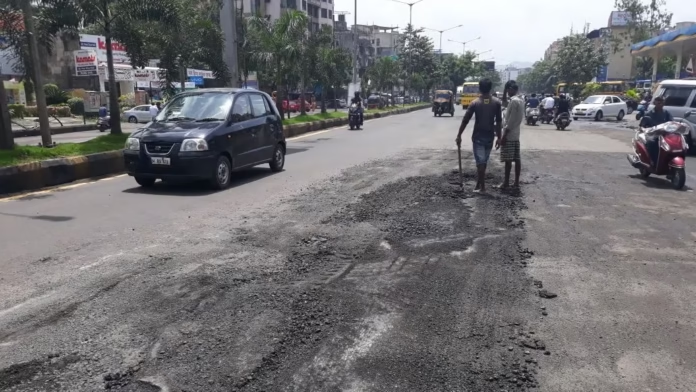
          A team from the Indian Institute of Technology (IIT) Mumbai conducted a crucial inspection of the cement concrete road project in Dahisar on December 12, 2024, to ensure adherence to the highest quality and construction standards. This midnight inspection is part of the Brihanmumbai Municipal Corporation’s (BMC) ongoing efforts to maintain excellence in its expansive cement concrete road development initiative across Mumbai.

          The IIT team, led by Professor Solomon and consisting of three additional experts, scrutinised various stages of the Pavement Quality Concrete (PQC) process. Their assessment included evaluating concrete samples, reviewing Ready-Mix Concrete (RMC) batch reports, conducting slump tests, flexural beam casting, and checking temperature control measures. These in-depth checks are part of the rigorous monitoring to ensure that the cement concrete roads meet the highest industry standards. IIT Mumbai has been appointed as a third-party quality control agency for the BMC’s ambitious road development project. Under the supervision of Municipal Commissioner and Administrator Bhushan Gagrani, the BMC plans to concrete 701 kilometers of roads in two phases. The first phase will cover 392 kilometers, while the second phase will address 309 kilometers. IIT Mumbai is responsible for overseeing the quality of six packages within this extensive project.

          The inspection reinforced the importance of stringent quality controls throughout the construction process. Among the key recommendations made by the IIT team was the need to complete groove cutting on concrete surfaces within 8 to 12 hours after concreting. The team also advised on improved curing methods and suggested using mobile applications to monitor environmental factors such as humidity and wind speed during construction to ensure optimal conditions. Additionally, the IIT team conducted practical workshops for workers, teaching essential techniques such as surface brooming to enhance the finishing of the roads. These hands-on sessions highlighted the importance of maintaining consistent quality checks, particularly during crucial phases like curing and post-concreting.

          The team also discussed site-specific challenges with BMC engineers and provided solutions to address these issues in the next phases of construction. An official from the BMC praised the IIT team’s involvement, stating, “Ensuring quality in large-scale projects like this requires continuous monitoring and adapting to environmental factors. The IIT Mumbai team’s support has been critical in maintaining these high standards.” The cement concrete road project represents a key component of Mumbai’s urban infrastructure development. By partnering with IIT Mumbai for rigorous quality assurance, the BMC aims to deliver durable, high-quality roads that will meet international construction standards. With these proactive measures in place, the project is poised to set a new benchmark in urban road development in India.

          From IT Zones to Dream Homes in Mohali

            0
            From IT Zones to Dream Homes in Mohali
            From IT Zones to Dream Homes in Mohali

            Mohali, once renowned primarily as an IT and industrial hub, has swiftly evolved into a real estate haven, drawing homebuyers and investors alike. Its strategic location adjacent to Chandigarh, coupled with robust infrastructure and thriving industries, has made it a goldmine for real estate opportunities. The city offers a unique blend of urban modernity and suburban tranquillity, making it a coveted destination for professionals, families, and investors.

            The real estate landscape in Mohali has seen a significant boom over the past decade. The IT parks and Special Economic Zones (SEZs) have not only brought employment but also bolstered demand for residential and commercial properties. According to industry reports, residential property prices in Mohali have appreciated by approximately 15-20% in the last five years, outperforming many tier-II cities in India. The rise of integrated townships and luxury housing projects has further enhanced its appeal.

            From a sustainability perspective, Mohali has been making strides with eco-friendly housing solutions, solar energy initiatives, and planned green spaces. Developers are incorporating rainwater harvesting, energy-efficient designs, and recycling facilities, catering to the increasing demand for sustainable living. These efforts align with global trends and underscore the city’s commitment to an environmentally conscious future, a key consideration for modern homebuyers.

            Civic infrastructure and urban planning have played a pivotal role in Mohali’s real estate success. The city boasts excellent connectivity via roads, railways, and an international airport, making it a hub for economic and residential growth. Additionally, improved amenities, such as healthcare, education, and retail, provide a wholesome urban lifestyle, strengthening its position as a top choice for property investments.