HomeLatestAMNS India Backs Corrosion Resistant Steel Growth

AMNS India Backs Corrosion Resistant Steel Growth

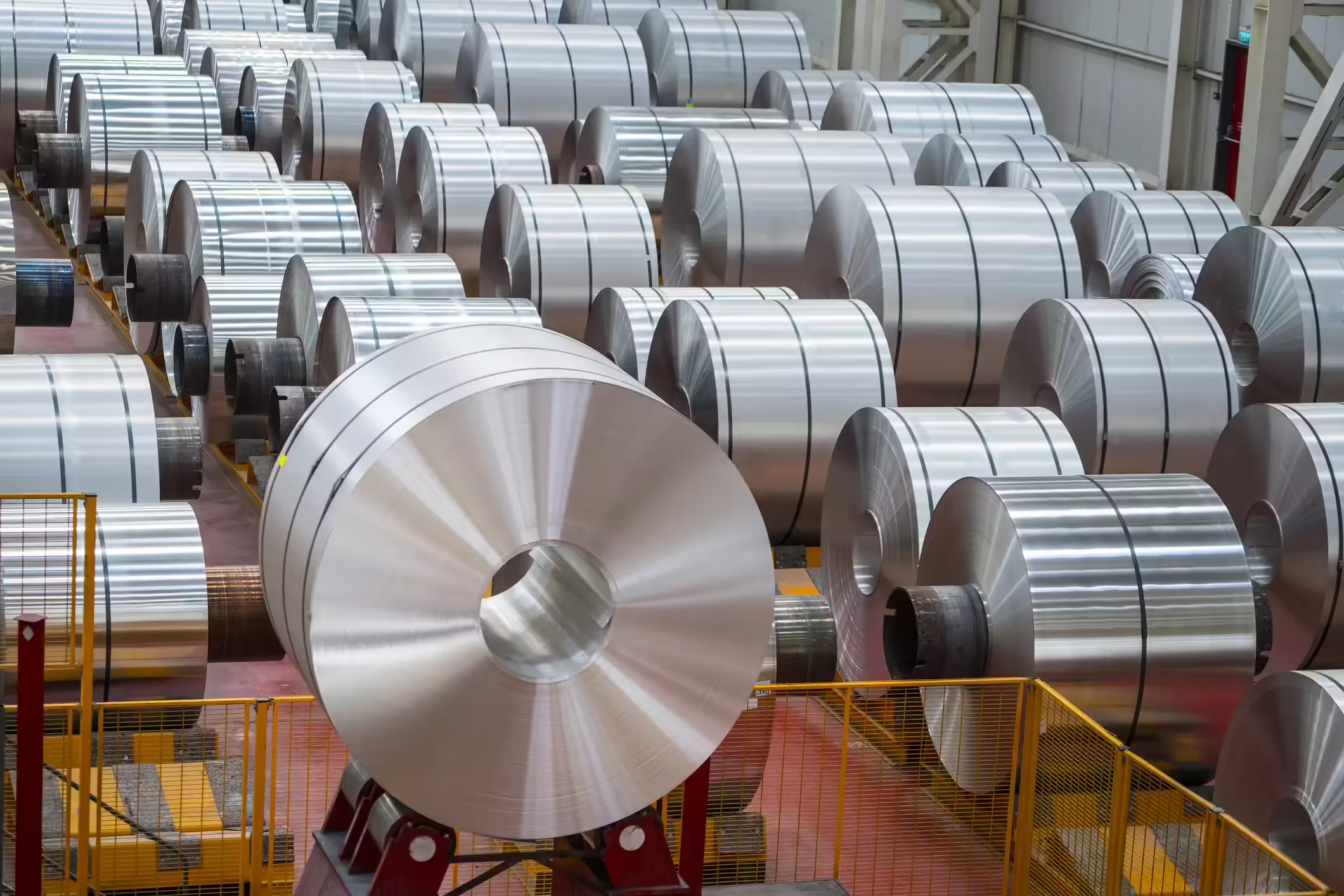
India’s rapid expansion of solar power capacity is drawing greater attention to the durability of the materials supporting renewable energy infrastructure, with industry stakeholders urging wider adoption of corrosion resistant steel to improve the longevity and reliability of utility scale solar projects. The discussion comes as the country accelerates clean energy deployment while seeking to lower maintenance costs and strengthen climate resilient infrastructure.

As solar parks expand into coastal, humid and high-temperature regions, exposure to harsh environmental conditions is becoming a growing engineering challenge. Experts say mounting structures that support photovoltaic panels are particularly vulnerable to corrosion over long operating lifecycles, potentially increasing maintenance requirements and affecting project performance if unsuitable materials are used.Industry specialists argue that corrosion resistant steel can help extend the service life of solar installations by reducing structural deterioration caused by moisture, salinity and industrial pollutants. While the initial investment may be higher than conventional alternatives, engineers suggest that lower maintenance costs and fewer component replacements can improve lifecycle economics for renewable energy assets.The issue is gaining significance as India pursues ambitious renewable energy targets alongside large-scale investments in transmission networks, energy storage and green industrial infrastructure.

Urban planners note that resilient construction materials are becoming increasingly important as cities and industrial regions integrate distributed solar systems into public buildings, transport hubs and commercial developments.Infrastructure analysts also point out that material durability has direct implications for project financing.Investors increasingly evaluate lifecycle performance rather than only upfront construction costs, particularly for renewable energy assets expected to operate for more than two decades.Structures requiring fewer repairs may reduce operational risks, improve asset availability and support more predictable long-term returns.Beyond financial considerations, the selection of construction materials also carries environmental consequences.Frequent replacement of corroded components increases demand for raw materials, transportation and industrial processing, contributing to additional resource consumption and emissions.Sustainable infrastructure experts therefore argue that longer-lasting structural systems can support circular economy objectives while reducing waste across the renewable energy value chain.The growing conversation around resilient materials reflects a broader shift in India’s infrastructure strategy, where quality and longevity are increasingly viewed as critical alongside rapid capacity addition.

As renewable energy becomes central to urban power systems and industrial decarbonisation, engineering standards are evolving to account for climate variability, extreme weather events and changing environmental conditions.Policy observers believe future technical specifications for public and private renewable energy projects could place greater emphasis on durability, corrosion protection and lifecycle assessment. Such measures would help ensure that expanding solar infrastructure remains reliable under diverse climatic conditions while limiting long-term maintenance burdens.Looking ahead, the debate over corrosion resistant steel highlights a wider challenge for India’s energy transition: building renewable infrastructure that not only expands clean electricity generation but also delivers resilience, resource efficiency and long-term value for communities, investors and rapidly growing cities adapting to a changing climate.

Also Read : India Steel Sector Gains Investment Grade Recognition
AMNS India Backs Corrosion Resistant Steel Growth
RELATED ARTICLES

LEAVE A REPLY

Please enter your comment!
Please enter your name here

- Advertisment -spot_img

Most Popular

Recent Comments

India Steel Consumption Drives Urban Expansion

India Steel Consumption Drives Urban Expansion

India’s steel industry has entered a new phase of expansion, with both production and domestic demand reaching fresh highs as infrastructure construction, manufacturing and...
Tata Steel Strategy Supports Industrial Transition

Tata Steel Strategy Supports Industrial Transition

India’s largest steel producers are increasingly relying on domestic demand to offset uncertainty in overseas markets, with Tata Steel expansion plans in India emerging...
Jindal Stainless Profit Signals Stronger Steel Value

Jindal Stainless Profit Signals Stronger Steel Value

India’s stainless steel sector began the financial year with a mixed operational picture as Jindal Stainless reported higher quarterly profitability despite softer sales volumes,...
India Steel Production Drives Urban Infrastructure Growth

India Steel Production Drives Urban Infrastructure Growth

India’s expanding infrastructure pipeline and manufacturing activity have continued to reshape the country’s steel landscape, with official government data showing that India steel production...
Shree Cement Expects Cement Demand Growth Ahead

Shree Cement Expects Cement Demand Growth Ahead

India’s construction materials sector opened the financial year with stronger-than-expected operational momentum as Shree Cement reported improved quarterly earnings and projected cement demand growth...