HomeUrban NewsBangaloreBengaluru Metro Expansion Reshapes Real Estate Demand

Bengaluru Metro Expansion Reshapes Real Estate Demand

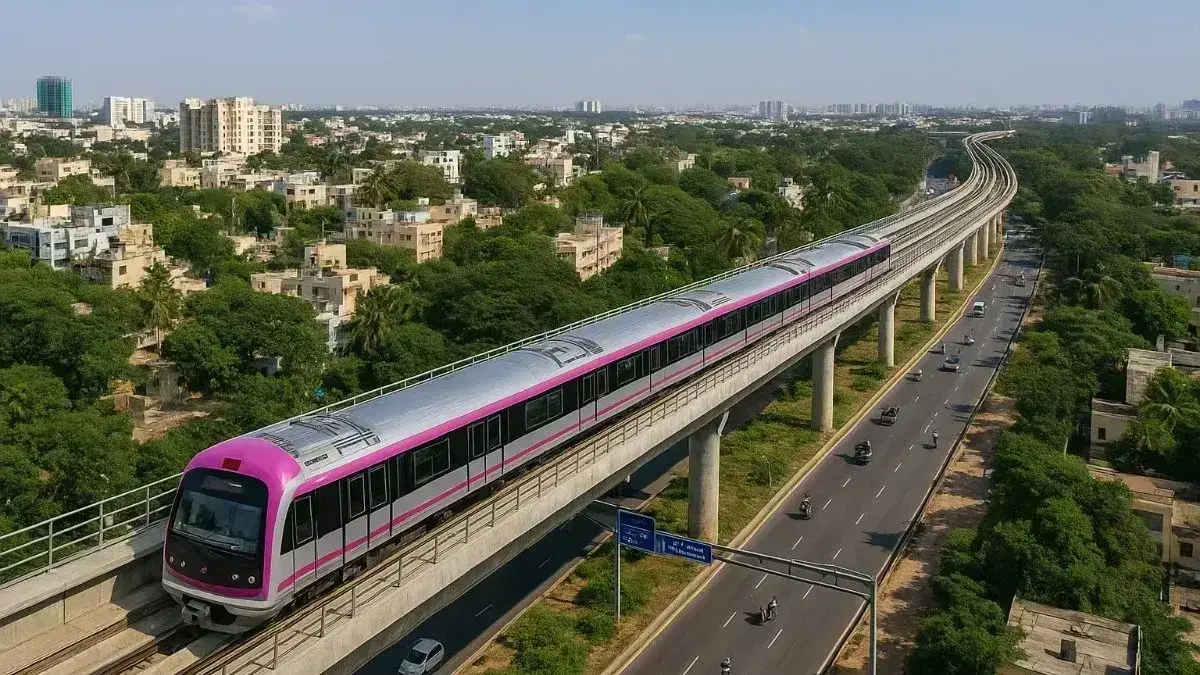
Bengaluru’s expanding metro network is beginning to redraw the city’s real estate map, with new corridors expected to unlock office demand, raise housing values, and reshape how people move and work. As recently operational and upcoming metro lines extend connectivity into southern and central districts, urban planners say the shift could influence both economic activity and liveability in India’s technology capital.

The Bengaluru metro expansion is emerging as a decisive factor in the city’s next phase of growth. Improved transit access along key routes in the south, particularly towards major employment hubs, is already easing commute times that have long constrained productivity and quality of life. Areas historically dependent on road-based mobility are now witnessing increased interest from both developers and occupiers. Industry estimates suggest that office demand in micro-markets linked to these corridors could rise by 5–7 million square feet over the next two years. Central business districts and secondary office zones are expected to benefit, alongside technology-driven clusters in the south. This expansion of Grade A office stock may also push rental values upward, reflecting stronger occupier interest and improved infrastructure reliability.

Urban experts note that such transit-led growth, if managed well, can support more balanced development across the city. By reducing pressure on traditional commercial cores, metro connectivity has the potential to decentralise jobs and bring workplaces closer to residential areas. This could also support hybrid work patterns, with flexible office spaces emerging in neighbourhoods once considered peripheral. The Bengaluru metro expansion is equally influencing the housing market. Residential localities along these corridors have seen rising demand, particularly in mid-income and premium segments. Improved access to employment centres is a key driver, with property values in some southern stretches already recording significant appreciation. Analysts indicate that housing prices in select areas could climb sharply in the near term, reflecting both infrastructure gains and speculative interest. However, this growth raises questions around affordability and inclusive planning. As property prices rise, ensuring access to housing for diverse income groups remains a challenge. Urban planners emphasise the need for transit-oriented development that integrates affordable housing, pedestrian-friendly design, and public amenities, rather than allowing unchecked real estate escalation.

Beyond residential and office segments, industrial and warehousing clusters are also set to benefit. Enhanced metro connectivity can improve workforce accessibility in manufacturing zones and support logistics networks linked to e-commerce and last-mile delivery. This could strengthen Bengaluru’s broader economic ecosystem, extending beyond its technology-driven identity. Looking ahead, further metro lines planned over the next few years are expected to deepen these trends, particularly in northern and outer ring road corridors. The opportunity lies in aligning infrastructure expansion with sustainable urban planning prioritising reduced congestion, lower emissions, and equitable growth. As Bengaluru continues to expand, the challenge will be ensuring that transit-led development remains people-centric rather than purely market-driven.

Also Read : Bengaluru Metro Expansion Fuels Property Price Growth
Bengaluru Metro Expansion Reshapes Real Estate Demand
RELATED ARTICLES

LEAVE A REPLY

Please enter your comment!
Please enter your name here

- Advertisment -spot_img

Most Popular

Recent Comments

Berger Paints Financial Update Eyes Construction Demand

Berger Paints Financial Update Eyes Construction Demand

Berger Paints is preparing to present its first-quarter financial performance for FY27 to institutional investors and market analysts on 5 August, as India’s paints...
India Chemical Manufacturing Gets Policy Boost

India Chemical Manufacturing Gets Policy Boost

The Union government has unveiled the Bhavya Rasayan Scheme, a new policy initiative aimed at strengthening India’s chemical manufacturing ecosystem through targeted support for...
Sumitomo Chemical India Sets Board Meeting Agenda

Sumitomo Chemical India Sets Board Meeting Agenda

Sumitomo Chemical India has scheduled a board meeting to consider and approve its financial results for the first quarter of FY27 on the same...
Jindal Steel Balances Expansion And Earnings Pressure

Jindal Steel Balances Expansion And Earnings Pressure

Jindal Steel reported a weaker financial performance for the first quarter of FY27, with consolidated net profit declining to ₹844 crore, even as the...
SAIL Results Signal Stronger Steel Sector Momentum

SAIL Results Signal Stronger Steel Sector Momentum

Steel Authority of India Ltd. (SAIL) witnessed renewed investor interest after reporting a strong improvement in first-quarter earnings for FY27, supported by better operating...