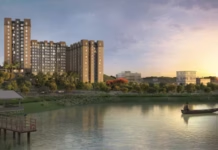
A new chapter in Bengaluru’s hospitality and real estate landscape is unfolding as a 370-key JW Marriott Hotel is set to anchor a ₹3,500-crore integrated township in Electronic City. Developed by Aratt One World, the mixed-use project aims to blend luxury, workspace, and sustainability in one of the city’s fastest-growing tech corridors. The development is planned across 43 acres and will be completed in three phases by 2030.
The township, officials said, is designed as a “walk-to-work” ecosystem, aligning with the Karnataka Industrial Areas Development Board’s policy of enabling live-work-play environments. It will comprise 4.5 million sq. ft of built-up space, of which nearly 80% will be dedicated to commercial development including Grade A offices for global capability centres, co-working hubs, and boutique spaces for startups.
The upcoming JW Marriott Hotel, spread across four acres, will serve as the hospitality centrepiece of the township. It will include multiple dining venues, wellness facilities, and nearly 3,500 sq. m of banqueting and conference areas, positioned to attract both corporate travellers and leisure guests. Industry observers said the project could help reposition Electronic City as a premium business-leisure destination, complementing its IT base with lifestyle and hospitality infrastructure.
On the residential side, the first phase will include around 136 luxury homes covering eight lakh sq. ft, with price points between ₹3 crore and ₹5 crore. Later phases are expected to introduce mid-segment and affordable housing, expanding access to professionals working in the tech corridor. “Creating inclusive housing within high-value zones like Electronic City remains a challenge, but efforts are being made to balance premium and accessible living,” a project official said.The township will also feature a branded co-living complex with 260 rooms, catering to professionals seeking flexible, high-quality accommodation. Operated under a franchise model, it aims to bridge the gap between serviced apartments and business hotels, a format that has seen rising demand in Bengaluru’s post-pandemic rental market.
Urban development experts note that such integrated townships represent a shift in how Indian cities are planning for sustainable growth. By reducing daily commuting distances, integrating residential and workspace infrastructure, and encouraging shared amenities, these projects can lower carbon footprints while improving urban liveability.With its focus on mixed-use design and partnerships with global hospitality brands, the Electronic City project highlights how Bengaluru continues to evolve into a more holistic, inclusive urban ecosystem that blends business efficiency with environmental and social consciousness.
Bengaluru To Develop ₹3,500-Crore Township Anchored By JW Marriott Hotel