HomeNewsDelhi And Chennai Lead India Housing Market Value Surge By 20 Percent...

Delhi And Chennai Lead India Housing Market Value Surge By 20 Percent In FY26

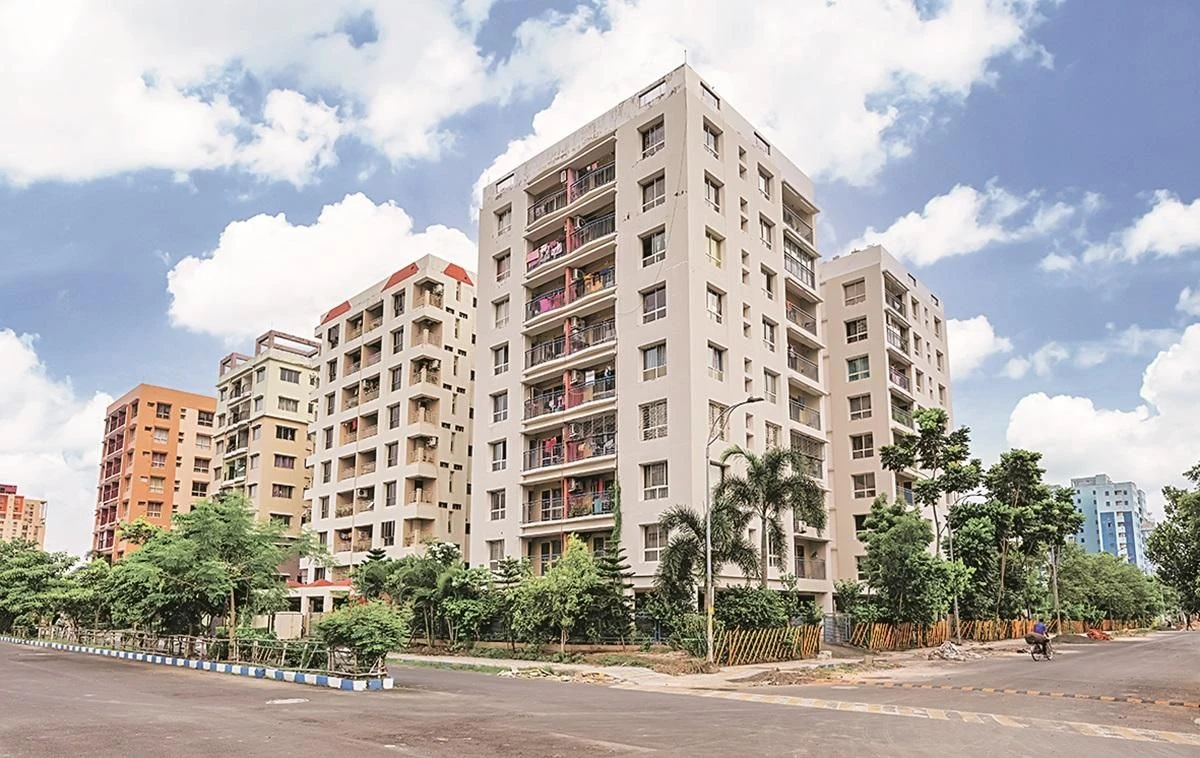
India’s residential real estate sector is entering a decisive phase of value-led expansion. Even as sales volumes stabilise, the overall market value is expected to surge by nearly 20 per cent in FY26, signalling a strong shift toward premium housing and affluent urban demand, according to new research by a leading property consultancy.

The report highlights that India’s top seven cities  Mumbai Metropolitan Region (MMR), Delhi-NCR, Bengaluru, Pune, Hyderabad, Chennai, and Kolkata  collectively recorded housing sales worth ₹5.59 lakh crore in FY25 across about 4.22 lakh units. This figure is projected to rise beyond ₹6.65 lakh crore in FY26, supported by sustained appetite for luxury and upper-mid segment homes.

Industry experts note that while the number of transactions has plateaued, the average ticket size and overall transaction value have grown sharply. “After a period of rapid absorption post-pandemic, the housing market has matured. Buyers today prioritise space, location, and lifestyle amenities over sheer affordability,” said a senior real estate advisor.

Data from the first half of FY26 reveals that Delhi-NCR and Chennai are outperforming other metros. NCR clocked sales of over ₹75,800 crore from 29,000 units  nearly three-quarters of its FY25 value  while Chennai achieved 71 per cent of last year’s total sales value within six months. Conversely, MMR, India’s largest housing market, showed slower momentum, achieving only 45 per cent of FY25’s value so far.

This regional divergence underscores a structural transition in India’s housing economy. Cities undergoing infrastructure upgrades and witnessing corporate growth  such as NCR, Bengaluru, and Chennai  are driving demand for high-value residential spaces, while mature markets like Mumbai are moderating after years of high pricing.Developers are realigning their portfolios to cater to this trend. Roughly 42 per cent of new launches in H1 FY26 were in the premium and luxury categories, indicating a decisive pivot toward aspirational living. Investors and developers alike view this as a sign of long-term stability rather than speculative demand.

Analysts describe this evolution as India’s “value consolidation” phase  a time when quality, design, and sustainability increasingly define real estate success. As India’s urban middle class grows wealthier and more discerning, the country’s housing sector appears poised to become both financially stronger and more resilient, even amid global economic headwinds.

Delhi And Chennai Lead India Housing Market Value Surge By 20 Percent In FY26
RELATED ARTICLES

LEAVE A REPLY

Please enter your comment!
Please enter your name here

- Advertisment -spot_img

Most Popular

Recent Comments

Mayur Bhosale

SpaceMultiplier From Limitation to Leverage : Mayur Bhosale

In this conversation, Mr. Mayur Bhosale, National Sales Head at Wohr Parking Systems Pvt Ltd., shares insights into how mechanised parking, integrated technologies, and...

From Constraint to Capability in India’s Vertical Cities : Rajesh Dogra

In this exclusive conversation, Rajesh Dogra shares how Eros Group, through its automated parking brand Skyzone, is addressing structural urban challenges with engineered, intelligent,...

INDIA’S REAL ESTATE CAN’T AFFORD ANOTHER RAMP — HERE’S WHY : Mohan Kumar Soundararaj

In an exclusive interaction with Mohan Kumar Soundararaj, Managing Director of Parklayer Private Limited, he outlines how intelligent parking infrastructure is redefining urban real...
Antony Parokaran

The Engineering Race to Solve India’s Urban Space Crisis : Antony Parokaran

In this conversation, Antony Parokaran, Director – Parking Division at Sieger Global, discusses automation, engineering reliability, redevelopment challenges, EV integration, and the future of...
Ajay Raina

Engineering the Future of Urban Parking : Ajay Raina on How Tedra is Reimagining...

In rapidly densifying Indian cities, where land is scarce and vehicle ownership is rising exponentially, parking is no longer a backend utility—it is critical...