
HomeLatestGurugram Maintains Lead in NCR Housing Demand

Gurugram Maintains Lead in NCR Housing Demand

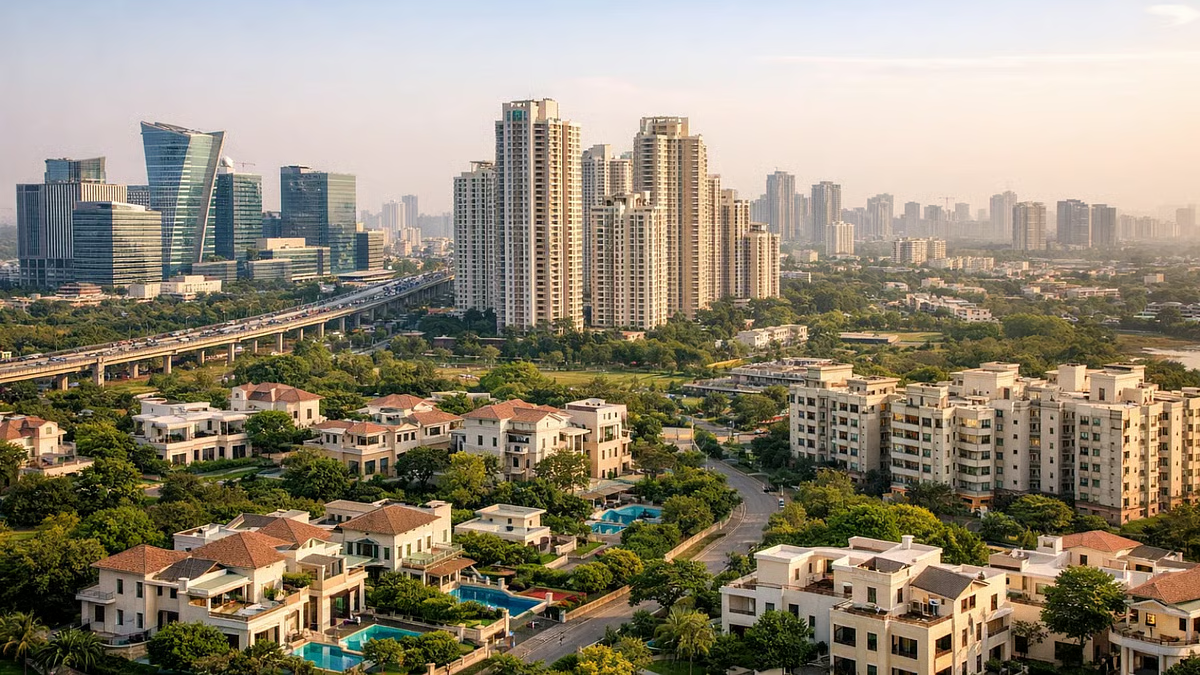
Gurugram retained its position as the National Capital Region’s largest residential market during the first half of 2026, while Noida and Greater Noida together strengthened their share of home sales, reflecting a broader redistribution of housing demand across the region. The trend highlights how expanding infrastructure, employment corridors and improved connectivity are reshaping residential preferences and influencing long-term urban growth across NCR.

Recent market assessments indicate that the NCR housing market remained resilient between January and June 2026 despite a gradual moderation in nationwide residential activity. Gurugram continued to account for the largest proportion of housing transactions, supported by sustained demand for premium and mid-segment homes, while Noida and Greater Noida collectively contributed around 35 per cent of total residential sales. Analysts attribute this performance to continued infrastructure expansion, stronger transport connectivity and the emergence of new employment hubs across western Uttar Pradesh. Industry experts believe Gurugram’s performance reflects its established position as a corporate and commercial centre with a mature ecosystem of office districts, retail infrastructure and social amenities. The city’s residential market continues to benefit from demand generated by professionals employed in technology, financial services and multinational businesses. At the same time, improved road connectivity and metro expansion have reinforced its appeal for both end-users and long-term investors.

The growing contribution of Noida and Greater Noida demonstrates the changing dynamics within the NCR housing market. Large-scale infrastructure projects, including expressways, metro connectivity and industrial development, have expanded the attractiveness of these cities by improving accessibility to employment centres while offering comparatively diverse housing options. Urban planners note that this shift is encouraging a more balanced pattern of metropolitan development rather than concentrating growth within a single urban core. Housing demand across the region is also being influenced by evolving buyer preferences. Homebuyers increasingly prioritise projects offering reliable civic infrastructure, proximity to workplaces, educational institutions and healthcare facilities, along with greater emphasis on environmental quality and integrated township development. Mixed-use communities and developments with green open spaces are gaining attention as households seek improved quality of life alongside property investment.

Experts caution, however, that sustained residential expansion must be matched by proportional investment in public infrastructure. Rapid housing growth without corresponding improvements in public transport, water supply, waste management and climate-resilient urban planning could place additional pressure on municipal services. Coordinated planning across NCR’s multiple urban authorities will therefore remain essential as new residential clusters continue to emerge. Infrastructure investment is expected to remain the principal driver of future housing demand across the region. Ongoing metro extensions, expressway networks, logistics corridors and commercial developments are creating new growth centres that could further diversify residential activity beyond traditional locations. Such expansion also presents opportunities to reduce congestion in established urban districts while promoting more distributed economic development. Looking ahead, analysts expect the NCR housing market to remain supported by employment growth, infrastructure upgrades and continued urbanisation. The next phase of expansion, however, will depend on how effectively policymakers and developers balance housing supply with sustainable mobility, affordable living options and resilient civic infrastructure to ensure that metropolitan growth delivers long-term benefits for residents across the region.

Also Read: India Flexible Office Leasing Accelerates Commercial Property Expansion
Gurugram Maintains Lead in NCR Housing Demand
RELATED ARTICLES

LEAVE A REPLY

Please enter your comment!
Please enter your name here

- Advertisment -spot_img

Most Popular

Recent Comments

India GCC Expansion Could Reshape Smaller Cities

India GCC Expansion Could Reshape Smaller Cities

India’s Global Capability Centre ecosystem is entering a broader geographic phase, with companies expected to establish nearly 1,380 new centres and generate about 1.18...
Delhi Real Estate Enters A New Density Era

Delhi Real Estate Enters A New Density Era

Delhi’s proposed Master Plan 2047 could alter the economics of land and housing by allowing greater development intensity around transit corridors, enabling redevelopment and...
India Housing Costs Rise As Valuations Change

India Housing Costs Rise As Valuations Change

India’s property market is being shaped by an administrative benchmark that rarely attracts attention until a home is bought or sold. Circle rates, the...
NCR Real Estate Seeks Consistent Project Relief

NCR Real Estate Seeks Consistent Project Relief

Delhi-NCR’s construction sector is seeking a common regulatory response to delays linked to the continuing West Asia conflict, with developers asking regulators in Delhi,...
India Chemicals Sector Targets A Bigger Global Role

India Chemicals Sector Targets A Bigger Global Role

India’s chemicals industry is being positioned for a much larger role in global manufacturing, but reaching that scale will depend on closing gaps in...
