

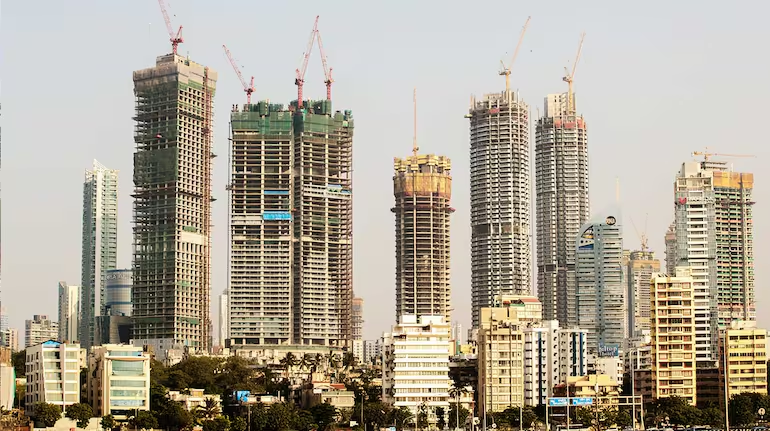
How 2025 Could Redefine Indian Real Estate
The Indian real estate market is poised for significant transformation in 2025, shaped by evolving buyer preferences, government policies, and technology-driven innovations. Analysts predict that the sector, which rebounded robustly post-pandemic, will see sustained growth fuelled by increasing urbanisation and infrastructure development. Moreover, affordable housing and green building initiatives are expected to play pivotal roles, aligning with the nation’s sustainability goals.
Current data suggests a 15% year-on-year increase in housing demand across metropolitan cities, with Tier II and III cities emerging as growth centres due to improved connectivity and affordable living costs. Industry stakeholders, however, express concerns over regulatory hurdles and rising construction costs, which could temper the momentum. A crucial question remains—can the real estate sector adapt to meet the twin challenges of affordability and sustainability while maintaining profitability?
Urban Development and Civic Issues
As India’s urban population continues to expand, the demand for quality housing and commercial spaces has surged. This growth, however, brings pressing civic challenges. Congested roads, inconsistent water supply, and inadequate waste management in major cities highlight the need for integrated urban planning. Builders and policymakers must collaborate to create projects that address these issues holistically, ensuring equitable access to basic amenities.
Recent announcements, such as the government’s “Housing for All” extension, aim to address housing shortages. Yet, critics argue that while these initiatives are laudable, their implementation often falls short due to bureaucratic delays and a lack of transparency. For the sector to thrive in 2025, urban development must go beyond creating housing—focusing instead on building liveable, resilient cities.
Sustainability Takes Centre Stage
Sustainability will undoubtedly shape the future of Indian real estate in 2025. With rising awareness of climate change and environmental degradation, developers are increasingly adopting green construction practices. Recent statistics show that the green building market in India is projected to grow by 20% annually, driven by demand for eco-friendly homes and energy-efficient commercial spaces.
Adopting solar energy systems, rainwater harvesting, and energy-efficient designs will not only attract environmentally conscious buyers but also reduce long-term costs for developers. Additionally, integrating sustainable infrastructure into urban planning, such as green transport corridors and eco-friendly public utilities, can significantly mitigate environmental impact. Developers who prioritise these measures are likely to gain a competitive edge in the evolving market.
What Lies Ahead: A Comparative Perspective
India’s real estate market in 2025 is likely to mirror global trends in some aspects while carving a distinct path in others. For instance, the rise of co-living and co-working spaces seen globally has found resonance in India, especially among millennials. Similarly, digitalisation and AI-driven smart homes are gaining traction, reflecting global technological advancements.
However, India faces unique challenges, such as ensuring affordable housing for its burgeoning middle class while addressing regional disparities in development. While cities like Mumbai and Bengaluru remain key players, regions like the North-East and central India show untapped potential. Policymakers and developers must strike a balance between fostering growth in established hubs and nurturing emerging markets.
The year 2025 will likely be a turning point for Indian real estate—a sector where adaptability, innovation, and sustainability will define long-term success. By addressing civic issues, embracing green initiatives, and aligning with evolving buyer needs, the industry can chart a robust, inclusive growth trajectory.