HomeBricks & MortarCementIndia Cement Sector Navigates Fuel Transition

India Cement Sector Navigates Fuel Transition

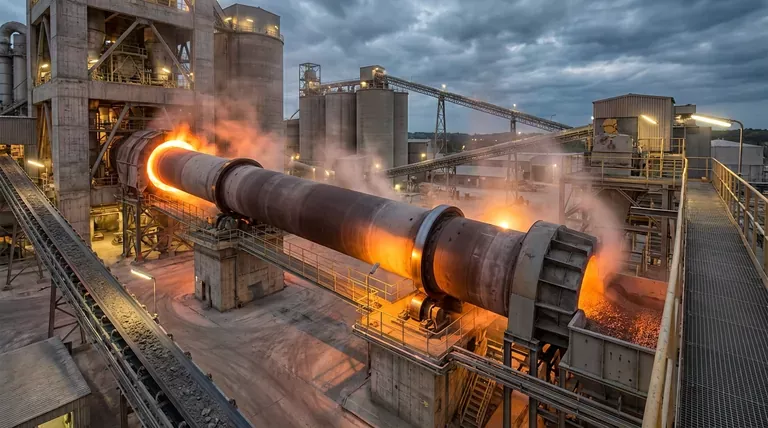
India’s cement manufacturers are increasingly reducing their dependence on petroleum coke, or petcoke, and expanding the use of imported and domestic thermal coal as changing global energy prices alter production economics.

Industry data and market assessments indicate that imports of fuel-grade petcoke have slowed sharply during the opening months of 2026 as cement producers reassess fuel procurement strategies. Rising petcoke prices, combined with tax and freight considerations, have narrowed its traditional cost advantage over high-calorific-value thermal coal. As a result, several manufacturers have adjusted kiln fuel mixes in favour of coal-based alternatives. The development comes at a crucial time for India’s construction sector. Cement remains a foundational material for housing, transport infrastructure, commercial real estate and urban expansion projects. Changes in fuel sourcing directly affect production costs and can influence pricing across the broader built environment.Market observers note that imported Northern Appalachian coal from the United States has become increasingly competitive relative to petcoke. Industry participants cite a combination of lower import duties and favourable energy-value economics as factors driving the transition. The resulting fuel arbitrage in cement operations is encouraging manufacturers to diversify away from a single dominant fuel source and pursue greater flexibility in procurement strategies.

For urban economies, the consequences extend beyond industrial fuel markets. Energy expenses account for a substantial share of cement manufacturing costs, meaning volatility in fuel prices can ripple through infrastructure budgets and housing projects. Recent assessments suggest producers continue to face pressure from higher fuel, freight and logistics expenses, creating uncertainty around margins even as construction demand remains relatively resilient. Environmental considerations are also gaining prominence. Petcoke is a carbon-intensive fuel and has long been associated with air-quality concerns in industrial regions. While coal is not a low-carbon substitute, the changing fuel mix highlights the broader challenge facing heavy industries: balancing affordability, energy security and emissions reduction while supporting rapid urbanisation. Experts argue that long-term competitiveness will increasingly depend on cleaner energy sources, alternative fuels and efficiency improvements rather than fuel switching alone.

The emerging fuel arbitrage in cement production reflects a wider transition occurring across industrial supply chains as companies respond to geopolitical disruptions and commodity market volatility. For city builders, infrastructure planners and housing developers, the key question is whether manufacturers can maintain stable supplies and manageable costs while progressing toward lower-emission production models.As India accelerates investment in housing and infrastructure, the sector’s next phase may be defined not only by how much cement is produced, but by how sustainably and efficiently it is made.

Also Read : Andhra Cements Merger Highlights Infrastructure Demand Shift
India Cement Sector Navigates Fuel Transition
RELATED ARTICLES

LEAVE A REPLY

Please enter your comment!
Please enter your name here

- Advertisment -spot_img

Most Popular

Recent Comments

Mumbai Bandra West Apartment Sale Signals Demand

Mumbai Bandra West Apartment Sale Signals Demand

Mumbai’s premium residential market has recorded another notable ownership transaction with a residential apartment in Bandra West changing hands for ₹3.50 crore, underlining the...
Bhandup West Homes Reflect Mumbai Growth Shift

Bhandup West Homes Reflect Mumbai Growth Shift

Mumbai’s north-eastern suburb of Bhandup West is witnessing renewed residential activity as a series of new apartment launches and housing options enter the market,...
Delhi Luxury Housing Embraces Fifteen Minute Neighbourhoods

Delhi Luxury Housing Embraces Fifteen Minute Neighbourhoods

Delhi's premium residential market is witnessing a gradual shift in buyer expectations, with integrated neighbourhood planning emerging as a defining feature of high-end housing....
Nagpur Marina Luxury Development Elevates Central India Housing

Nagpur Marina Luxury Development Elevates Central India Housing

A luxury waterfront residential development in Nagpur has received recognition as an Alpha Grade luxury asset, signalling the growing maturity of Central India's premium...
India Commercial Real Estate Shifts Towards Grade A Offices

India Commercial Real Estate Shifts Towards Grade A Offices

Demand for Grade A office spaces is reshaping the country's commercial real estate landscape as businesses increasingly prioritise high-quality, sustainable and technology-enabled workplaces. The...