HomeBricks & MortarCementIndia Cement Sector Powers Infrastructure Transformation

India Cement Sector Powers Infrastructure Transformation

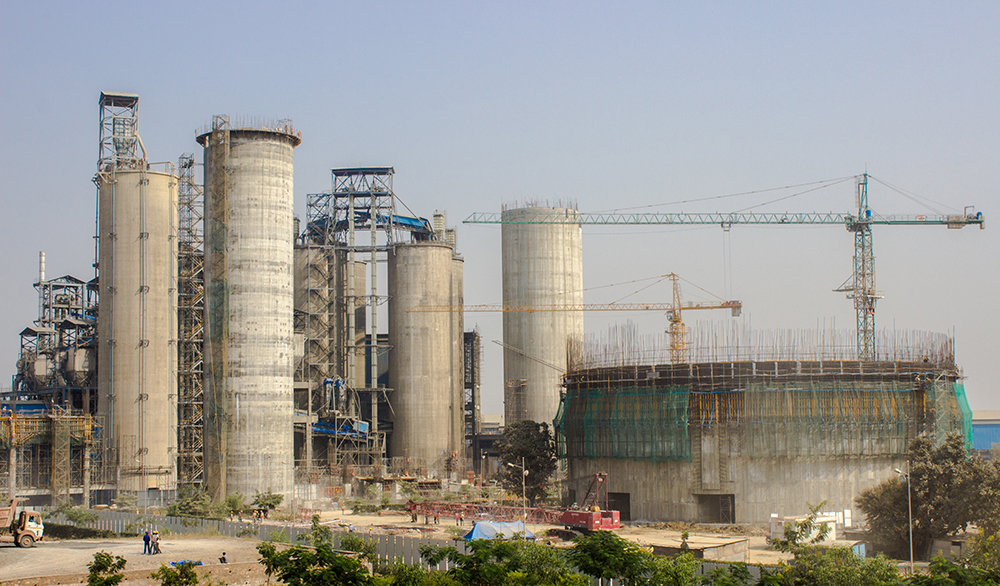
India’s accelerating investment in housing,transport networks and public infrastructure is drawing renewed attention to the role of cement manufacturers in supporting the country’s urban transformation.

Recent industry assessments indicate that leading cement producers are scaling operations, strengthening logistics networks and investing in production capacity to meet growing demand from infrastructure and real estate projects.The trend reflects broader shifts within India’s development landscape, where urbanisation and capital expenditure continue to drive demand for essential construction materials.The significance of the sector extends beyond industrial output.Cement remains one of the most widely used materials in the built environment, forming the backbone of residential buildings,transport systems,water infrastructure and civic amenities.As governments prioritise economic growth through infrastructure creation,the availability of reliable cement supplies becomes a key factor in project execution and cost management.Industry experts note that Sustainable Infrastructure Development increasingly depends on the ability of construction material suppliers to balance scale with environmental responsibility.Cement production is energy-intensive and contributes significantly to industrial emissions. As a result, manufacturers are facing growing pressure to improve energy efficiency, adopt alternative fuels and reduce the carbon footprint associated with production processes.

The sector’s expansion is closely tied to India’s urban future. Growing populations in cities are creating demand for affordable housing, upgraded transport systems and resilient public infrastructure. Urban planners argue that Sustainable Infrastructure Development requires not only the rapid construction of new assets but also a focus on durability, resource efficiency and climate resilience. Construction materials play a decisive role in determining how infrastructure performs over its lifecycle.Economists suggest that investments by cement manufacturers can generate wider economic benefits through employment, logistics activity and regional industrial growth.New production facilities and supply chain improvements often create opportunities in transport, warehousing and ancillary manufacturing sectors.These effects can contribute to economic diversification in regions experiencing infrastructure-led development.However, environmental specialists caution that future growth must be accompanied by stronger sustainability measures.

As India works towards climate goals, industries supplying the construction sector are expected to adopt cleaner technologies and more responsible resource management practices.The challenge for the cement industry will be supporting infrastructure demand while reducing environmental impacts associated with large scale production.The outlook for the sector remains linked to government spending, private real estate investment and industrial expansion.Analysts expect demand for cement to remain robust as infrastructure projects move from planning to execution across multiple states.Looking ahead, the conversation around infrastructure is shifting from quantity to quality.For India’s cities, the success of future development programmes will depend not only on how much is built, but on whether construction materials, industrial practices and investment decisions contribute to resilient, low-carbon and inclusive urban growth.

Also Read : Sudarshan Chemical Investor Meeting Signals Industry Focus
India Cement Sector Powers Infrastructure Transformation
RELATED ARTICLES

LEAVE A REPLY

Please enter your comment!
Please enter your name here

- Advertisment -spot_img

Most Popular

Recent Comments

India Aluminium Import Duty Review Gains Momentum

India Aluminium Import Duty Review Gains Momentum

A new policy assessment has recommended a phased reduction of aluminium import duty, arguing that lower tariffs could strengthen India’s downstream manufacturing sector, improve...
Shree Cement Board Meets On Quarterly Performance

Shree Cement Board Meets On Quarterly Performance

Shree Cement’s board is scheduled to meet on Q1 FY27 results this week, with investors closely watching the company’s financial performance amid evolving cement...
Steel Exchange India Governance Decisions Gain Focus

Steel Exchange India Governance Decisions Gain Focus

Steel Exchange India Ltd has placed a series of governance and leadership resolutions before shareholders ahead of its annual general meeting, including proposals relating...
India Fertiliser Supply Shows Import Resilience

India Fertiliser Supply Shows Import Resilience

India’s fertiliser supply has remained largely stable despite geopolitical tensions and shipping disruptions across West Asia, reflecting stronger procurement planning, diversified imports and...
Asian Paints Signals Potential Paint Price Cuts

Asian Paints Signals Potential Paint Price Cuts

Asian Paints has indicated that softer raw material costs could create room for paint price cuts during the second half of FY2026-27, reflecting changing...