HomeLatestIndia Coal Output Strain Tests Power Security

India Coal Output Strain Tests Power Security

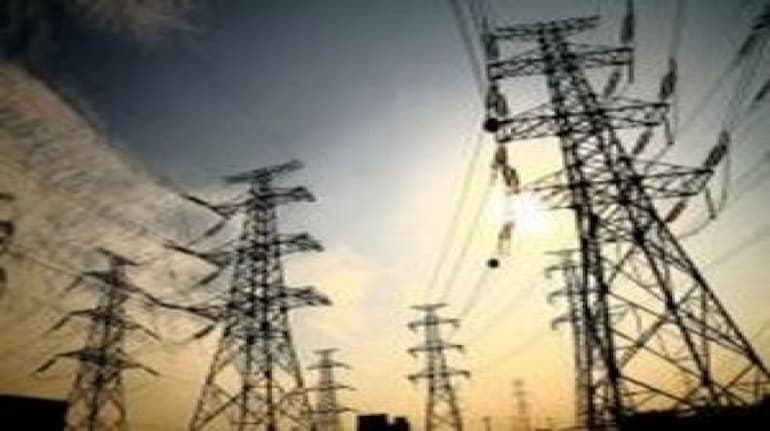
India’s coal sector is facing a renewed stress test as electricity demand rises faster than output growth in key periods, exposing the country’s continuing dependence on fossil fuel supply for power security. The mismatch matters far beyond mines and utilities: coal remains central to the electricity that runs homes, metros, factories, water systems and much of urban India’s economic engine. 

Recent reporting indicates that while authorities maintain adequate stocks and no immediate disruption in supply, pressure is building from seasonal demand spikes, especially during hotter months when cooling needs surge. Coal India, the country’s dominant producer, has said it is prepared to meet requirements, but the wider structural issue remains how quickly output, transport and cleaner alternatives can scale together. For cities, the India Coal Dilemma is not abstract. When power systems tighten, local administrations face higher costs for pumping water, running transit infrastructure and maintaining public services. Industrial users can also experience volatility that feeds into construction materials, manufacturing costs and employment conditions. Reliable electricity is now inseparable from urban resilience.The challenge is sharpened by climate trends. Rising temperatures increase air-conditioning demand, while erratic monsoons can affect mining operations, rail logistics and hydroelectric output. This creates a feedback loop in which hotter weather increases coal demand just as environmental conditions complicate supply. Experts say India’s energy planning must now account for weather volatility as a core economic variable rather than a seasonal exception.At the same time, India has accelerated renewable capacity additions, with solar and wind becoming more competitive in several markets. Yet intermittent generation still requires storage, stronger grids and backup systems before it can fully displace thermal dependence during peak hours.

Analysts note that until battery storage and transmission networks deepen, coal will continue to serve as the balancing fuel in many states. That places policymakers in a difficult position. Expanding domestic coal output may reduce import exposure and stabilise short-term power availability, but it can also lock in higher emissions and delay investment signals for cleaner systems. The India Coal Dilemma therefore sits at the centre of two competing national goals: rapid economic growth and long-term decarbonisation.For the construction and real estate sectors, energy reliability directly influences cement production, steelmaking, project timelines and financing assumptions. Any sustained supply strain can ripple through housing costs and infrastructure delivery. Cleaner, predictable electricity would improve both affordability and competitiveness.The more durable solution may lie in diversification rather than a binary choice between coal and renewables. Faster deployment of battery storage, pumped hydro, demand management and efficient buildings can reduce peak pressure without sacrificing growth. Upgrading older coal assets for flexibility while retiring the least efficient units could also smooth the transition.

India’s coal debate is no longer only about tonnes mined. It is about whether the world’s fastest-growing major economy can power expanding cities while reducing the environmental costs of that growth. The next few summers may offer the clearest answer yet.

Also Read: Haryana JK Cement Probe Raises Air Quality Questions

India Coal Output Strain Tests Power Security
RELATED ARTICLES

LEAVE A REPLY

Please enter your comment!
Please enter your name here

- Advertisment -spot_img

Most Popular

Recent Comments

Vedanta Aluminium Output Hits Record as Restructuring Nears

Vedanta Aluminium Output Hits Record as Restructuring Nears

Vedanta closed FY26 with record aluminium and alumina production, strengthening its position in a metals market closely tied to India’s infrastructure, power and transport...

India Steel Consumption Signals Wider Urban Growth

India Steel Consumption Signals Wider Urban Growth

India’s steel consumption has nearly doubled over the past decade, reaching about 152 million tonnes in 2024-25 from 77 million tonnes in 2014-15. The...

Pune GCC Demand Reshapes Commercial Office Market

Pune GCC Demand Reshapes Commercial Office Market

Pune’s office market is increasingly being shaped by Global Capability Centres (GCCs), with multinational firms using the city for technology, engineering, financial and specialised...

Hyderabad Brigade Barcelona RERA Shapes Kokapet Housing

Hyderabad Brigade Barcelona RERA Shapes Kokapet Housing

Hyderabad’s western growth corridor is seeing another large residential addition as Brigade Barcelona, a luxury housing project in Kokapet’s Neopolis, moves ahead with Telangana...

Chandigarh RERA Enters Focus as Prime Homes Near Crores

Chandigarh RERA Enters Focus as Prime Homes Near Crores

Chandigarh’s prime residential market is entering a new price bracket, with registered transactions showing that well-located plots in established sectors can command tens of...