
HomeLatestIndia Retail Growth Reshapes Major Urban Markets

India Retail Growth Reshapes Major Urban Markets

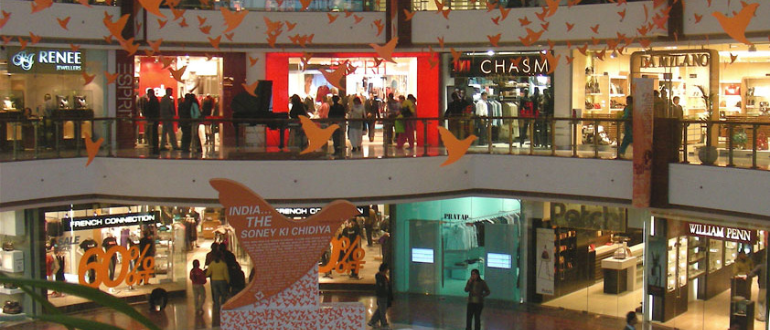
India’s organised retail footprint has reached 186.2 million sq ft across 12 major markets, signalling a structural shift in how shopping, work and leisure are being integrated into urban districts. The expansion is being driven not only by new malls, but also by office-linked retail and changing consumer demand, raising fresh questions about transport, public infrastructure and the environmental cost of larger developments.

Shopping malls account for the largest share at 114.3 million sq ft, while office-led retail contributes 51.7 million sq ft and high-street formats add another 20.2 million sq ft. Overall organised retail stock has grown roughly ninefold in two decades, reflecting the rapid formalisation of India’s consumption economy. Bengaluru currently has the largest organised retail footprint among the 12 markets, with 29.2 million sq ft. Gurugram follows at 27.4 million sq ft, Hyderabad at 24.8 million sq ft and Mumbai at 23.8 million sq ft. The geographic spread matters because retail growth is increasingly tied to employment centres and high-growth residential corridors. Office-led retail alone expanded by 15.4 million sq ft between 2021 and 2025. Gurugram accounted for 10 million sq ft of additions, followed by Mumbai with 8.4 million sq ft and Pune with 7.4 million sq ft.

For cities, however, a larger retail footprint also means greater pressure on roads, public transport, parking, water supply, waste management and energy systems. Urban planners note that destination malls can generate significant travel demand when they are located away from established public transport networks. Better integration with mass transit and walkable streets will therefore become increasingly important as new projects move forward. The market is also changing internally. Apparel and fashion increased its share of leasing activity from 25% during 2013–15 to 35% in 2023–25. Food and beverage rose from 11% to 15%, while department stores, everyday essentials and grocery increased from 3% to 11%. The trend indicates that retail spaces are becoming broader social and service destinations rather than being centred only on conventional shopping.

Future supply is likely to reinforce that shift. About 40.4 million sq ft of mall space is identified for delivery through 2030, with Hyderabad and Gurugram together accounting for 51% of the pipeline. The average planned mall size for 2026–30 is estimated at 0.59 million sq ft, more than twice the average size of malls built before 2000. As India organised retail expands, the next phase will depend on more than leasing demand. The urban test will be whether larger commercial districts can deliver economic activity while remaining accessible, resource-efficient and connected to resilient public infrastructure.

Also Read : Mumbai Luxury Housing Prices Outpace Global Average
India Retail Growth Reshapes Major Urban Markets
RELATED ARTICLES

LEAVE A REPLY

Please enter your comment!
Please enter your name here

- Advertisment -spot_img

Most Popular

Recent Comments

Highbar Technocrat Expands AI Tools For Real Estate

Highbar Technocrat Expands AI Tools For Real Estate

Highbar Technocrat is expanding its use of artificial intelligence across real estate, construction, infrastructure and mobility, placing automated analysis alongside enterprise resource planning systems....

Signature Global Expands Into Gurugram West Farmhouses

Signature Global Expands Into Gurugram West Farmhouses

A 194-acre residential development planned in Farrukhnagar is set to add a large new luxury housing project to western Gurugram, highlighting how infrastructure-led land...

Mumbai Model SRO Brings New Property Registration Route

Mumbai Model SRO Brings New Property Registration Route

Mumbai’s property registration system is entering a new phase as developer Kalpataru becomes an early real estate user of Maharashtra’s Model Sub-Registrar Office (SRO)...

Tishman Speyer India Leadership Shifts Toward Expansion

Tishman Speyer India Leadership Shifts Toward Expansion

Tishman Speyer has appointed a new Managing Director and Regional Director for India, bringing an experienced real estate executive into a role linked to...
Mumbai Luxury Housing Prices Outpace Global Average

Mumbai Luxury Housing Prices Outpace Global Average

Mumbai’s prime residential market continued to outperform the broader global luxury housing segment in Q2 2026, with high-end property values rising 6.2% annually. The...