
HomeLatestIndia steel capacity growth hinges on infrastructure demand

India steel capacity growth hinges on infrastructure demand

India’s steel sector could significantly expand its production capacity over the coming decade, driven by sustained infrastructure investment and urbanisation, according to industry assessments. The outlook reflects growing demand from construction, transport, and manufacturing sectors, positioning steel as a critical material in the country’s development trajectory.

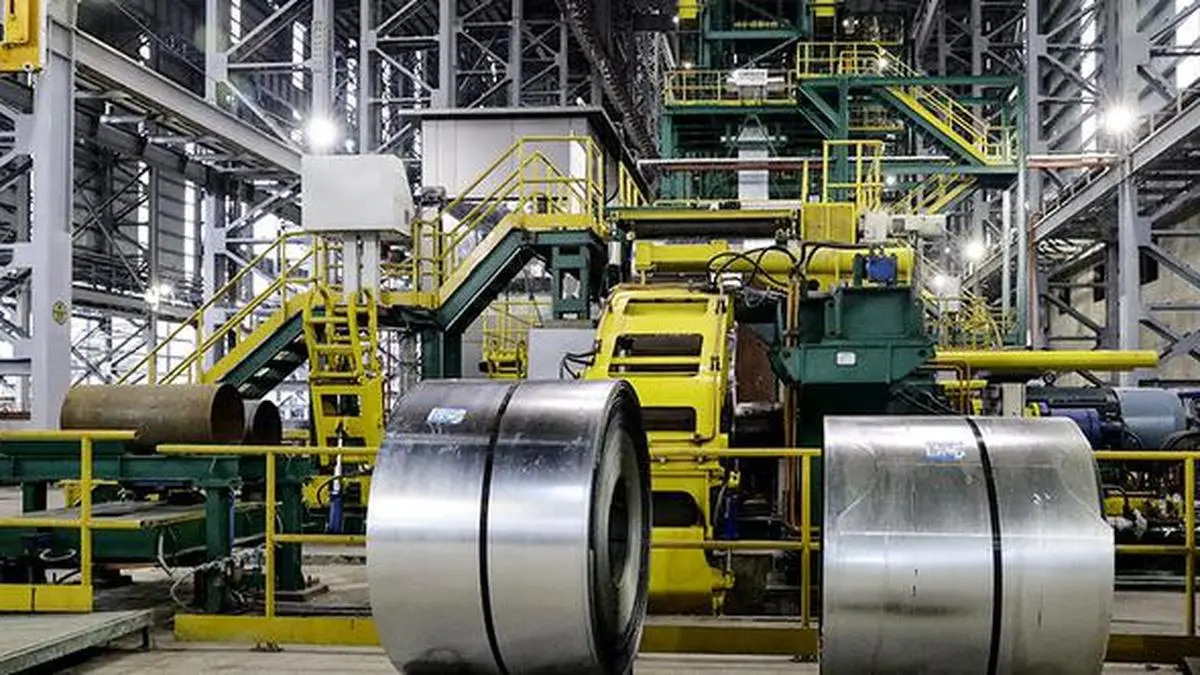
India is already the world’s second-largest steel producer, with installed capacity nearing 200 million tonnes and production exceeding 150 million tonnes annually. Industry experts suggest that with continued policy support and private investment, the country has the potential to substantially scale this capacity to meet both domestic and export demand.The expansion is closely tied to India’s urban growth patterns. Large-scale investments in housing, transport corridors, and industrial infrastructure are expected to sustain long-term demand for steel. As cities expand and densify, the need for durable construction materials—particularly in high-rise buildings, metro systems, and logistics networks—continues to rise.At the same time, the government has outlined ambitious targets to increase steel production capacity to 300 million tonnes by 2030–31, with further expansion under consideration beyond that horizon. This aligns with broader industrial strategies aimed at reducing import dependence and strengthening domestic manufacturing capabilities.However, scaling capacity presents structural challenges. Access to raw materials such as iron ore and coking coal, along with logistics bottlenecks, remains a constraint.

India continues to rely heavily on imported coking coal, exposing the sector to global price volatility. Additionally, infrastructure gaps in rail and port connectivity can affect supply chain efficiency, particularly in mineral-rich but underdeveloped regions.Environmental considerations are also becoming central to future expansion plans. The steel sector accounts for a significant share of industrial emissions, and current production processes in India are more carbon-intensive than global averages. Policymakers are therefore pushing for a transition towards cleaner technologies, including gas-based steelmaking and increased use of recycled scrap.Urban planners highlight that the trajectory of steel demand will increasingly depend on how cities balance growth with sustainability. While infrastructure expansion is essential for economic development, integrating low-carbon materials and circular construction practices will be critical to reducing environmental impact.The evolving policy landscape also reflects this dual objective. Incentive schemes targeting speciality steel and advanced manufacturing are expected to attract fresh investments and enhance technological capabilities. At the same time, efforts to decarbonise production are likely to shape how new capacity is built and operated.

Looking ahead, India’s steel sector stands at a pivotal juncture. The potential to significantly increase production capacity is closely linked to the country’s urban and industrial ambitions. Yet, the long-term success of this expansion will depend on aligning scale with sustainability—ensuring that growth in steel production supports resilient, resource-efficient, and inclusive urban development.

Also Read: Reliance Axis coal blocks mark energy shift

India steel capacity growth hinges on infrastructure demand
RELATED ARTICLES

LEAVE A REPLY

Please enter your comment!
Please enter your name here

- Advertisment -spot_img

Most Popular

Recent Comments

India Housing Sector Balances Trust And Profit

India Housing Sector Balances Trust And Profit

A decade after the Real Estate Regulation and Development Act (RERA) came into force, India’s property market is showing signs of greater transparency and...
Mumbai Corridor Opens New Housing Frontiers

Mumbai Corridor Opens New Housing Frontiers

The opening of the new Mumbai Pune Expressway bypass section is expected to redraw development patterns across western Maharashtra, with planners and property analysts...
Chennai Housing Market Sees Sharp Premium Growth

Chennai Housing Market Sees Sharp Premium Growth

India’s residential property market continued its upward trajectory in the first four months of 2026, with housing sales rising alongside a sharp increase in...
IGBC Hyderabad Expands Sustainable Building Leadership

IGBC Hyderabad Expands Sustainable Building Leadership

Hyderabad’s push toward climate-responsive urban growth received another institutional signal this week after the Indian Green Building Council appointed Venu Vinod as co-chairman of...
Casagrand Rajendra Nagar Project Expands Urban Edge

Casagrand Rajendra Nagar Project Expands Urban Edge

Hyderabad’s western urban corridor is witnessing another wave of large-scale housing expansion as a major private developer announced a 35-acre residential township in Rajendra...