
HomeLatestIndia steel decarbonisation gap raises climate concerns

India steel decarbonisation gap raises climate concerns

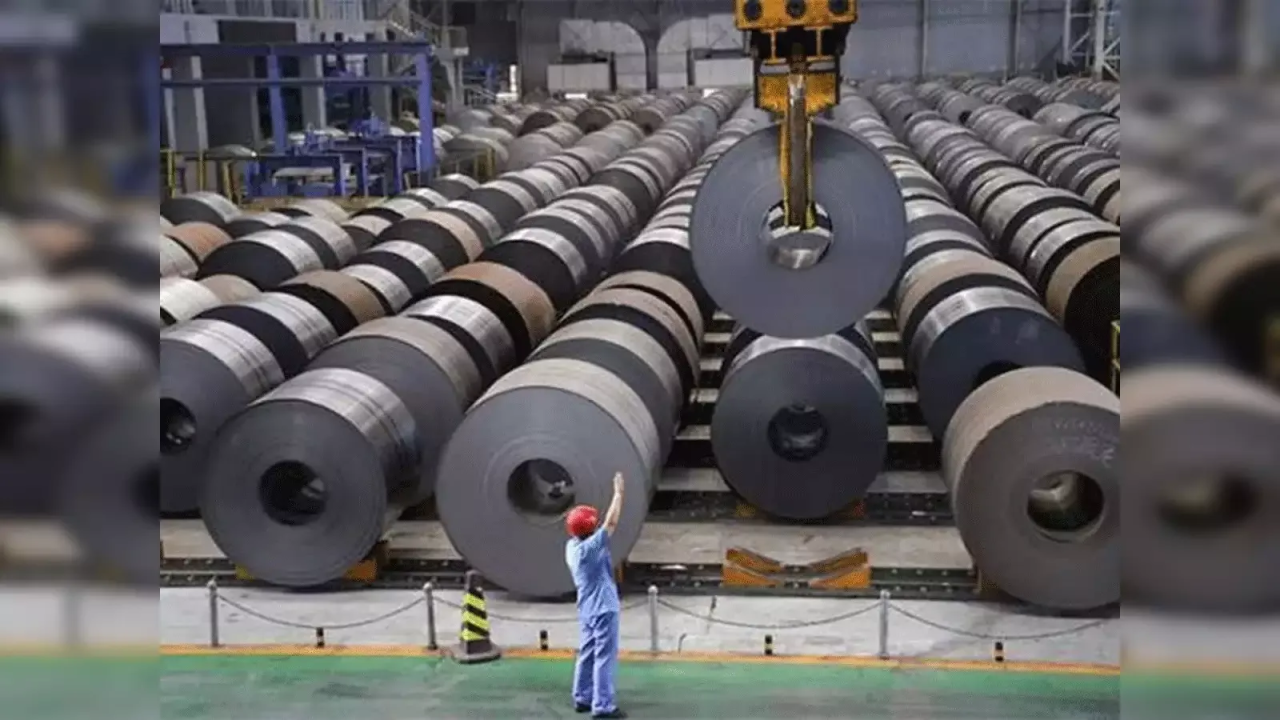
India’s steel sector risks falling behind on decarbonisation despite ambitious net-zero commitments, according to a recent assessment by the Institute for Energy Economics and Financial Analysis (IEEFA). The findings highlight a growing disconnect between climate targets announced by major producers and the actual investments and operational shifts required to achieve them—raising concerns for a sector central to urban infrastructure and industrial growth.

The report points to a widening gap between stated decarbonisation goals and tangible progress on the ground. While several large steelmakers have committed to long-term emission reduction targets, many continue to rely heavily on coal-based production technologies. This mismatch, analysts warn, could lock the industry into carbon-intensive systems for decades, slowing its transition and affecting global competitiveness. India’s steel industry accounts for a significant share of industrial emissions—estimated at around 12% of the country’s total carbon dioxide output. As demand for steel rises alongside urbanisation, infrastructure expansion, and housing development, the sector’s environmental footprint is expected to grow unless cleaner production pathways are adopted at scale.The challenge is particularly acute given India’s expansion plans. The country aims to increase steel production capacity substantially by 2030, driven by demand from transport networks, real estate, and industrial corridors. However, much of this planned capacity continues to depend on blast furnace technology, which relies on imported coking coal and carries high emissions intensity. IEEFA’s analysis also highlights structural weaknesses in the transition process. None of the major companies assessed scored above mid-range levels on overall decarbonisation readiness, reflecting gaps in capital allocation, technology deployment, and policy alignment.

Experts note that while strategic roadmaps exist, financial commitments and implementation timelines remain unclear or insufficient.From an urban development perspective, the implications are far-reaching. Steel is a foundational material for cities—used in housing, transport infrastructure, and energy systems. As Indian cities expand rapidly, the sector’s trajectory will directly influence the carbon intensity of urban growth. Without significant shifts in production methods, infrastructure expansion could embed long-term emissions into the built environment.Alternative pathways are emerging but face barriers. Green hydrogen-based steelmaking and electric arc furnace technologies offer lower-emission options, but high costs, limited infrastructure, and supply chain constraints have slowed adoption. Additionally, continued dependence on imported coal exposes the sector to global price volatility and energy security risks. Experts argue that bridging the gap between ambition and execution will require coordinated policy support, targeted financing, and accelerated technology deployment. Without these interventions, India risks missing an opportunity to align industrial growth with climate resilience—particularly at a time when global markets are increasingly prioritising low-carbon materials.

Looking ahead, the steel sector’s transition will play a decisive role in shaping the sustainability of India’s urbanisation. As cities continue to grow, aligning industrial expansion with cleaner production methods will be critical—not only for meeting climate goals but also for ensuring long-term economic and environmental resilience.

Also Read: India steel capacity growth hinges on infrastructure demand

India steel decarbonisation gap raises climate concerns
RELATED ARTICLES

LEAVE A REPLY

Please enter your comment!
Please enter your name here

- Advertisment -spot_img

Most Popular

Recent Comments

India Housing Sector Balances Trust And Profit

India Housing Sector Balances Trust And Profit

A decade after the Real Estate Regulation and Development Act (RERA) came into force, India’s property market is showing signs of greater transparency and...
Mumbai Corridor Opens New Housing Frontiers

Mumbai Corridor Opens New Housing Frontiers

The opening of the new Mumbai Pune Expressway bypass section is expected to redraw development patterns across western Maharashtra, with planners and property analysts...
Chennai Housing Market Sees Sharp Premium Growth

Chennai Housing Market Sees Sharp Premium Growth

India’s residential property market continued its upward trajectory in the first four months of 2026, with housing sales rising alongside a sharp increase in...
IGBC Hyderabad Expands Sustainable Building Leadership

IGBC Hyderabad Expands Sustainable Building Leadership

Hyderabad’s push toward climate-responsive urban growth received another institutional signal this week after the Indian Green Building Council appointed Venu Vinod as co-chairman of...
Casagrand Rajendra Nagar Project Expands Urban Edge

Casagrand Rajendra Nagar Project Expands Urban Edge

Hyderabad’s western urban corridor is witnessing another wave of large-scale housing expansion as a major private developer announced a 35-acre residential township in Rajendra...