HomeLatestIndian Railways Drives Cleaner Cement Transport

Indian Railways Drives Cleaner Cement Transport

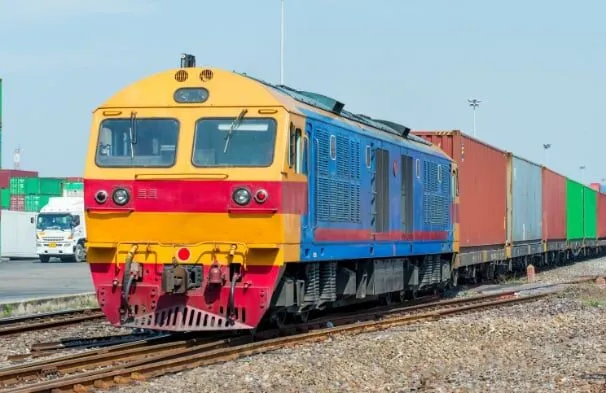
Indian Railways has recalibrated its freight tariff structure for bulk cement transport, a reform expected to strengthen multimodal logistics, cut urban construction costs and support greener supply chains. By reducing charges and simplifying pricing for tank container movements, the rail operator is aiming to shift volumes from road to rail — a strategic pivot that reverberates across India’s urban infrastructure and housing markets.

The revised pricing mechanism now bases freight on Gross Tonne Kilometre (GTKM) rather than slab-based haulage, with rates lowered to about 85–90 paise per tonne per kilometre. Railways has also retained incentives for empty container return journeys, aiming to boost utilisation and lower overall logistics expenditure for bulk cement producers.Urban planners and supply chain analysts say this is a pivotal shift for Indian cities, where cement demand underpins housing expansion, metro rail projects, road widening and climate-resilient urban infrastructure. Road freight has historically dominated bulk cement movement due to quicker turnaround times and flexible pick-up points, but it contributes significantly to congestion, fuel costs and carbon emissions in and around fast-growing urban centres.

Rail-based bulk logistics in tank containers — specialised units that allow loose cement to be transported without bagging — are gaining traction because they reduce handling losses and integrate more smoothly with silo infrastructure at terminals. The Container Corporation of India (CONCOR) is installing silos at key freight hubs to improve loading efficiency and cut transit times.For developers and affordable housing stakeholders, lower freight costs can translate into more competitive pricing for materials. Cement accounts for a substantial portion of construction costs; even modest freight savings — especially over long hauls from production centres to consumption zones — can ease pricing pressures on housing projects in tier-II and tier-III cities..

Environmental advocates also welcomed the change, noting that shifting freight from road tankers to electrified rail corridors reduces diesel consumption and particulate emissions — a step in line with national climate goals and urban air quality targets. Cement logistics reform dovetails with broader policy efforts to encourage more rail freight via dedicated freight corridors and terminal modernisation.However, industry executives caution that scaling tank container operations will require continued investment in terminal capacity and smoother last-mile linkages with urban distribution networks. Freight reforms also must be marketed effectively to smaller cement producers, who operate on thin margins and are sensitive to logistical complexity.

As India’s urban footprint expands, reforms like these illustrate how logistics policy can influence not only cost structures but also sustainability outcomes across the built environment. The next phase will focus on tangible modal shifts, data-driven route optimisation and integration with other green freight initiatives.

Also Read: UltraTech Cement Sustainable Construction Push

Indian Railways Drives Cleaner Cement Transport
RELATED ARTICLES

LEAVE A REPLY

Please enter your comment!
Please enter your name here

- Advertisment -spot_img

Most Popular

Recent Comments

Asian Paints Links Paint Longevity To Homes

Asian Paints Links Paint Longevity To Homes

0
India’s largest decorative paints company has rolled out a new advertising campaign centred on colour durability, using emotional storytelling to position painted surfaces as...
JSW Steel POSCO Plan Reshapes Odisha Industry

JSW Steel POSCO Plan Reshapes Odisha Industry

0
A proposed partnership between two major steel producers to build a 6 million tonne per annum facility in Odisha marks another significant step in...
Ahmedabad Real Estate Faces Material Labour Strain

Ahmedabad Real Estate Faces Material Labour Strain

0
Ahmedabad’s construction landscape is witnessing a visible slowdown as developers confront a convergence of supply chain disruptions and workforce shortages, raising concerns about project...
Odisha Steel Industry Expansion Reshapes Eastern Growth

Odisha Steel Industry Expansion Reshapes Eastern Growth

0
Odisha is fast consolidating its position as a strategic centre for India’s metals economy, with policymakers and industry leaders aligning around a sharp increase...
NBCC Sarojini Nagar Project Raises Urban Land Questions

NBCC Sarojini Nagar Project Raises Urban Land Questions

0
A state-owned developer, NBCC, has secured the top bid for a large commercial tower in Sarojini Nagar, New Delhi, committing over ₹1,374 crore in...