Union Railway Minister Ashwini Vaishnaw announced the rollout of the Integrated Track Monitoring System (ITMS) across all railway zones in India. This initiative, aimed at enhancing the safety and efficiency of the national railway network, will leverage advanced technology to improve track inspections and maintenance, ensuring smoother operations for passengers and workers alike.
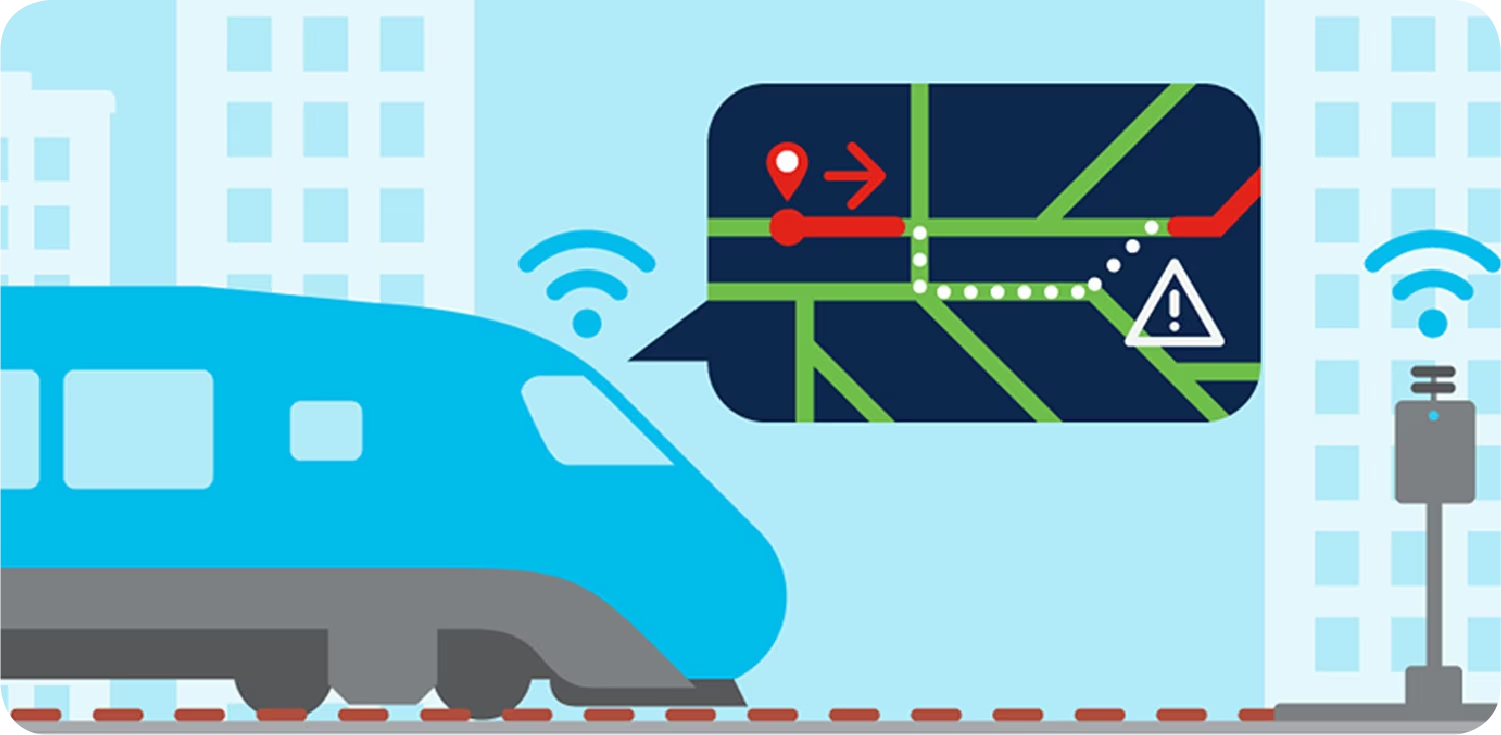
The ITMS, a cutting-edge system designed for monitoring track conditions, is installed on Track Recording Cars (TRCs), allowing for real-time data collection while traveling at speeds of 20 km/h to 200 km/h. These systems use a combination of laser sensors, high-speed cameras, and light detection and ranging (LiDAR) technology to measure key track parameters, such as alignment, geometry, rail wear, and profile. The collected data is processed and integrated into the Track Management System (TMS), which is accessible to railway officials via a dedicated portal. This initiative is part of the government’s broader strategy to use technology to improve working conditions for trackmen, the personnel responsible for track maintenance. Minister Vaishnaw highlighted that with real-time data at their disposal, trackmen would be able to perform their duties more efficiently, safely, and effectively. The ITMS was successfully introduced during the fiscal years 2022-23 and 2023-24, with three units already deployed across Indian Railways. These units will monitor approximately 2.54 lakh kilometers of track in the 2024-25 fiscal year. The system’s operator, the supplier firm, will maintain and update the ITMS for seven years, ensuring its long-term reliability and performance.
The deployment of ITMS marks a significant step towards the modernization of India’s railway infrastructure. By providing real-time data on track conditions, the system will help predict maintenance needs, reduce the likelihood of track failures, and enhance safety. As the technology evolves, the ITMS is expected to play a pivotal role in sustaining the efficiency and safety of one of the world’s largest railway networks. This move is in line with the Indian government’s vision of utilizing technology for smarter, safer, and more efficient railway operations. The integration of ITMS not only ensures the well-being of the railway workforce but also enhances the safety and convenience of the millions of passengers who rely on the Indian Railways system every day.