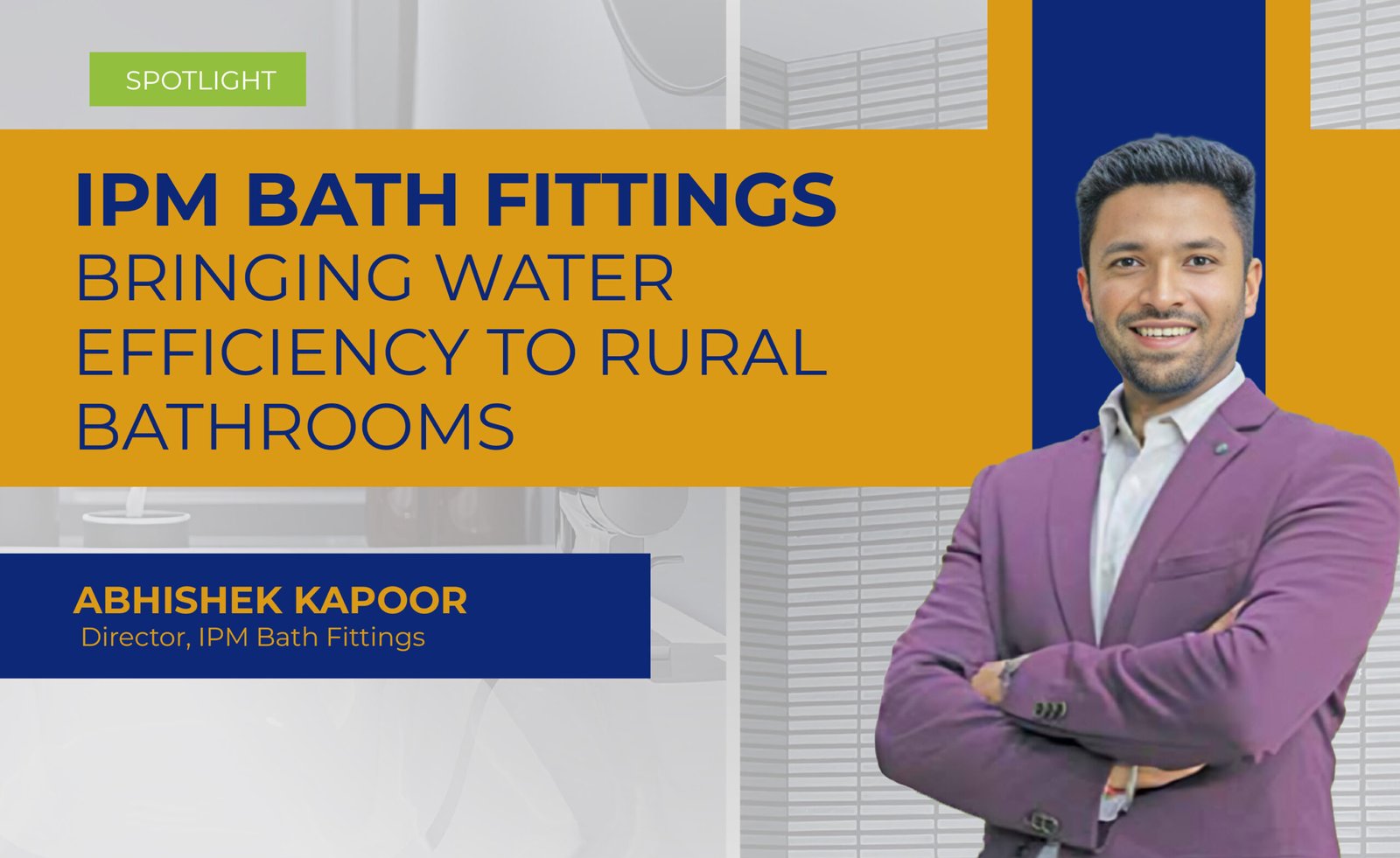
IPM BATH FITTINGS BRINGING WATER EFFICIENCY TO RURAL BATHROOMS
In an exclusive interview with Homes & Buildings Magazine, ABHISHEK KAPOOR, Director of IPM Bath Fittings, shares insights into the company’s journey, the evolving needs of Indian consumers, and how innovation is shaping the future of accessible, water efficient sanitaryware in the secondary market.
In the ever-evolving world of sanitaryware, water conservation, sustainability, and technological advancements are driving industry innovation. While premium brands dominate the luxury segment, secondary manufacturers like IPM Bath Fittings are making a significant impact by offering affordable yet high-quality solutions that cater to a wider consumer base. With over five decades of expertise, IPM Bath Fittings has positioned itself as a key player in providing efficient, durable, water-saving sanitaryware for rural and urban markets.
IPM Bath Fittings has been around for 58 years. Could you share the story behind its journey?
Our story began with my great-grandfather, who was deeply invested in improving hygiene standards through bathroom accessories. My grandfather expanded on this, ensuring people had access to durable brass fittings that enhanced sanitation. Over time, my father further strengthened our legacy, and now, I am carrying it forward, focusing on expanding our footprint both within India and internationally. Today, we are committed to ensuring every household has access to high-quality and hygienic bathroom fittings, irrespective of its economic status. Our dedication to the ‘Make in India’ initiative has further strengthened our vision, allowing us to position Indian-made products globally. The sanitaryware industry is evolving, and with increased awareness around hygiene and sustainability, we see an opportunity to drive change by developing cost-effective, high-performance products that conserve water and improve hygiene.
You’ve spoken about the importance of hygiene in rural areas. How have consumer preferences changed in these regions?
The transformation in sanitaryware usage in rural areas has been remarkable. Traditionally, plastic taps dominated the market because they were inexpensive. However, a noticeable shift towards brass faucets has been driven by increased awareness about hygiene and government-led housing schemes like ‘PAKKA homes.’ Brass, being antimicrobial, reduces bacteria accumulation and improves sanitation, making it a superior alternative to plastic. Another crucial factor is water conservation. Plastic taps often lead to excessive water wastage, with an average flow rate of 26 litres per minute. In contrast, our brass faucets limit flow to as low as 4 litres per minute, significantly reducing water consumption while maintaining efficiency. This shift towards more durable and eco-friendly solutions is a testament to growing consumer awareness and the availability of cost-effective metal faucets.
How do urban markets vary from rural markets?
While our focus in rural markets is on affordability and hygiene, aesthetics and luxury play a key role in urban areas. Modern homeowners, architects, and designers are keen on creating an immersive bathroom experience, often inspired by high-end hotels. The demand for customised fittings, premium finishes, and personalised colour palettes has skyrocketed. Earlier, chrome-plated faucets were the standard, but today, there is an increasing preference for matte black, beige, grey, gold, and rose gold finishes that complement high-end interiors. Consumers also invest in coordinated bathroom aesthetics, ensuring their faucets match their tiles and fittings. The focus is no longer just on function—design has become an equally important aspect of purchasing decisions.