HomeLatestJSW Steel investment tests India’s low carbon path

JSW Steel investment tests India’s low carbon path

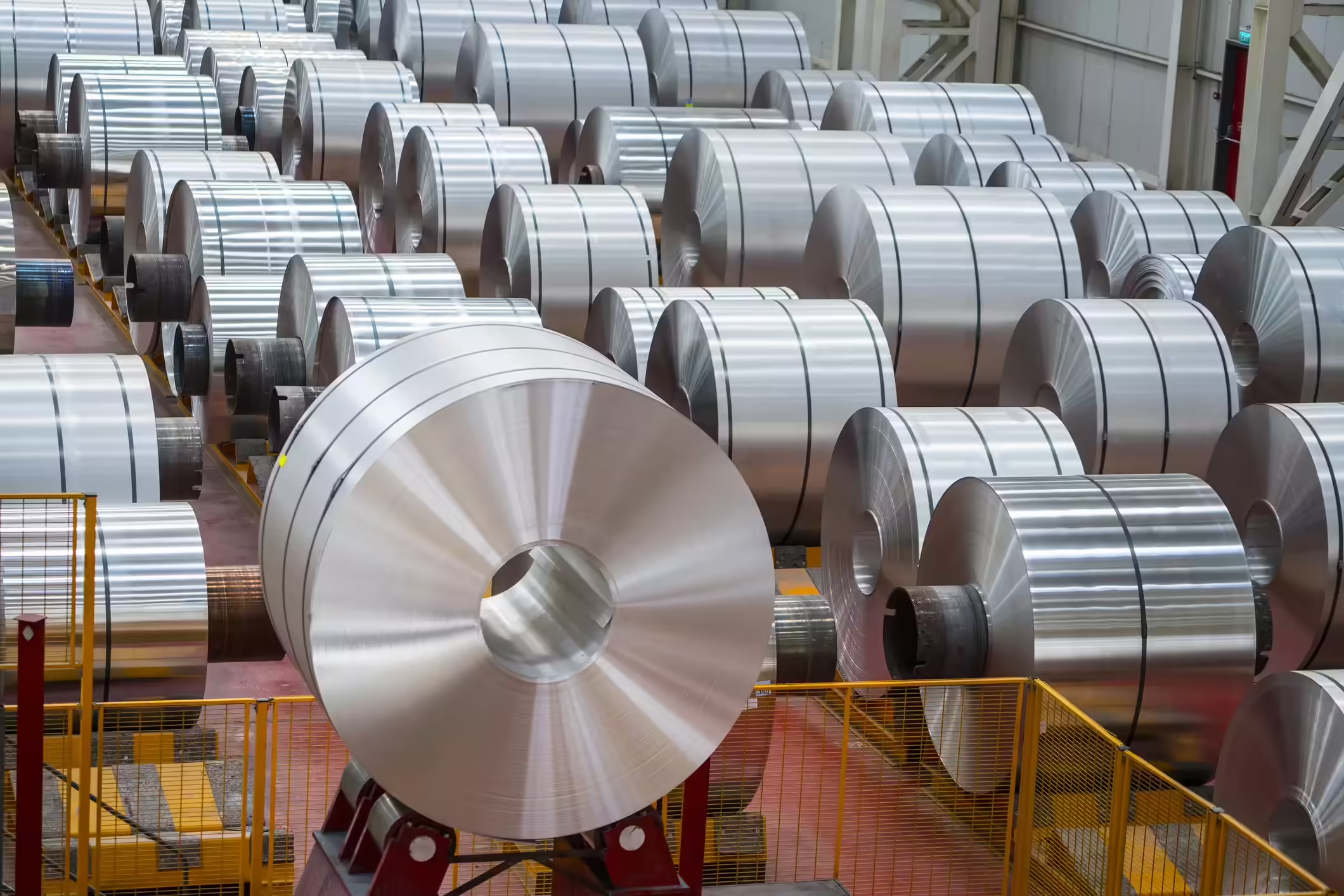
JSW Steel has updated investors on its expansion pipeline, operating priorities and decarbonisation programme as India’s steel demand continues to grow. The company’s roadmap combines substantial new capacity with investments in value-added products, raw-material security and cleaner production. For India’s cities and infrastructure economy, the scale-up could strengthen domestic steel availability, but it also raises the environmental cost of expansion unless emissions intensity falls alongside output.

The company is targeting 50 million tonnes per annum of Indian steel capacity by FY2030-31, from a significantly smaller base today. Its existing plans include brownfield expansion at key facilities, a large greenfield project in Odisha and additional downstream manufacturing. JSW Steel says it is on track to add more than 7 million tonnes of capacity by September 2027. That investment reflects a structural change in India’s steel market. Infrastructure spending, manufacturing growth and construction activity are lifting demand for domestic steel. The company has identified specialised and value-added steel as another growth area, including products for automobiles, energy infrastructure and engineering.Such production can reduce dependence on imported grades while supporting more sophisticated domestic manufacturing chains.
Yet the more consequential part of the strategy is its energy transition.

JSW Steel’s published roadmap includes a target of sourcing 10 GW of renewable power by the end of the decade, alongside waste-gas and waste-heat recovery, fuel-efficiency measures and a pilot green-hydrogen project. It has also outlined a 4-million-tonne green-steel facility and studies for large-scale carbon capture, utilisation and storage.The distinction between expanding capacity and lowering emissions will be critical. Steelmaking remains one of the industrial sectors with the highest carbon footprints. Renewable electricity can reduce emissions from power consumption, but it does not by itself eliminate emissions from coal-based ironmaking. Deeper reductions will require changes in ironmaking technology, greater scrap use, cleaner fuels and eventually commercially viable near-zero-emission production routes.The financial challenge is equally important. The company has disclosed an approved capital expenditure programme of about ₹61,863 crore over three years covering capacity, efficiency, raw materials and decarbonisation. Such spending can support competitiveness if demand remains strong, but it also exposes the balance sheet to construction delays, commodity cycles and weaker-than-expected steel prices.For cities, the implications extend beyond the steel market.

Steel is embedded in bridges, rail systems, housing, renewable-energy equipment, factories and logistics infrastructure.Greater domestic capacity can strengthen supply resilience and reduce import dependence, but additional plants also mean more pressure on land, water, energy systems and surrounding communities.The next test for JSW Steel expansion is therefore not simply how quickly tonnes are added. It is whether capacity growth can be matched by cleaner energy, resource efficiency, transparent emissions measurement and credible safeguards for communities near industrial corridors. That balance will determine whether India’s next phase of steel growth strengthens infrastructure resilience without locking cities into a higher-carbon development path.

Also Read : India’s aluminium producers navigate a volatile supply chain
JSW Steel investment tests India’s low carbon path
RELATED ARTICLES

LEAVE A REPLY

Please enter your comment!
Please enter your name here

- Advertisment -spot_img

Most Popular

Recent Comments

Maharashtra Steel Expansion Brings New Jobs To Chandrapur

Maharashtra Steel Expansion Brings New Jobs To Chandrapur

Chandrapur is set to become the proposed site of a 9-million-tonne-per-year integrated steel complex after Shyam Metalics and Energy signed a non-binding agreement with...
Sobha Expands Residential Sales Across Bengaluru And NCR

Sobha Expands Residential Sales Across Bengaluru And NCR

Bengaluru-based Sobha Limited recorded ₹5,862 crore in housing sales during the first half of FY27, up 47.2% from a year earlier, as new launches...
Mumbai Housing Boom Tests Urban Affordability

Mumbai Housing Boom Tests Urban Affordability

Mumbai’s residential market is becoming an increasingly important measure of how India’s housing economy is changing. The Mumbai Metropolitan Region accounted for 34% of...

India’s Tier 2 Cities Push Plotted Developments

India’s Tier 2 Cities Push Plotted Developments

India’s residential land market is moving beyond its traditional metropolitan centres, with Tier-2 cities becoming a major source of organised plotted housing supply. More...
Kolkata Real Estate Gains Focus In Bengal Revival

Kolkata Real Estate Gains Focus In Bengal Revival

Kolkata: West Bengal is looking to use real estate and urban redevelopment as a wider economic lever, with the state seeking changes to legacy...