HomeLatestMMR Data Center Expansion Reshapes Industrial Land Use

MMR Data Center Expansion Reshapes Industrial Land Use

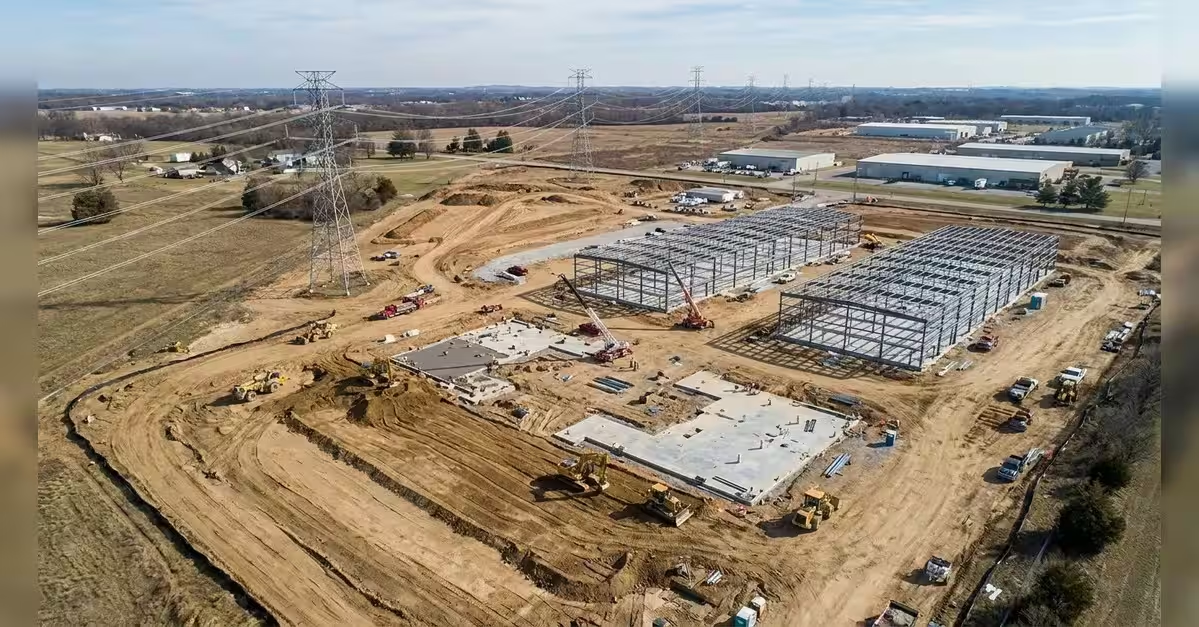
The Mumbai Metropolitan Region (MMR) is witnessing another significant push towards digital infrastructure, with plans to monetise nearly 150 acres of land earmarked for a large-scale data centre park. Estimated to unlock around ₹10,000 crore in value over time, the proposed development reflects India’s growing demand for digital infrastructure while raising important questions about sustainable land use, energy security and urban planning.

The planned Mumbai data center park is expected to support the country’s expanding digital economy, where demand for cloud computing, artificial intelligence, financial technology and digital public services continues to accelerate. As enterprises migrate to data-intensive operations, developers are increasingly allocating industrial land for hyperscale data centres rather than conventional logistics or manufacturing facilities. Industry observers say the monetisation strategy reflects a broader shift in real estate investment priorities. Data centres have emerged as one of the fastest-growing commercial asset classes, attracting institutional investors because of long-term lease structures and increasing demand from global technology companies. The Mumbai Metropolitan Region remains particularly attractive due to its extensive fibre-optic connectivity, financial ecosystem, international cable landing stations and proximity to major enterprise customers. However, urban planners argue that the growth of the Mumbai data center park should be evaluated beyond its investment potential. Large data centres require substantial electricity, cooling infrastructure and reliable water resources, making them among the most resource-intensive components of modern urban infrastructure. Without careful planning, rapid expansion could increase pressure on already constrained energy grids and municipal utilities.

Experts suggest future data centre developments should integrate renewable energy procurement, advanced cooling technologies, wastewater recycling and efficient building management systems to minimise environmental impacts. Climate-resilient infrastructure is becoming increasingly important as operators seek to reduce operational emissions while ensuring uninterrupted digital services during extreme weather events. The project also reflects the changing character of metropolitan industrial corridors. Land once primarily associated with manufacturing and warehousing is increasingly being repurposed for digital infrastructure, creating new employment opportunities in engineering, facility management, cybersecurity and information technology. Although operational staffing levels at data centres are relatively modest compared with traditional industries, associated construction activity and supporting services generate wider economic benefits across the regional supply chain.

Infrastructure specialists note that successful digital clusters require more than land availability. Reliable power transmission, high-capacity telecommunications networks, transport connectivity and supportive regulatory frameworks remain critical to sustaining long-term investment. Coordinated planning between urban authorities, utilities and private developers will therefore determine whether large digital infrastructure projects deliver balanced economic growth without overburdening civic systems. The monetisation plan also signals increasing confidence in India’s digital economy, where demand for secure data storage and cloud services continues to rise across financial services, healthcare, e-commerce and public administration. As digital transformation accelerates, metropolitan regions are likely to witness greater competition for strategically located industrial land suitable for technology infrastructure. Looking ahead, the success of the Mumbai data center park will depend not only on commercial returns but also on its ability to align with sustainable urban development goals. Integrating renewable energy, resilient infrastructure and responsible resource management into future digital projects will be essential if India’s expanding data economy is to support both economic competitiveness and climate-conscious urban growth.

Also Read: Mumbai Commercial Real Estate Attracts High Value Tenants
MMR Data Center Expansion Reshapes Industrial Land Use
RELATED ARTICLES

LEAVE A REPLY

Please enter your comment!
Please enter your name here

- Advertisment -spot_img

Most Popular

Recent Comments

Radisson Hotel Group Expands Across Emerging Indian Cities

Radisson Hotel Group Expands Across Emerging Indian Cities

Radisson Hotel Group is intensifying its expansion strategy across India with a long-term goal of building a portfolio of 500 hotels by 2030, placing...
Chennai Thirumazhisai Emerges As Residential Growth Hub

Chennai Thirumazhisai Emerges As Residential Growth Hub

Chennai's western residential corridor is witnessing renewed momentum as a housing project in Thirumazhisai secured more than 250 home reservations during its pre-launch phase....
SPR India Expands Chennai Commercial Real Estate

SPR India Expands Chennai Commercial Real Estate

Chennai's commercial real estate market is expanding beyond its established business districts as SPR India launches a new office development in Perambur aimed at...
M3M India Expands Commercial Footprint In Gurugram

M3M India Expands Commercial Footprint In Gurugram

Commercial real estate activity along the Dwarka Expressway corridor is gathering fresh momentum as M3M India plans to invest around ₹600 crore in a...
Trehan Iris Plans Premium Residential Community In Gurugram

Trehan Iris Plans Premium Residential Community In Gurugram

Gurugram's premium residential market is set for another major investment cycle, with a new luxury housing development expected to attract nearly ₹1,300 crore in...