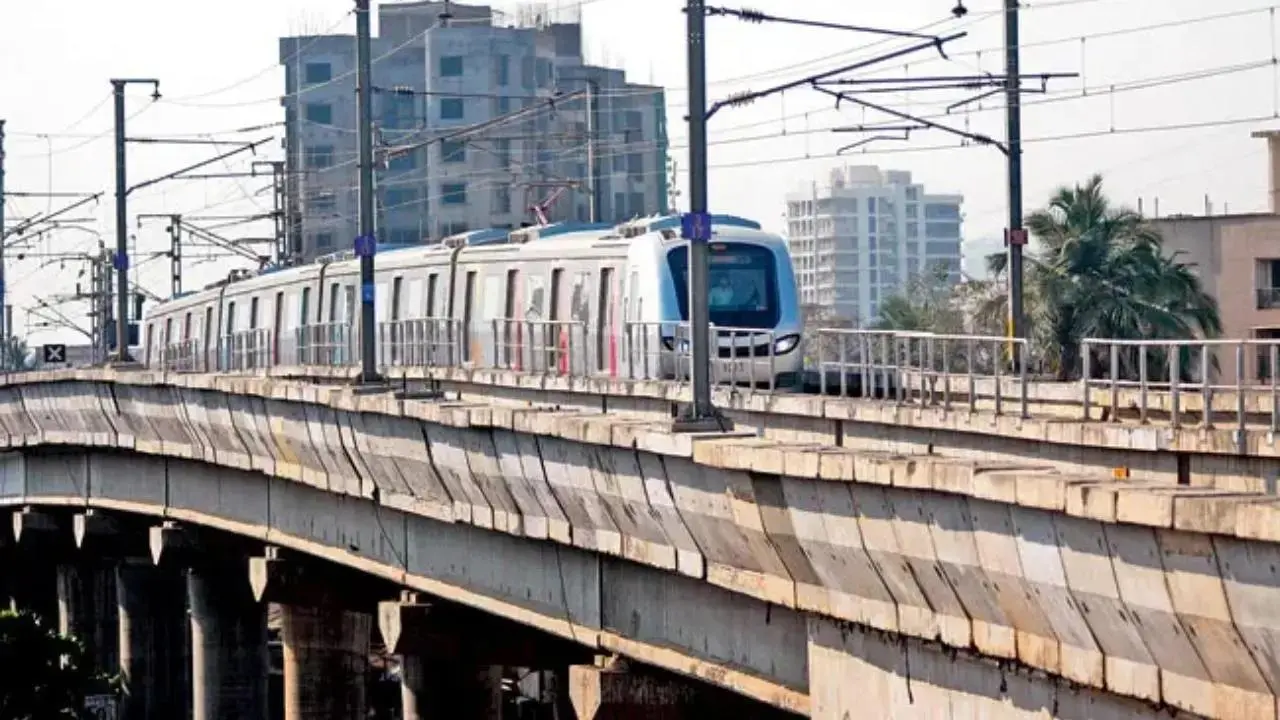
With Mumbai’s Metro network rapidly expanding, homebuyers are increasingly re-evaluating their preferences between properties near traditional suburban railway stations and those located along new Metro corridors.
Historically, railway station proximity has guaranteed higher property value, but real estate experts are now observing a growing tilt towards Metro-connected homes. Currently, more than seven million commuters rely daily on the suburban train system, making properties near stations prime assets. However, consultants highlight that younger professionals and new-age buyers are showing a strong preference for Metro corridors that promise faster, congestion-free commutes. At present, nearly 70 km of the Metro network is operational in Mumbai, with plans to scale up to 100 km shortly and surpass 300 km within two years. This upcoming connectivity is already influencing buyer sentiment and shifting housing demand to areas once considered secondary markets. “Borivali is constantly congested, and new residential stock near the railway station is rare. But the Metro line along the Western Express Highway has opened up better alternatives,” said Dinkar Shinde, a property consultant from Borivali.
A similar trend is unfolding in central areas. Mahesh Shetty, a consultant based in Dadar, notes that the operational Metro Line 3, especially near Siddhivinayak Temple, has prompted redevelopment projects in areas like Lower Parel, Parel, and Dadar. “The Metro has become a key growth driver in places where new construction near railway stations is no longer feasible,” he said. In terms of pricing, the real estate market remains varied. Properties near newly launched Metro lines, such as in Dadar, now command upwards of ₹50,000 per sq ft—up from ₹35,000–₹40,000 before the pandemic. Meanwhile, under-construction apartments near Borivali railway station range between ₹30,000 and ₹35,000 per sq ft, compared to just ₹10,000 two decades ago. Despite the Metro’s rising appeal, consultants point out that price is still influenced by other factors, including the age of the building and access to amenities. For instance, new developments in Matunga near railway stations fetch around ₹60,000 per sq ft, while older constructions are 20–30% cheaper. Ultimately, the decision to invest near a Metro or train station hinges on lifestyle and long-term goals. “Metro-connected homes are increasingly viewed as forward-looking investments, especially by those who prioritise commute and urban convenience,” said Piyush Jani, a real estate consultant from Goregaon. “But if public transport isn’t your primary concern, properties offering forest or sea views could provide better peace and value.”
As Mumbai evolves into a Metro-connected city, the real estate market is set for a reconfiguration, with connectivity, quality of life, and future growth driving homebuyer choices.
Mumbai Homebuyers Shift Focus to Metro Corridors