HomeLatestMumbai Redevelopment Market Set For Housing Surge

Mumbai Redevelopment Market Set For Housing Surge

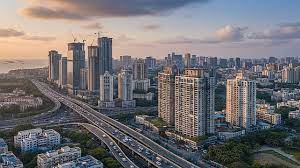
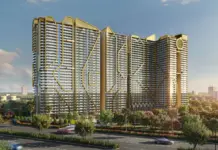
Mumbai’s property market is entering a new redevelopment-driven growth phase, with ageing housing societies across the city unlocking a pipeline of nearly 44,000 apartments valued at around ₹1.3 lakh crore over the coming years. The surge highlights how redevelopment is becoming the dominant expansion route for real estate in one of India’s most land-constrained urban markets.

Industry estimates suggest that more than 910 cooperative housing societies in the city have signed redevelopment agreements since 2020, paving the way for a large inventory of new residential units expected to enter the market by the end of the decade. These projects collectively represent one of the most significant urban housing transformations currently underway in the country.For developers, the shift toward Mumbai redevelopment projects reflects a structural reality: the city has little land available for greenfield construction. Instead, redevelopment of ageing residential buildings—many over 30 years old—has become the principal mechanism to add new housing supply while modernising infrastructure and improving safety standards in older neighbourhoods.

The western suburban belt stretching from Bandra to Borivali is expected to dominate the redevelopment pipeline. Analysts estimate that nearly three-quarters of the anticipated housing supply will originate from these micro-markets, where redevelopment agreements have accelerated due to strong demand and favourable development potential. Central suburbs such as Mulund, Ghatkopar and Chembur are also witnessing rising activity, although at a comparatively smaller scale.Real estate experts say Mumbai redevelopment projects are reshaping the city’s residential landscape by converting low-rise cooperative societies into high-rise towers with modern amenities. The redevelopment model typically involves developers rehousing existing residents in newly constructed apartments while monetising additional floor space through the sale of surplus units in the open market.

This model allows developers to unlock additional value in high-demand urban districts without requiring new land acquisition. For property investors, redevelopment has therefore emerged as one of the most viable strategies for expanding housing supply in Mumbai’s constrained real estate ecosystem.The economic implications are also significant. Analysts estimate that the free-sale component of redevelopment projects could generate several thousand crore rupees in government revenue through stamp duty and taxes, while also stimulating construction activity across multiple segments of the real estate value chain.

However, the redevelopment boom is not without challenges. Industry stakeholders highlight long project timelines, complex approval processes and rising construction costs as major hurdles. In some cases, projects can take close to a decade from agreement to completion due to regulatory clearances and negotiations between developers and housing societies.Urban planners note that the long-term success of Mumbai redevelopment projects will depend on integrating higher-density housing with improved transport access, public spaces and civic infrastructure. Without parallel upgrades in urban services, redevelopment could intensify pressure on already stretched city systems.

As Mumbai continues to grow vertically, redevelopment is likely to remain the cornerstone of its real estate strategy—offering a pathway to renew ageing neighbourhoods while gradually expanding housing supply in India’s financial capital.

Also Read: India Co Living Real Estate Reshapes Rental Market

Mumbai Redevelopment Market Set For Housing Surge
RELATED ARTICLES

LEAVE A REPLY

Please enter your comment!
Please enter your name here

- Advertisment -spot_img

Most Popular

Recent Comments

India Decarbonisation Efforts Shift Toward Implementation

India Decarbonisation Efforts Shift Toward Implementation

India’s leading industrial, infrastructure and energy businesses used World Environment Day to outline a fresh round of sustainability targets and decarbonisation measures, signalling a...
Steel Exchange India Signals Debt Discipline Shift

Steel Exchange India Signals Debt Discipline Shift

Steel Exchange India has completed a scheduled interest payment of approximately ₹1.53 crore to holders of its listed non-convertible debentures (NCDs), according to a...
UltraTech Cement Slide Signals Market Caution

UltraTech Cement Slide Signals Market Caution

UltraTech Cement has emerged among a group of major listed companies experiencing consecutive declines in share prices over recent trading sessions, highlighting growing investor...
Andhra Cements Merger Plan Draws Infrastructure Attention

Andhra Cements Merger Plan Draws Infrastructure Attention

A proposed integration between Andhra Cements and Sagar Cements has added momentum to a broader wave of consolidation within India’s cement industry, reflecting changing...
Rathi Steel, Steel Industry, Infrastructure Development, Urban Growth, Sustainable Construction, Climate Resilient Cities, Industrial Manufacturing, Housing Development, Construction Economy, Green Infrastructure, Real Estate Growth, Building Materials Sector

Rathi Steel Growth Outlook Tied To Infrastructure Demand

Fresh disclosures linked to Rathi Steel and Power’s latest quarterly performance have drawn attention to the evolving dynamics of India’s steel and construction materials...