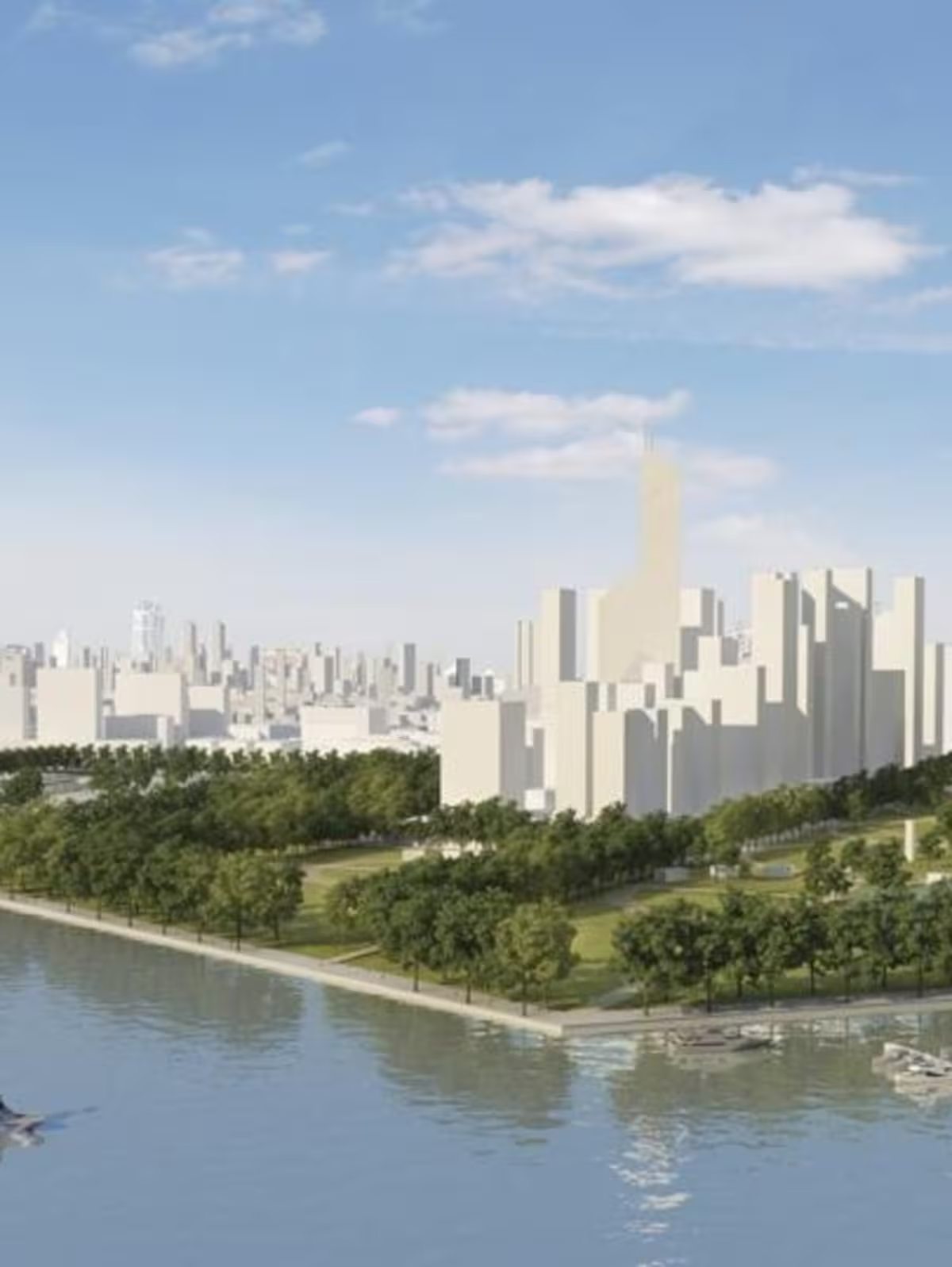
In a major step toward enhancing Mumbai’s urban ecology, the Brihanmumbai Municipal Corporation (BMC) has launched a citywide initiative to restore 319 ponds and convert them into accessible public and tourist-friendly spaces. The project aims to revive the city’s neglected water bodies while improving biodiversity, promoting heritage conservation, and expanding open recreational areas for residents.
The initiative will be implemented in phases, beginning with 30 ponds selected across different wards based on their ecological condition, location, and public access. According to civic officials, this first phase will serve as a pilot to develop restoration models before scaling up citywide. The effort forms part of a broader strategy to integrate blue-green infrastructure into Mumbai’s urban design a critical move for climate resilience and water management in a city facing rising heat and rainfall extremes.
Funding for the project will primarily come through Corporate Social Responsibility (CSR) collaborations with private companies. By adopting this partnership model, the BMC seeks to ease financial pressure on municipal budgets while engaging the private sector in sustainable urban development. “The idea is to blend ecological restoration with public benefit and cultural value,” said a senior civic planner involved in the initiative.
Of the 319 ponds identified, 309 are under BMC’s jurisdiction, while the remaining ten fall under state agencies such as the Maharashtra Housing and Area Development Authority (MHADA) and the Mumbai Metropolitan Region Development Authority (MMRDA). The civic body has begun compiling detailed surveys, documenting each pond’s depth, water quality, and surrounding land use to prepare customised rejuvenation plans.The restoration process will include de-silting, strengthening embankments, introducing natural vegetation, landscaping, improving lighting, and developing walking pathways and seating zones. Officials added that each design will balance ecological restoration with community use ensuring ponds become safe, inclusive spaces for leisure, festivals, and learning.
Special attention will be given to heritage ponds such as Banganga Tank in Walkeshwar and Bandra Talao, both of which hold significant historical and cultural value. The BMC aims to position these heritage sites as eco-tourism landmarks that celebrate Mumbai’s layered history while promoting environmental awareness.Urban experts have welcomed the plan as a step toward re-establishing the city’s “lost relationship with water”. They note that restored ponds can serve as natural carbon sinks, recharge groundwater, and act as community anchors in densely built neighbourhoods.If executed effectively, Mumbai’s pond revival could serve as a blueprint for other Indian cities grappling with rapid urbanisation and shrinking public spaces reaffirming the importance of water bodies in building resilient, inclusive, and liveable cities.
Mumbai To Transform 319 City Ponds Into Eco Tourist And Public Spaces