HomeReal EstateLandMumbai Unlocks Land For Cluster Redevelopment Push

Mumbai Unlocks Land For Cluster Redevelopment Push

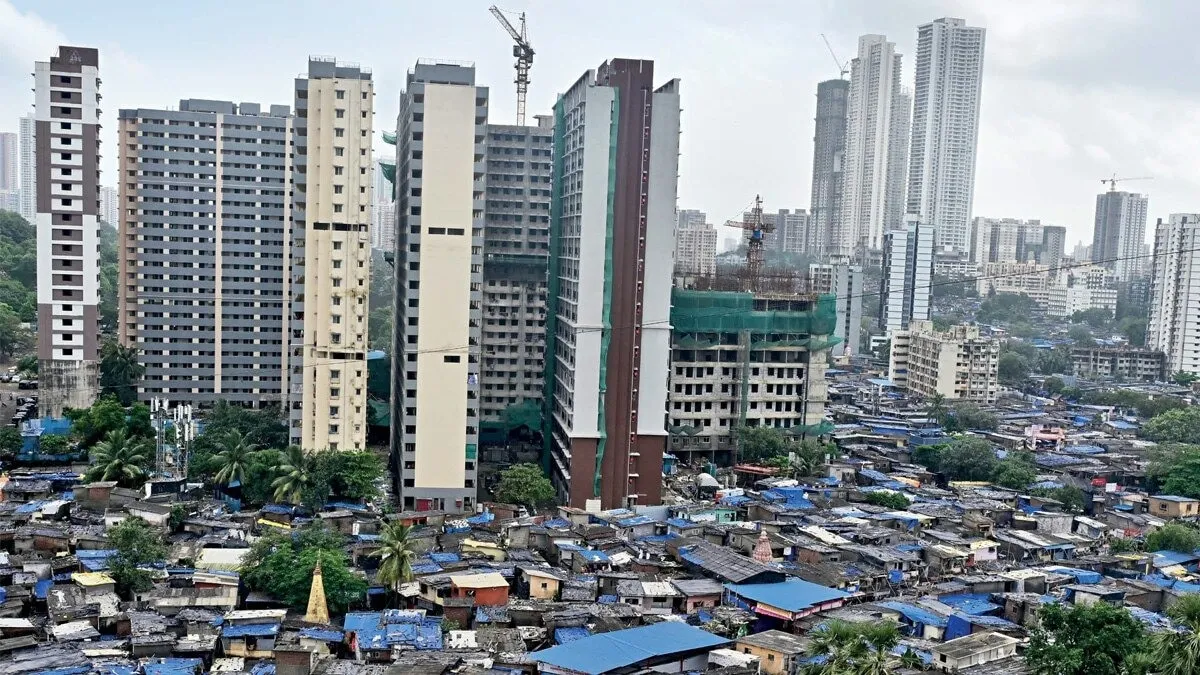
Mumbai is set to witness a significant shift in its housing and urban renewal strategy, with the state government opening up nearly 1,000 acres for cluster redevelopment across key inner-city neighbourhoods. The move is designed to accelerate the replacement of ageing housing stock while improving liveability, infrastructure efficiency, and access to formal housing within the city’s core.

Cluster redevelopment where contiguous plots or housing layouts are consolidated into a single, integrated project has been identified as a critical tool to address Mumbai’s fragmented and ageing built environment. By allowing larger planning units, authorities aim to deliver wider roads, improved sanitation networks, open spaces, and resilient infrastructure, particularly in dense, land-constrained areas. Officials indicate that multiple neighbourhoods, including older public housing layouts and informal clusters, are being prioritised under this initiative. These areas have historically struggled with inadequate infrastructure, limited open space, and poor building conditions. Through cluster redevelopment, planners expect to unlock higher development potential while ensuring in-situ rehabilitation of existing residents an approach seen as essential in a city where displacement risks are politically and socially sensitive.

The policy push comes alongside ongoing large-scale redevelopment programmes in legacy housing settlements built during the early 20th century. These projects have long been cited as test cases for balancing density with dignity, particularly as residents transition from sub-200 sq ft units to significantly larger formal homes. Urban planners note that such upgrades, when executed with adequate social infrastructure, can improve health outcomes, reduce overcrowding, and support more equitable urban growth. From a market perspective, the expansion of cluster redevelopment could also influence land economics in Mumbai. Larger redevelopment parcels tend to attract institutional developers and enable better financing structures, potentially improving project viability. However, experts caution that execution risks remain, including consent from multiple stakeholders, rehabilitation timelines, and ensuring that infrastructure upgrades keep pace with increased density.

Environmental considerations are also central to the conversation. Cluster redevelopment offers an opportunity to embed energy-efficient design, better waste management systems, and climate-resilient infrastructure into older parts of the city. With Mumbai facing recurrent flooding and heat stress, integrating sustainability into redevelopment frameworks is becoming increasingly critical. For residents, the success of this initiative will depend on delivery timelines, quality of construction, and access to social amenities such as schools, healthcare, and public transport. Urban policy analysts emphasise that while cluster redevelopment can transform neighbourhoods, its long-term impact will hinge on governance, transparency, and inclusive planning processes.

As Mumbai continues to grapple with land scarcity and rising housing demand, the expansion of cluster redevelopment signals a strategic pivot towards more integrated, people-centric urban regeneration one that could redefine how the city rebuilds itself from within.

Also Read : Mumbai Leads India Luxury Housing Market Shift
Mumbai Unlocks Land For Cluster Redevelopment Push
RELATED ARTICLES

LEAVE A REPLY

Please enter your comment!
Please enter your name here

- Advertisment -spot_img

Most Popular

Recent Comments

India GCC Expansion Could Reshape Smaller Cities

India GCC Expansion Could Reshape Smaller Cities

India’s Global Capability Centre ecosystem is entering a broader geographic phase, with companies expected to establish nearly 1,380 new centres and generate about 1.18...
Delhi Real Estate Enters A New Density Era

Delhi Real Estate Enters A New Density Era

Delhi’s proposed Master Plan 2047 could alter the economics of land and housing by allowing greater development intensity around transit corridors, enabling redevelopment and...
India Housing Costs Rise As Valuations Change

India Housing Costs Rise As Valuations Change

India’s property market is being shaped by an administrative benchmark that rarely attracts attention until a home is bought or sold. Circle rates, the...
NCR Real Estate Seeks Consistent Project Relief

NCR Real Estate Seeks Consistent Project Relief

Delhi-NCR’s construction sector is seeking a common regulatory response to delays linked to the continuing West Asia conflict, with developers asking regulators in Delhi,...
India Chemicals Sector Targets A Bigger Global Role

India Chemicals Sector Targets A Bigger Global Role

India’s chemicals industry is being positioned for a much larger role in global manufacturing, but reaching that scale will depend on closing gaps in...