HomeLatestOdisha Coal Projects Signal Industrial Value Shift

Odisha Coal Projects Signal Industrial Value Shift

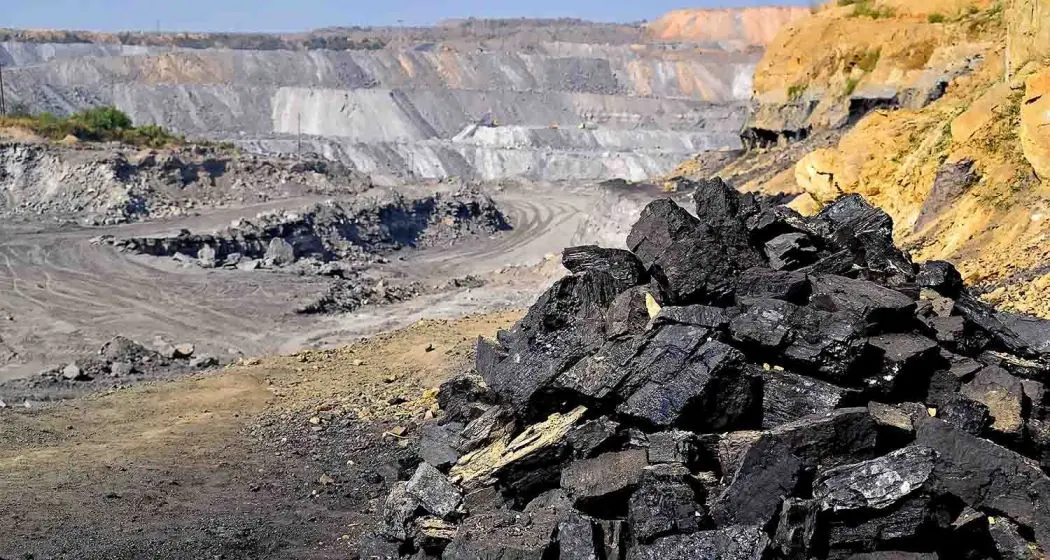
Coal India plans to build two new coal washeries with combined capacity of 27 million tonnes per annum in Odisha, alongside a coal gasification-based ammonium nitrate plant, marking a significant push toward local value addition in one of India’s most resource-rich states. The projects could reshape how raw coal is processed, create industrial jobs and reduce long-distance transport of untreated fuel.

The proposed washeries will be developed under Mahanadi Coalfields Ltd, Coal India’s Odisha-based subsidiary. Public disclosures indicate one 15 million tonne facility is planned at the Balaram-Hingula mining area, while a second 12 million tonne unit is proposed at Kulda-Garjanbahal. Washeries are used to improve coal quality by reducing ash content before supply to power plants and industries. For Odisha, the announcement addresses a long-running economic concern: while the state is among India’s largest coal producers, a portion of raw coal has historically moved to other states for beneficiation or end use. Expanding in-state processing capacity can help retain more economic value locally through jobs, transport services, contractor demand and associated industrial activity. The second leg of the plan is strategically more ambitious. A coal gasification-based ammonium nitrate plant is being developed at Lakhanpur by Bharat Coal Gasification and Chemicals Ltd, a joint venture involving Coal India and Bharat Heavy Electricals Ltd. The project is expected to be commissioned around FY2030. Ammonium nitrate is widely used in mining, infrastructure blasting and industrial applications. Producing it domestically through coal gasification could reduce reliance on imported feedstocks and broaden India’s coal sector beyond conventional combustion.

Officials have described the Lakhanpur project as India’s first coal gasification initiative using indigenous technology for this product category. For urban development, the implications are wider than mining districts. Better-quality washed coal can improve thermal plant efficiency and lower particulate emissions compared with untreated coal. Meanwhile, domestic chemical production can support infrastructure construction, quarrying and industrial supply chains linked to roads, railways and housing expansion.Yet environmental trade-offs remain significant. Coal washeries require water management, waste disposal controls and land safeguards. Coal gasification, while more diversified than direct burning, still depends on fossil resources and will face scrutiny over emissions intensity and carbon management. Urban planners increasingly argue that industrial expansion must be matched by stronger environmental compliance and transparent rehabilitation standards.The Odisha projects therefore represent a dual-track energy strategy: maximise economic returns from existing coal reserves while gradually shifting toward higher-value industrial outputs. Whether that becomes a durable development model will depend on execution quality, local employment outcomes and how effectively environmental costs are managed.

For policymakers, the next challenge is clear. Resource states such as Odisha increasingly want more than royalties—they want processing, manufacturing and long-term economic gains. These projects suggest that future mining approvals may be judged not just by extraction volumes, but by how much value stays within the region

Also Read: BCCL Coal Incentives Aim To Lower Power Costs

Odisha Coal Projects Signal Industrial Value Shift
RELATED ARTICLES

LEAVE A REPLY

Please enter your comment!
Please enter your name here

- Advertisment -spot_img

Most Popular

Recent Comments

Vedanta Aluminium Output Hits Record as Restructuring Nears

Vedanta Aluminium Output Hits Record as Restructuring Nears

Vedanta closed FY26 with record aluminium and alumina production, strengthening its position in a metals market closely tied to India’s infrastructure, power and transport...

India Steel Consumption Signals Wider Urban Growth

India Steel Consumption Signals Wider Urban Growth

India’s steel consumption has nearly doubled over the past decade, reaching about 152 million tonnes in 2024-25 from 77 million tonnes in 2014-15. The...

Pune GCC Demand Reshapes Commercial Office Market

Pune GCC Demand Reshapes Commercial Office Market

Pune’s office market is increasingly being shaped by Global Capability Centres (GCCs), with multinational firms using the city for technology, engineering, financial and specialised...

Hyderabad Brigade Barcelona RERA Shapes Kokapet Housing

Hyderabad Brigade Barcelona RERA Shapes Kokapet Housing

Hyderabad’s western growth corridor is seeing another large residential addition as Brigade Barcelona, a luxury housing project in Kokapet’s Neopolis, moves ahead with Telangana...

Chandigarh RERA Enters Focus as Prime Homes Near Crores

Chandigarh RERA Enters Focus as Prime Homes Near Crores

Chandigarh’s prime residential market is entering a new price bracket, with registered transactions showing that well-located plots in established sectors can command tens of...