HomeLatestParanjape Schemes Expands Senior Living Communities Footprint

Paranjape Schemes Expands Senior Living Communities Footprint


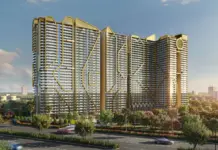
A privately developed network of senior living communities has crossed a significant occupancy milestone, signalling how India’s ageing population is reshaping housing demand and urban planning priorities. The Pune-based developer’s platform, now operating across multiple cities, has reached around 6,000 residents, reflecting a steady shift towards organised senior living communities as a distinct segment within the residential market.

The growth of such developments points to deeper structural changes. Longer life expectancy, migration-driven family fragmentation, and rising incomes are altering how older citizens approach housing. Urban planners note that senior living communities are no longer viewed as care-dependent spaces but as independent, service-led residential ecosystems offering healthcare access, mobility support, and social infrastructure. Industry experts say the expansion into cities beyond traditional metros is particularly notable. Tier 2 and Tier 3 locations are witnessing increased traction, driven by lower land costs and a growing retiree population seeking quieter, more affordable environments. This geographic spread also aligns with decentralisation trends, easing pressure on large urban centres while distributing demand across emerging cities.

At the same time, the integration of healthcare and monitoring technologies is becoming central to these developments. Newer projects are incorporating real-time health tracking, emergency response systems, and partnerships with medical institutions. Urban development specialists suggest this convergence of housing and healthcare could reduce long-term pressure on public health infrastructure if scaled responsibly. Policy support is also beginning to shape the segment. Maharashtra’s recent housing framework, which recognises senior living communities as a distinct category and proposes financial incentives, is being seen as a turning point. Analysts believe such measures could improve affordability and formalise standards in a segment that has so far evolved largely through private initiatives. However, questions remain around inclusivity and accessibility. While premium developments cater to middle- and high-income groups, there is limited provision for economically weaker seniors. Experts argue that future urban policy must ensure that senior living communities do not become exclusive enclaves but are integrated into broader city planning with public transport access, green spaces, and community linkages.

Environmental considerations are also coming into focus. Age-friendly housing design overlaps with sustainability goals walkable layouts, energy-efficient buildings, and access to open spaces can improve both quality of life and environmental performance. Planners say these communities could serve as prototypes for low-carbon, inclusive neighbourhoods if aligned with climate-resilient design principles. As India’s “silver economy” expands, senior living communities are likely to become a more visible part of the housing mix. The next phase of growth will depend not only on private investment but also on regulatory clarity, affordability measures, and integration with urban infrastructure factors that will determine whether this model evolves into a mainstream, equitable solution for ageing cities.

Also Read : Adani Motilal Nagar Redevelopment To Transform Urban Fabric
Paranjape Schemes Expands Senior Living Communities Footprint
RELATED ARTICLES

LEAVE A REPLY

Please enter your comment!
Please enter your name here

- Advertisment -spot_img

Most Popular

Recent Comments

Vedanta Aluminium Output Hits Record as Restructuring Nears

Vedanta Aluminium Output Hits Record as Restructuring Nears

Vedanta closed FY26 with record aluminium and alumina production, strengthening its position in a metals market closely tied to India’s infrastructure, power and transport...

India Steel Consumption Signals Wider Urban Growth

India Steel Consumption Signals Wider Urban Growth

India’s steel consumption has nearly doubled over the past decade, reaching about 152 million tonnes in 2024-25 from 77 million tonnes in 2014-15. The...

Pune GCC Demand Reshapes Commercial Office Market

Pune GCC Demand Reshapes Commercial Office Market

Pune’s office market is increasingly being shaped by Global Capability Centres (GCCs), with multinational firms using the city for technology, engineering, financial and specialised...

Hyderabad Brigade Barcelona RERA Shapes Kokapet Housing

Hyderabad Brigade Barcelona RERA Shapes Kokapet Housing

Hyderabad’s western growth corridor is seeing another large residential addition as Brigade Barcelona, a luxury housing project in Kokapet’s Neopolis, moves ahead with Telangana...
Chandigarh RERA Enters Focus as Prime Homes Near Crores

Chandigarh RERA Enters Focus as Prime Homes Near Crores

Chandigarh’s prime residential market is entering a new price bracket, with registered transactions showing that well-located plots in established sectors can command tens of...