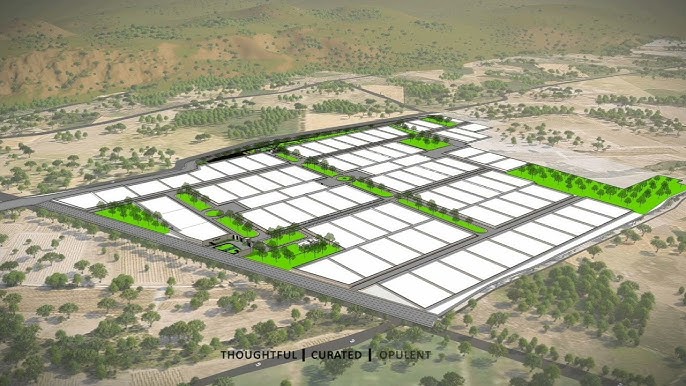
A fresh wave of land aggregation is gathering pace along the Delhi–Mumbai Expressway, with Ram Rattan Group and Regency Advertisers planning to acquire nearly 500 acres for future real estate development. The proposed expansion reflects increasing investor interest in infrastructure-led growth corridors, where improved regional connectivity is transforming agricultural and peri-urban land into potential residential, commercial and mixed-use urban districts.
The proposed Delhi Mumbai Expressway land acquisition highlights how major transport infrastructure is reshaping development patterns across northern and western India. As sections of the expressway become operational, adjoining regions are witnessing rising land values and greater interest from developers seeking to establish long-term land banks ahead of future urban expansion.
Urban planners believe infrastructure corridors have evolved beyond transport projects to become catalysts for new economic clusters. Improved freight movement, reduced travel times and enhanced access between industrial centres are encouraging investment in housing, logistics parks, hospitality and commercial developments. However, specialists caution that land acquisition should remain aligned with regional master plans to prevent fragmented urbanisation and unplanned settlement growth.
Industry observers note that large-scale acquisitions along expressways increasingly reflect long-term development strategies rather than immediate construction activity. Developers often secure land well in advance of project launches, anticipating demand generated by expanding industrial investment, employment opportunities and improved mobility. The Delhi Mumbai Expressway land acquisition therefore represents a broader confidence in the corridor’s future economic potential rather than a short-term real estate cycle.
Experts also emphasise that infrastructure-led development must be supported by strong governance and environmental safeguards. While expressways stimulate investment, they can also accelerate conversion of agricultural land, increase pressure on water resources and contribute to dispersed urban growth if supporting policies are absent. Integrated planning, efficient public transport, groundwater conservation and ecological buffers are increasingly viewed as essential components of sustainable corridor development.
Environmental specialists argue that emerging urban districts should incorporate climate-responsive planning from the outset. Green infrastructure, rainwater harvesting, wastewater recycling, renewable energy integration and protection of natural drainage systems can reduce environmental impacts while improving long-term resilience. Such measures become increasingly important as India’s expressway corridors evolve into major centres of population and economic activity. The planned acquisitions also indicate growing competition among developers seeking strategic locations along nationally significant infrastructure projects. As connectivity improves between Delhi, Mumbai and intermediate economic centres, land surrounding the corridor is expected to support diverse forms of urban development over the coming decade. For policymakers, the challenge will be ensuring that infrastructure investment translates into balanced regional growth rather than speculative land expansion. Coordinated planning between development authorities, local governments and private investors will determine whether the Delhi–Mumbai Expressway becomes a model for sustainable urbanisation that combines economic opportunity with environmental stewardship and inclusive community development.
Also Read: Jashn Realty Plans Premium Homes In Lucknow
Ram Rattan Group Eyes Delhi Mumbai Expressway Land