HomeInfrastructureSAIL Raw Material Strategy Supports Infrastructure Growth

SAIL Raw Material Strategy Supports Infrastructure Growth

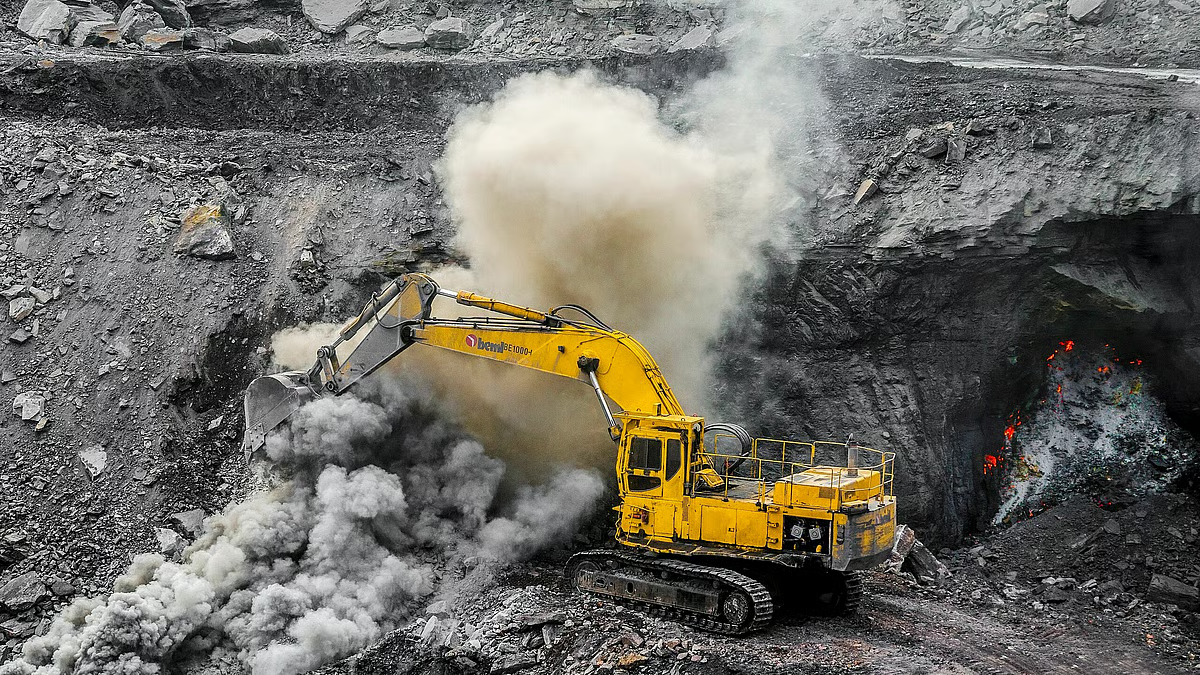
India’s drive to secure long term supplies of critical industrial raw materials has entered a new phase as major state owned mining and steel enterprises evaluate opportunities beyond domestic borders.

The move reflects growing concerns over supply security for essential inputs used in steel production, a sector that remains central to infrastructure expansion, manufacturing growth and urban development across the country.The exploration of overseas resource assets comes at a time when India is pursuing ambitious infrastructure targets, including transport corridors, industrial zones, housing projects and energy networks. These investments are expected to sustain strong demand for steel over the coming decades, placing increasing pressure on producers to secure stable and cost-effective supplies of key raw materials.Industry experts say Raw Material Security is becoming a strategic priority for steelmakers worldwide. Volatility in global commodity markets, geopolitical tensions and disruptions to international trade routes have exposed vulnerabilities in industrial supply chains. Companies dependent on imported resources are increasingly seeking direct access to mining assets as a way to reduce exposure to market fluctuations and ensure long-term supply continuity.For India, the issue carries significant economic implications. Steel is a foundational material for modern cities, supporting everything from residential construction and public transport systems to bridges, industrial facilities and renewable energy infrastructure. Any disruption in supply chains can influence production costs, project timelines and broader infrastructure development goals.

Analysts note that Raw Material Security is particularly relevant in the context of coking coal, a key input used in conventional steelmaking. Despite being one of the world’s largest steel producers, India remains dependent on imports for a substantial share of its metallurgical coal requirements. This reliance has prompted policymakers and industry leaders to explore strategies that strengthen access to reliable international resources.However, the development also raises broader questions about the future direction of industrial sustainability. Urban planners and climate specialists argue that while securing raw materials is essential for economic growth, long-term competitiveness will increasingly depend on reducing dependence on carbon-intensive production pathways. The steel industry is under growing pressure to adopt cleaner technologies, improve energy efficiency and invest in lower emission manufacturing processes.The challenge, experts suggest, is balancing immediate industrial needs with long-term environmental objectives. Infrastructure development requires large quantities of steel, yet global climate commitments are encouraging industries to rethink traditional production models. This tension is shaping investment decisions across mining, manufacturing and resource extraction sectors.

From a market perspective, access to reliable raw materials can improve cost predictability and strengthen operational planning. For infrastructure projects, stable input supplies help reduce uncertainty and support timely project delivery. These considerations have become increasingly important as governments seek to accelerate economic growth through large scale construction programmes.Looking ahead, the debate around Raw Material Security is likely to intensify as demand for steel continues to rise alongside urbanisation and industrialisation. The key challenge will be ensuring that resource strategies not only support economic expansion but also align with the broader transition towards more resilient, efficient and climate-conscious industrial systems.As India builds the next generation of infrastructure, the availability of critical resources will remain closely linked to both economic competitiveness and the sustainability of future urban growth.

Also Read : SAIL Share Price Reflects Steel Market Pressures
SAIL Raw Material Strategy Supports Infrastructure Growth
RELATED ARTICLES

LEAVE A REPLY

Please enter your comment!
Please enter your name here

- Advertisment -spot_img

Most Popular

Recent Comments

Mumbai Bandra West Apartment Sale Signals Demand

Mumbai Bandra West Apartment Sale Signals Demand

Mumbai’s premium residential market has recorded another notable ownership transaction with a residential apartment in Bandra West changing hands for ₹3.50 crore, underlining the...
Bhandup West Homes Reflect Mumbai Growth Shift

Bhandup West Homes Reflect Mumbai Growth Shift

Mumbai’s north-eastern suburb of Bhandup West is witnessing renewed residential activity as a series of new apartment launches and housing options enter the market,...
Delhi Luxury Housing Embraces Fifteen Minute Neighbourhoods

Delhi Luxury Housing Embraces Fifteen Minute Neighbourhoods

Delhi's premium residential market is witnessing a gradual shift in buyer expectations, with integrated neighbourhood planning emerging as a defining feature of high-end housing....
Nagpur Marina Luxury Development Elevates Central India Housing

Nagpur Marina Luxury Development Elevates Central India Housing

A luxury waterfront residential development in Nagpur has received recognition as an Alpha Grade luxury asset, signalling the growing maturity of Central India's premium...
India Commercial Real Estate Shifts Towards Grade A Offices

India Commercial Real Estate Shifts Towards Grade A Offices

Demand for Grade A office spaces is reshaping the country's commercial real estate landscape as businesses increasingly prioritise high-quality, sustainable and technology-enabled workplaces. The...