
HomeLatestSteel Exchange India Debt Repayment Strengthens Balance Sheet

Steel Exchange India Debt Repayment Strengthens Balance Sheet

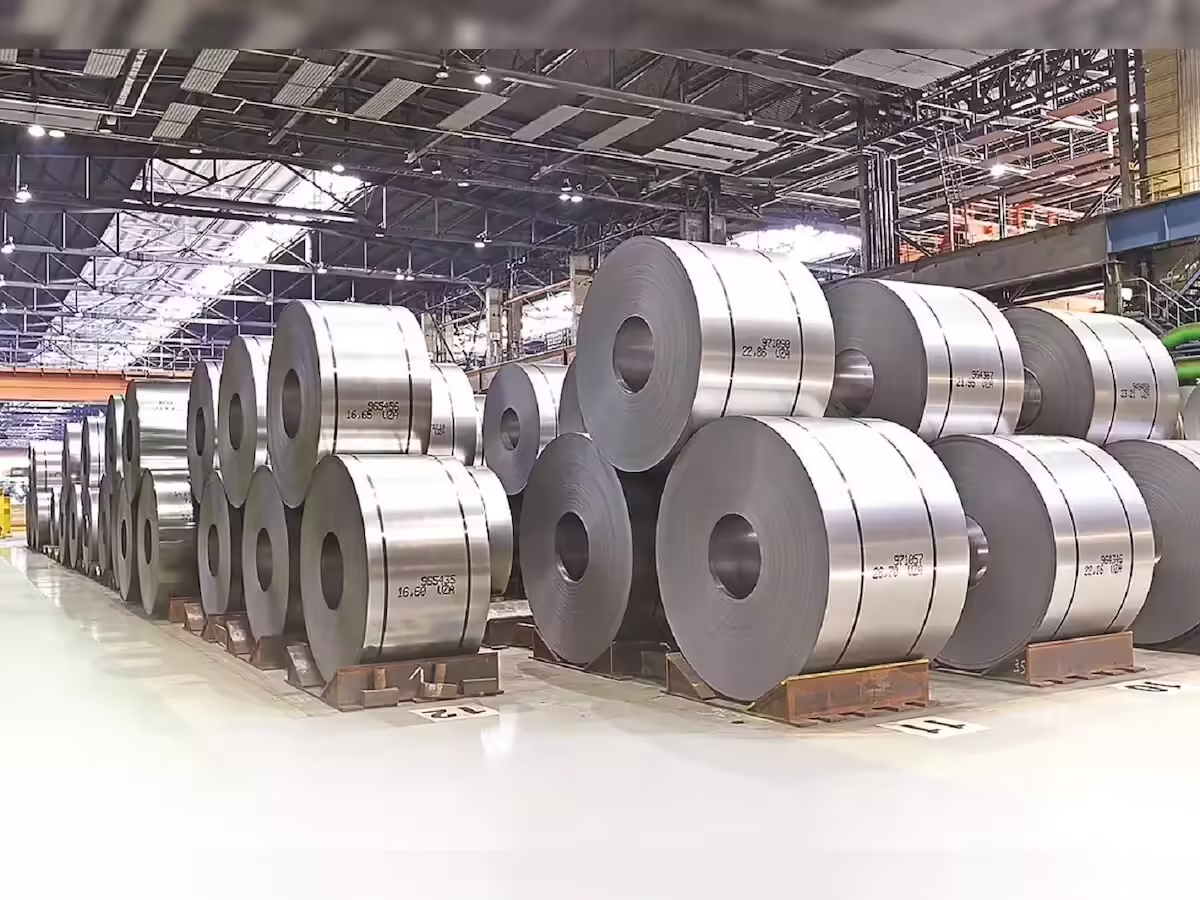
Steel Exchange India Limited has moved to strengthen its financial position through a recent debt repayment, signalling a shift towards balance sheet stability at a time when the broader construction and infrastructure ecosystem is expanding. The latest Steel Exchange India debt repayment of ₹28 crore reflects a broader trend among mid-sized industrial players aiming to reduce leverage and improve operational resilience.

The repayment, completed over the past two quarters, is part of a structured effort by the company to streamline liabilities and reduce interest burdens. Lower debt levels can enhance financial flexibility, allowing companies to redirect resources towards capacity utilisation, operational efficiency, and long-term growth initiatives.For the steel sector, which is closely tied to infrastructure and real estate activity, financial stability plays a critical role. Steel producers often operate in capital-intensive environments, where debt servicing can significantly impact profitability, especially during periods of input cost volatility. The Steel Exchange India debt repayment therefore positions the company to better navigate cyclical pressures while maintaining supply continuity.The development comes at a time when steel demand in India remains robust, driven by government-led infrastructure projects, urban housing expansion, and industrial growth. As cities continue to scale, the need for consistent and affordable supply of construction materials becomes increasingly important. Companies with stronger balance sheets are better equipped to sustain operations and invest in future capacity.

Industry observers note that deleveraging is becoming a strategic priority across the sector. Rising interest rates and fluctuating raw material costs have prompted companies to reassess financial structures, focusing on reducing risk exposure. In this context, the Steel Exchange India debt repayment aligns with a wider shift towards prudent financial management.Beyond immediate financial benefits, debt reduction can also improve access to future capital. Lenders and investors typically favour companies with lower leverage, particularly in sectors exposed to commodity cycles. This can support funding for expansion, technology upgrades, and sustainability initiatives—areas that are increasingly critical for long-term competitiveness.From an urban development perspective, such financial strengthening has indirect but meaningful implications. A stable steel supply chain supports timely execution of infrastructure projects, from transport networks to housing developments. It also helps maintain cost predictability, which is essential for both public and private sector projects.At the same time, the sector continues to face challenges. Input cost pressures, particularly from energy and raw materials, remain a concern. Companies must balance financial discipline with the need to invest in efficiency improvements and low-carbon production methods.

Looking ahead, the trajectory of companies like Steel Exchange India will depend on their ability to sustain financial discipline while capitalising on growing demand. The Steel Exchange India debt repayment marks a step in that direction, reinforcing the importance of balance sheet strength in supporting industrial growth.As India’s infrastructure pipeline expands, financially resilient steel producers are likely to play a crucial role in ensuring that urban development remains both timely and economically viable.

Also Read: India Steel Production Target Signals Infrastructure Expansion

Steel Exchange India Debt Repayment Strengthens Balance Sheet
RELATED ARTICLES

LEAVE A REPLY

Please enter your comment!
Please enter your name here

- Advertisment -spot_img

Most Popular

Recent Comments

India Tier Two Cities Attract GCC Expansion

India Tier Two Cities Attract GCC Expansion

India's next wave of Global Capability Centre (GCC) expansion is increasingly shifting towards Tier-2 cities, as companies look beyond traditional metropolitan hubs to access...
Sowparnika Capital Infusion Accelerates Housing Projects

Sowparnika Capital Infusion Accelerates Housing Projects

A ₹75 crore capital infusion into residential developer Sowparnika Projects underscores continued investor interest in India's mid-income housing sector, where demand remains resilient despite...
Tripura Infrastructure Funding Proposal Targets Faster Growth

Tripura Infrastructure Funding Proposal Targets Faster Growth

Tripura has urged the Union government to raise the ceiling for externally aided projects to ₹10,000 crore, arguing that the higher limit would accelerate...
MMR Affordable Housing Leads Residential Demand

MMR Affordable Housing Leads Residential Demand

Affordable and mid-segment homes continue to account for the largest share of residential transactions across the Mumbai Metropolitan Region (MMR), even as ultra-luxury housing...
Rustomjee Payment Plan Targets Housing Affordability

Rustomjee Payment Plan Targets Housing Affordability

Residential developer Rustomjee has introduced a flexible home payment plan across selected housing projects, allowing buyers to pay only 10 per cent of the...
