If oil shaped the 20th century, then water will define the 21st. The global conversation on water scarcity is growing louder, yet in India, a silent crisis is unfolding within our homes, hidden behind the sleek tiles and gleaming fixtures of modern bathrooms.
BY RONITA D SOUZA
For centuries, India had a deeply ingrained culture of water conservation. Bathing in rivers and lakes was a communal, ritualistic practice that used only as much water as necessary. Even in homes, bucket baths were the norm, using a fraction of the water that modern showers consume today. Indian sanitation systems, too, were built on principles of efficiency—squat toilets required minimal water, and many traditional methods functioned without plumbing altogether. Water was a resource to be revered, not wasted.
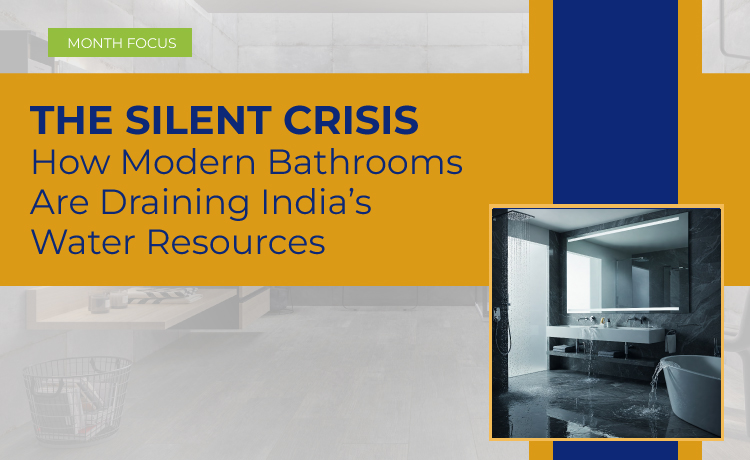
But in the span of a few decades, this balance has been lost. The explosion of urbanisation, economic growth, and aspirational living has transformed the way India interacts with water—especially within the confines of the modern bathroom. The shift from bucket baths to high-pressure showers, from squat toilets to Western commodes, and from compact wash areas to sprawling luxury bathrooms has created an unprecedented surge in domestic water consumption. What was once a necessity has now become an unchecked indulgence.
Per capita water wastage in India is rising at an alarming rate, and the modern bathroom is at the heart of the problem. A bucket bath, which traditionally required around 15–20 litres of water, has been replaced by 10-minute showers that can consume 150 litres or more. Western-style flush toilets, once considered a symbol of progress, now contribute to a staggering volume of wastewater—each full flush expelling 6–12 litres of clean water into the drainage system. In premium real estate developments, bathtubs that hold up to 300 litres are increasingly common, even in cities where water scarcity is a growing concern.
Despite technological advancements in sanitaryware—low-flow toilets, aerated taps, and sensor-based fixtures—India’s water consumption continues to soar. Ironically, as bathrooms become “smarter,” water wastage is only becoming worse. The convenience of automated water flow and the indulgence of spa-like bathing experiences have led to longer, more frequent, and more excessive water usage. Instead of conserving, technology has made overuse effortless.
The impact of this unchecked consumption is no longer hypothetical. According to a 2021 NITI Aayog report, 21 Indian cities, including major metros like Delhi, Bengaluru, and Hyderabad, will run out of groundwater by 2030. The data paints a grim picture—urban India is using water faster than it can be replenished, and domestic consumption is one of the primary drivers of depletion. Bathrooms alone account for over 60% of household water usage, making them the most significant source of wastage in urban homes.
Yet, even as India stares at an impending water crisis, the trend of extravagant bathroom spaces continues to grow. The real estate market is aggressively pushing luxury fittings, rain showers, multi-jet bathing systems, and expansive washrooms as aspirational lifestyle choices. Developers, eager to cater to high-end buyers, are constructing homes with larger bathrooms, multiple toilets, and imported fittings that demand excessive water usage—all while groundwater levels dip alarmingly low and water cuts become more frequent in metropolitan areas.
A paradox is emerging: the very cities that are running out of water are also witnessing a boom in water-intensive luxury developments. In Mumbai, for example, where water rationing is becoming a harsh reality, high-rise residential towers continue to offer penthouses with private pools and multi-bathroom apartments with spa-style interiors. The contrast is stark—while some residents struggle with restricted water supply, others indulge in water-consuming lifestyle trends that further strain the system.
This disconnect is not limited to residential spaces. Commercial real estate has also contributed to the crisis. Premium office complexes and IT parks are designed with high-pressure plumbing systems, excessive restroom facilities, and decorative water features that consume thousands of litres daily. The corporate obsession with luxury extends beyond the workspace, with hotels, malls, and entertainment hubs adopting extravagant bathroom designs that prioritise aesthetics over efficiency.
The result? A growing class divide in water accessibility. While high-income urban dwellers enjoy unlimited access to water-intensive conveniences, lower-income communities are already grappling with shortages. Municipal water supply is increasingly strained, forcing many households to rely on costly private tankers. The burden of water scarcity is disproportionately falling on those who can least afford it, while affluent city-dwellers remain largely insulated from the crisis—at least for now.
As India continues to urbanise at an unprecedented rate, the unchecked rise of water-guzzling bathrooms is becoming an invisible yet pressing threat. The country’s obsession with modern sanitation and luxurious bathing experiences is eroding its once-deep-rooted culture of water conservation. What was once a resource used with reverence has now become a silent casualty of progress.
The question is no longer whether India will face a water crisis—it already is. The real question is: how much longer can we afford to ignore the problem?
THE SILENT CRISIS