In an exclusive interaction with Mohan Kumar Soundararaj, Managing Director of Parklayer Private Limited, he outlines how intelligent parking infrastructure is redefining urban real estate, why engineering adaptability matters in India’s dense cities, and what it will take to make parking a seamless part of tomorrow’s smart mobility ecosystem.
Q Automated parking in India is moving beyond being a niche engineering solution and becoming part of mainstream urban infrastructure. At what point did you recognise this shift, and how did Parklayer position itself to capitalise on it early?
The shift became unmistakable to us around 2018–2020, though the groundwork was laid much earlier. When we founded Parklayer in 2012, automated parking was still seen as an interesting curiosity — a developer might visit an installation once, nod appreciatively, and then go right back to designing conventional ramp-based basements. But two parallel trends were building pressure that would change the calculus entirely: land prices in Mumbai — still our largest market — were crossing ₹1 lakh per square foot, while vehicle ownership was exploding across cities, not just the metros.
Bengaluru alone adds nearly 400,000 cars every year. Eventually the math just stopped working for the old approach. We recognised early that the inflection point wouldn’t come from a sudden love of technology. It would come from hard economics — the moment when the cost of not adopting automation exceeded the cost of the investment itself. That’s why our joint venture with Dong Yang PC of
Korea — a partnership that brought over 30 years of global deployment experience to India — was such a deliberate move. Rather than waiting for the market to educate itself, we invested in building multi-technology capabilities across rotary, tower, puzzle, and stack systems. When the shift finally arrived, we weren’t a single-product company scrambling to adapt; we were already positioned as a full-spectrum provider ready for the wide range of site conditions Indian cities throw at you. Today, that early conviction is reflected in our footprint.
We’ve crossed the 10,000-plus car park installation mark, and our teams are present in over 42 cities across India — not just sales, but full service teams on the ground. Mumbai remains our single largest market, but if you look at our project map, you’ll see us deeply embedded in Tier-2 and Tier-3 cities as well.
 Q In India, parking is often viewed as a compliance requirement rather than a strategic asset. How difficult was it to change this mindset among developers, architects, and urban planners during your initial years?
Extremely difficult — and to be honest, it remains one of our most persistent challenges even today. In the early years, parking was almost always the last item on a developer’s checklist: a regulatory box to tick under municipal norms, allocated the bare minimum of capital and creative attention. The prevailing mindset was, “Why would I sink money into something that generates zero revenue?”
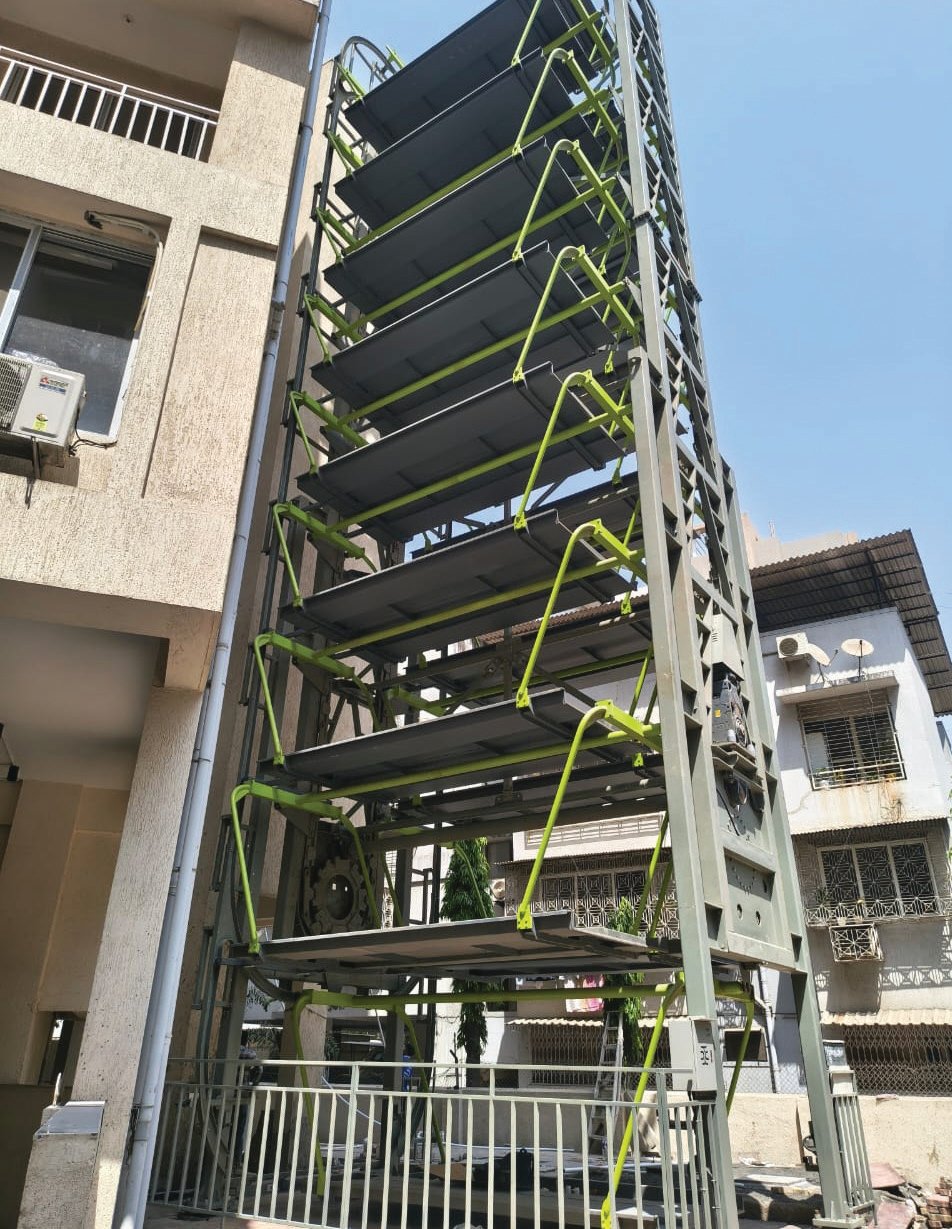
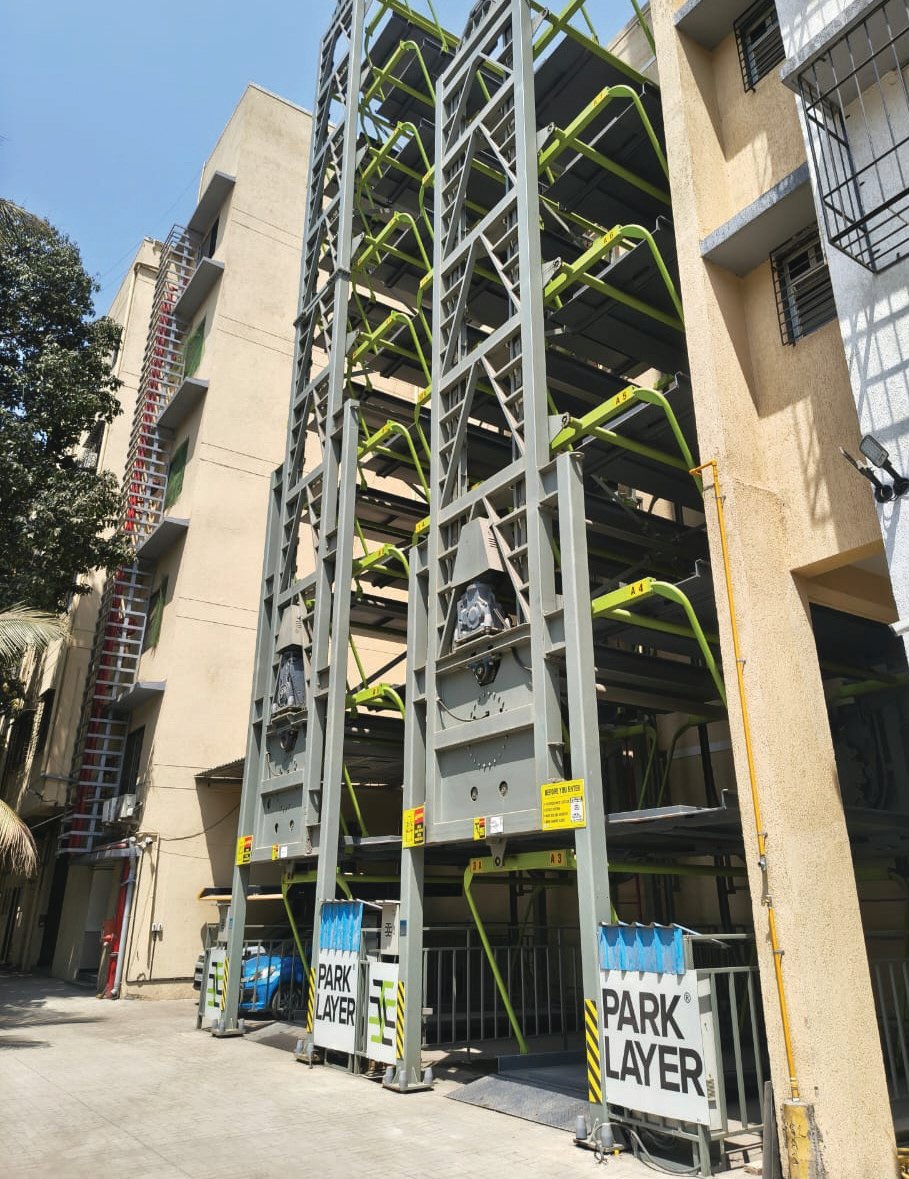
So we stopped talking about parking as a cost. Instead, we started demonstrating it as a value lever. Here’s the math we would walk developers through: take a 100-unit residential building requiring 150 parking spaces. A conventional ramp-based arrangement consumes roughly 50,000 square feet. In Mumbai, where land costs between ₹50,000 and ₹1 lakh per square foot, that’s ₹25 to 50 crores of capital locked up — generating nothing. A tower parking system can deliver the same 150 slots in about 10,000–12,000 square feet. You’ve just freed 40,000 square feet for additional units, retail, or landscaped amenities — all of which do generate returns.
But changing a developer’s mind isn’t just about showing them a spreadsheet. They need to know the solution won’t become a headache. That’s where our complete turnkey promise made the difference. From the very first site inspection, we consult on exactly which car park typology suits the requirement, handle design and manufacturing, manage transport and installation, and then stay on — service and maintenance for the entire life of the machine. Developers could see this wasn’t an equipment sale with an uncertain future; it was a full-cycle guarantee that the system would perform. That credibility, built up project after project, is what slowly turned parking from an afterthought into a strategic conversation.
Q Many automated parking companies speak about technology, but operational reliability often becomes the real differentiator. How does Parklayer approach long-term system performance, maintenance, and lifecycle efficiency?
I’ve always believed the true test of an automated parking system isn’t how it performs on day one — it’s how it performs on day one thousand. The Indian market has unfortunately witnessed installations where impressive technology was deployed but operational reliability fell short, leading to user frustration, developer disappointment, and in some instances, system abandonment. I was determined that Parklayer would never be associated with that outcome.
Our approach to reliability begins at the engineering stage, not the maintenance stage. Through our joint venture with Dong Yang PC, we draw on over 30 years of global deployment experience and manufacturing precision. Modern tower parking systems operate on mechanical principles refined through decades of real-world operation. The reliability mirrors that of building elevators: technology so mature and refined that it becomes unremarkable in daily operation.
But engineering quality alone isn’t sufficient. We’ve structured our operational philosophy around something that frankly separates us from most players: service is our core, not an after-sales obligation. Across those 42-plus cities where we are present, it’s not just a marketing team — our full service teams are stationed there. In fact, I would go so far as to say our service team is bigger than our manufacturing team. More manpower is deployed on-site, keeping installations running, than at our factory building new systems. That’s unusual, but it’s deliberate.
Of the 10,000-plus car parks we’ve delivered, we hold the service contract for 99% of them. We take up after-sales service right through the machine’s entire working life. That means preventive maintenance, not reactive repair. Our systems are equipped with sensors and monitoring capabilities that track component health continuously, enabling intervention before failures occur — increasingly shifting toward IoT-enabled predictive maintenance. But no amount of remote monitoring replaces a trained technician who can be at a site quickly when it matters. That’s exactly what our city-level service presence ensures.
We also help clients understand lifecycle cost transparency. While automated systems may carry a higher upfront capital cost, the total cost of ownership is frequently lower when you account for eliminated basement excavation, significantly reduced energy consumption (tower systems draw power only during active operations — mere minutes daily rather than 24/7 ventilation and lighting), lower staffing requirements, and extended asset life. But none of those savings materialise if the system isn’t reliably maintained. That is why we’ve built an organisation where service is larger than manufacturing, and why developers across India, in cities from Mumbai to smaller Tier-3 towns, trust us with the full lifecycle of their parking infrastructure.
 Q The future of parking is increasingly linked with data, intelligence, and predictive systems. How do you see AI, IoT, and digital monitoring changing the way parking infrastructure operates over the next decade?
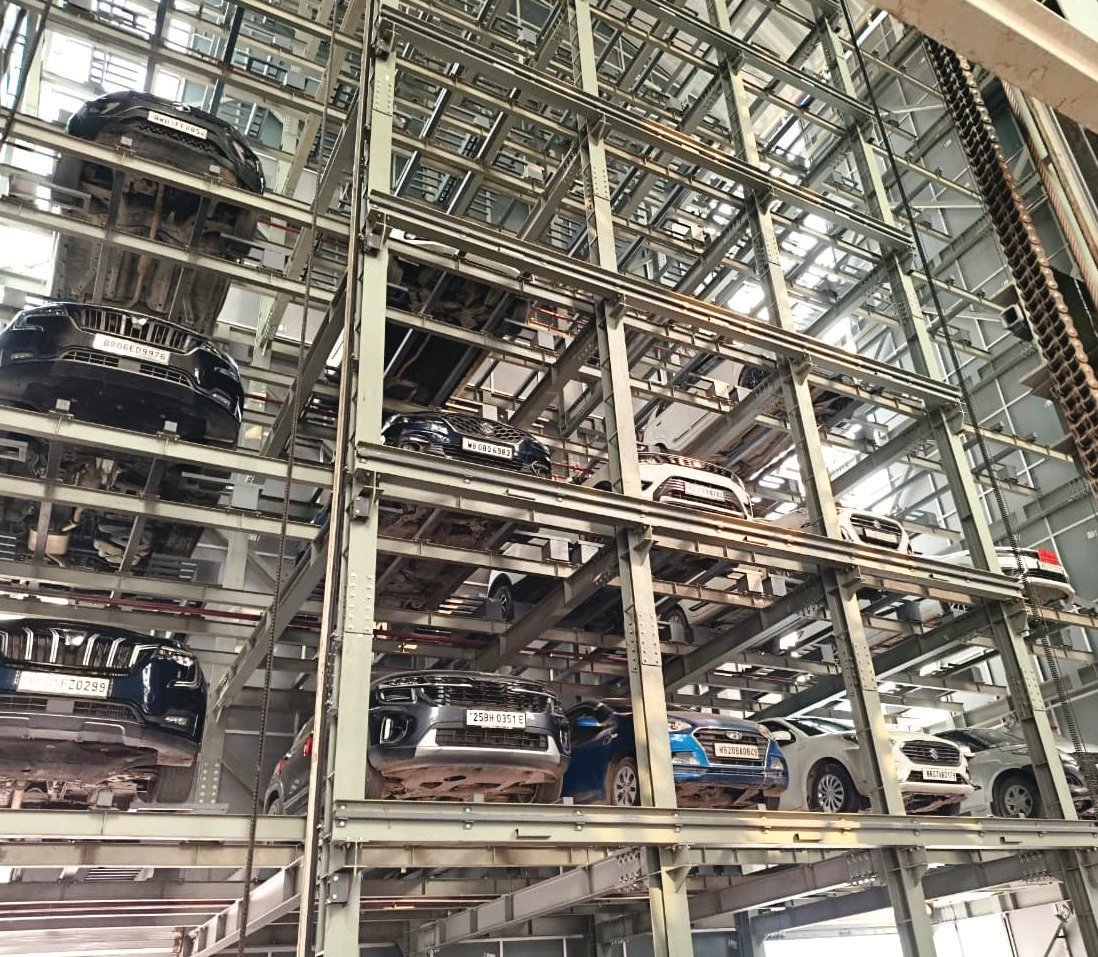
The next decade will transform parking from a mechanical utility into an intelligent, data-producing layer of urban infrastructure. We are already seeing the early contours of this transformation. Automated parking systems today are not merely mechanical structures — they are intelligent mobility solutions incorporating sensors, real-time monitoring, IoT dashboards, and predictive maintenance capabilities.
I see the evolution unfolding across three phases.
Phase one — what I’d call operational intelligence — is unfolding now through roughly 2028. This is about making parking systems self-aware. IoT sensors monitor every critical component — motor temperatures, chain tension, bearing vibration, hydraulic pressure — and feed data into dashboards that enable operators to resolve issues faster and users to gain confidence through transparent performance visibility. For us, this digital layer amplifies what our on-ground service teams can already do: instead of scheduled visits based on calendar intervals, we will move toward condition-based interventions. Predictive maintenance algorithms, I expect, will reduce downtime by 40–60% compared to traditional models.
Phase two — demand intelligence — will likely characterise 2028 to 2032. Parking systems will connect to broader urban data ecosystems. For the first time, cities will be able to map when and where parking demand peaks, how patterns shift during festivals, what vehicle types are entering facilities, and how people move through different parts of the city. This data will help planners make vastly better decisions — from signal timing to space allocation for EV charging. AI will enable dynamic pricing, reservation systems, and real-time wayfinding that reduces the cruising-for-parking traffic that accounts for a significant share of congestion in dense urban cores.
Phase three — systemic intelligence — will take hold from 2032 onward. Parking infrastructure will integrate with smart-city platforms, traffic management systems, and mobility-as-a-service networks. The future of parking is digitally connected, data-driven, environmentally responsible, and designed for seamless user experience. But all of that still depends on physical infrastructure that works, which is why our foundation — 42-city service presence, 99% AMC coverage, 10,000-plus installations — is non-negotiable. Digital intelligence only matters if the machine lifts the car when the user arrives.
Q In high-density urban environments, user adoption is equally as important as engineering. How do you ensure that automated systems remain intuitive, user-friendly, and practical for everyday residential and commercial use?
I learned early on that a technically brilliant system that intimidates its users is a failed system. User adoption isn’t a soft consideration — it is the determining factor in whether an installation becomes a lasting asset or a liability for the developer. In India, this challenge is compounded by extreme diversity: your user base ranges from tech-savvy young professionals to elderly residents who may never have encountered an automated system before.
Our design philosophy for user experience rests on simplicity, safety, resilient failure, and onboarding. The process must be intuitive: drive in, exit the vehicle, initiate parking via touchscreen or RFID card. Retrieval is typically within 90 seconds. In residential settings, RFID-based access means residents never need to touch a screen; they simply tap and go. We also build deliberate psychological safety — load-balance sensors, locking mechanisms, CCTV, and emergency backups. Even during a power outage, no user is stranded; our systems are designed for graceful degradation, and with service teams in 42 cities, any intervention required is prompt.
Once people experience the convenience — no more navigating tight ramps, no searching for slots, no anxiety about minor scratches in cramped spaces — adoption becomes self-reinforcing. At The Chennai Silks installation, one telling outcome was that the number of employed drivers dropped markedly because end users were comfortable parking themselves. When a system is backed by reliable service that keeps it running day after day, that confidence grows, and the machinery itself becomes invisible — simply a useful part of daily life.
Q As EV adoption accelerates, parking systems will eventually become part of a larger energy ecosystem. How is Parklayer preparing for this transition, particularly in terms of charging integration and future-ready infrastructure?
The convergence of automated parking and electric vehicle charging is not a distant future — it is a design imperative we are addressing right now. As EV adoption accelerates, parking infrastructure will inevitably become a critical node in the energy ecosystem:
a place where vehicles don’t merely park but charge, and eventually, through vehicle-to-grid technology, potentially contribute power back to the network.
Our preparation spans three horizons. Immediately, all new Parklayer systems are being designed with EV-ready infrastructure — dedicated power supply conduits, load-balancing capability, and slot-level charging integration pathways. Many of our facilities already integrate EV-ready slots, allowing vehicles to charge while parked.
In the medium term, we are engineering smart charging integration: parking management software that communicates with charging hardware via standardised APIs, enabling scheduled charging during off-peak tariff hours, dynamic load management across multiple simultaneous sessions, and integrated billing. Long-term, we are tracking bidirectional charging and grid-flexibility services — large commercial parking installations could become distributed energy resources, storing power during low-demand periods and feeding it back during peak hours.What makes this vision credible, however, is that we are already installed and deeply embedded across the country. With 10,000-plus car parks and service teams in 42 cities, we have a real, distributed base of infrastructure that can be progressively electrified. That combination of physical presence, service depth, and forward-looking engineering is what will make the transition real, not just rhetorical.