 The Announcement Fatigue
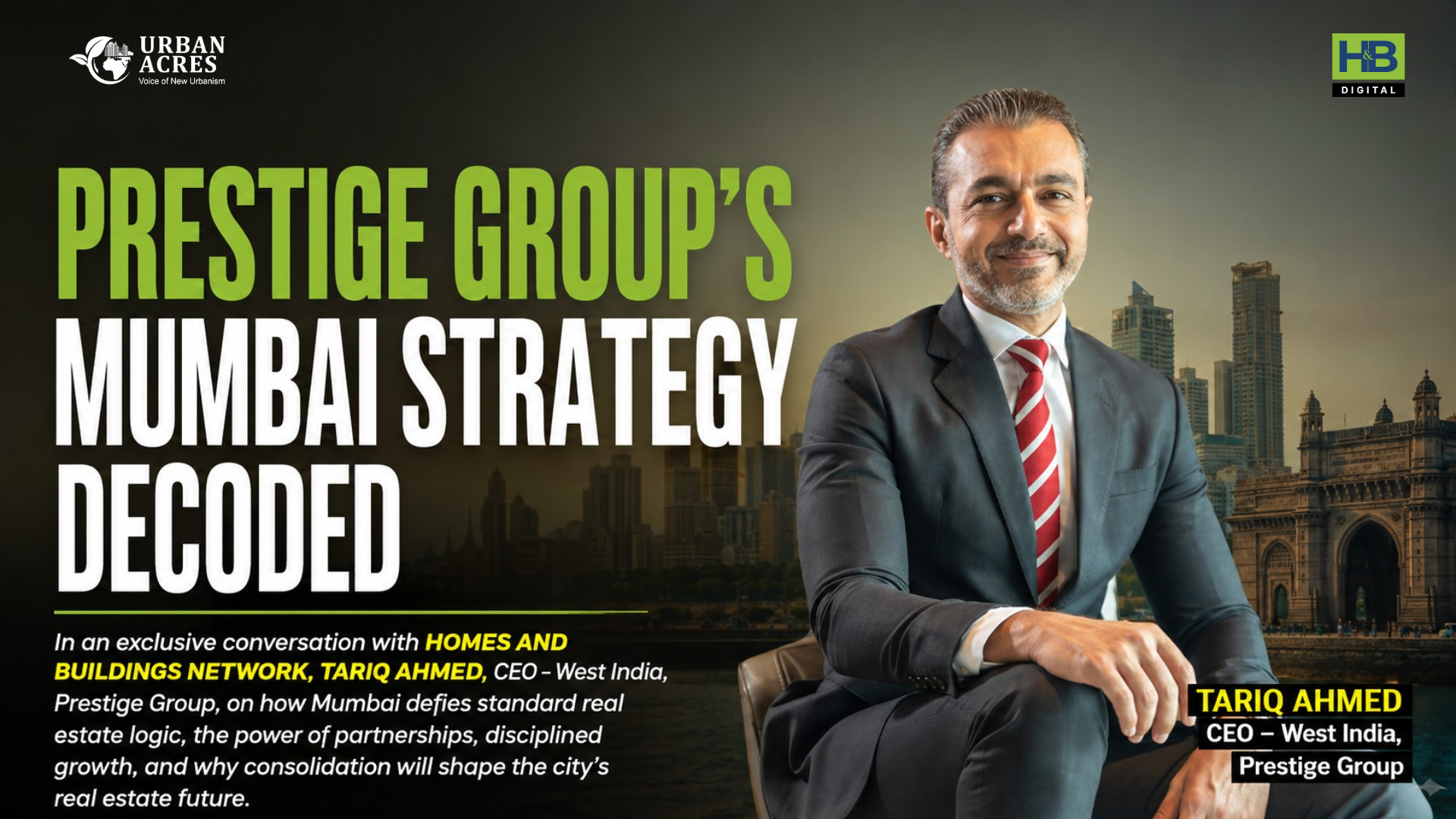
In an exclusive conversation with HOMES AND BUILDINGS NETWORK, Tariq Ahmed, CEO – West India, Prestige Group, speaks candidly about why Mumbai defies standard real estate logic, how partnerships and financial discipline unlocked growth, what Marine Lines represents architecturally and emotionally, and why consolidation, sustainability and regional expansion will define the city’s future.
Q Prestige entered Mumbai later than several national peers, yet scaled up at remarkable speed across multiple micro-markets. From your vantage point, what did Prestige understand about Mumbai that others may have misread?
I joined real estate only about five years ago, so it’s important to acknowledge that this momentum is largely the result of a very deliberate strategy laid down by our chairman and the senior leadership. There was absolute clarity at the outset about what the western region could represent for Prestige, and how we needed to approach it. If I were to distil our success in Mumbai into a few fundamentals, two factors stand out clearly. The first was timing. Despite entering the market at a moment when the broader real estate ecosystem was under strain, Prestige had strong capital visibility due to our liquidity transaction with Blackstone. That balance-sheet strength allowed us to move decisively when opportunities presented themselves.
The second factor was discipline — applying the same core principles that have worked for us over four decades across other markets. We did not try to reinvent ourselves for Mumbai. Instead, we remained clear about what Prestige does exceptionally well: brand credibility, execution capability, customer trust, marketing strength, and delivery discipline. Many of our early Mumbai assets — including Marine Lines, Mahalakshmi, and Mulund — emerged from complex situations such as distressed transactions and NCLT cases. These were not opportunities everyone was willing or able to pursue. Our approach was to form partnerships where roles were clearly defined. Prestige brought capital strength, execution, and brand confidence, while our local partners contributed land access and deep familiarity with Mumbai’s intricate approval environment. That collaboration proved extremely effective. Another important belief for us is that land should not sit idle. We are not in the business of creating passive land banks. Our focus is on quick conversion from land to development, and from development to sales so that capital is released and reinvested efficiently.
This approach has enabled us to scale without over-leveraging. Finally, we invested early in building the right platform — strong local teams, experienced leadership, and systems that reflect the learning Prestige has accumulated over 40 years. We kept the strategy simple: stay true to our strengths, choose partners carefully, and execute with consistency. In a market as complex as Mumbai, that clarity made all the difference.
 Q Mumbai is fundamentally different from markets such as Bengaluru — whether it is land economics, regulatory complexity, or the sheer number of authorities and premiums involved. How did Prestige navigate these early challenges, and what were the most important learnings from your first two to three years in the city?
Mumbai demands a very different mindset. The entry barriers are higher, the cost structures are heavier, and the approval ecosystem is far more layered than in most Indian cities. For anyone new to the market, the learning curve can be steep — and it certainly was for us in the initial phase. One of the first things we recognised was that Mumbai cannot be approached with a standardised playbook. What works in Bengaluru or other markets
does not automatically translate here. We recognised that local knowledge is critical for navigating land history, regulatory pathways, and coordination across multiple approving authorities. That understanding shaped our
decision to work closely with experienced local partners who could navigate these complexities far more efficiently.
At the same time, Prestige brought complementary strengths to the table — capital support, execution discipline, institutional processes, and brand credibility. This balance allowed us to absorb the initial friction without losing momentum. Once approvals are secured in Mumbai, speed of
execution becomes crucial, and that is where our delivery capabilities came into play. The challenges here are undeniably higher than in other markets, but so is the scale of opportunity. If you respect the city’s unique dynamics and work collaboratively within its ecosystem, Mumbai can reward you in ways very few markets can.
Q Compared to Bengaluru — where land, FSI and regulatory costs are far more predictable — how different has Mumbai been in terms of approvals, taxation and overall financial viability?
You’ve touched upon what is arguably the most defining difference between Mumbai and other Indian markets. When we first modelled our entry into the city, even with experienced advisors and strong local partners, the complexity of Mumbai’s economics came as a learning in its own right. In markets like Bengaluru, you typically acquire land with a clearly defined FSI, and the cost structure beyond that is relatively straightforward. Hyderabad goes a step further, with virtually no FSI cap. Mumbai, however, operates on a completely different framework. Here, base FSI, premiums, TDR, fungible components and multiple statutory charges all stack up — pushing both costs and density significantly upward.
When you analyse the numbers closely, not every project in Mumbai automatically makes financial sense once all these elements are factored in. The margin for error is very thin. This means developers have to be exceptionally disciplined, both in underwriting deals and in managing approvals and cash flows.
Without getting into exact figures, in Mumbai–land cost, premiums, and approval-related expenses–together can account for nearly 35 to 45 percent of the total project cost for mid-segment housing, typically priced in the ₹20,000–30,000 per sq ft carpet range. In cities like Bengaluru or Hyderabad, this proportion is materially lower, which translates into stronger profitability and healthier cash flows.
As you move up the price curve into mid-luxury and luxury housing, the economics become more forgiving. The relative share of approval and land costs reduces, allowing more room for margins. That reality has played a key role in how we think about product mix in Mumbai.
For mid-segment projects in this city, scale and speed are absolutely critical. You need to execute large developments, secure approvals smartly, and sell through quickly. If a project gets delayed, interest costs alone can erode margins. Timing approvals alongside sales, using deferred payment structures, and avoiding front-loaded costs become essential tools rather than optional strategies.
Mumbai, therefore, demands far sharper financial discipline than most other markets. The rewards are real, but so are the risks. Success here is less about optimism and more about precision — in underwriting, execution, and capital management.
Q You mentioned about Marine Lines, which is not just another micro-market in Mumbai — it is an emotion, layered with heritage, memory and aspiration. As Prestige’s first project in this iconic precinct, what architectural and lifestyle shift are you seeking to introduce here?
Marine Lines is one of those rare parts of Mumbai where real estate goes
beyond economics. As you rightfully said, it carries memory, heritage and emotion. The Queen’s Necklace, the Art Deco buildings, and the rhythm of the promenade— collectively, these define a precinct that demands restraint, not excess.
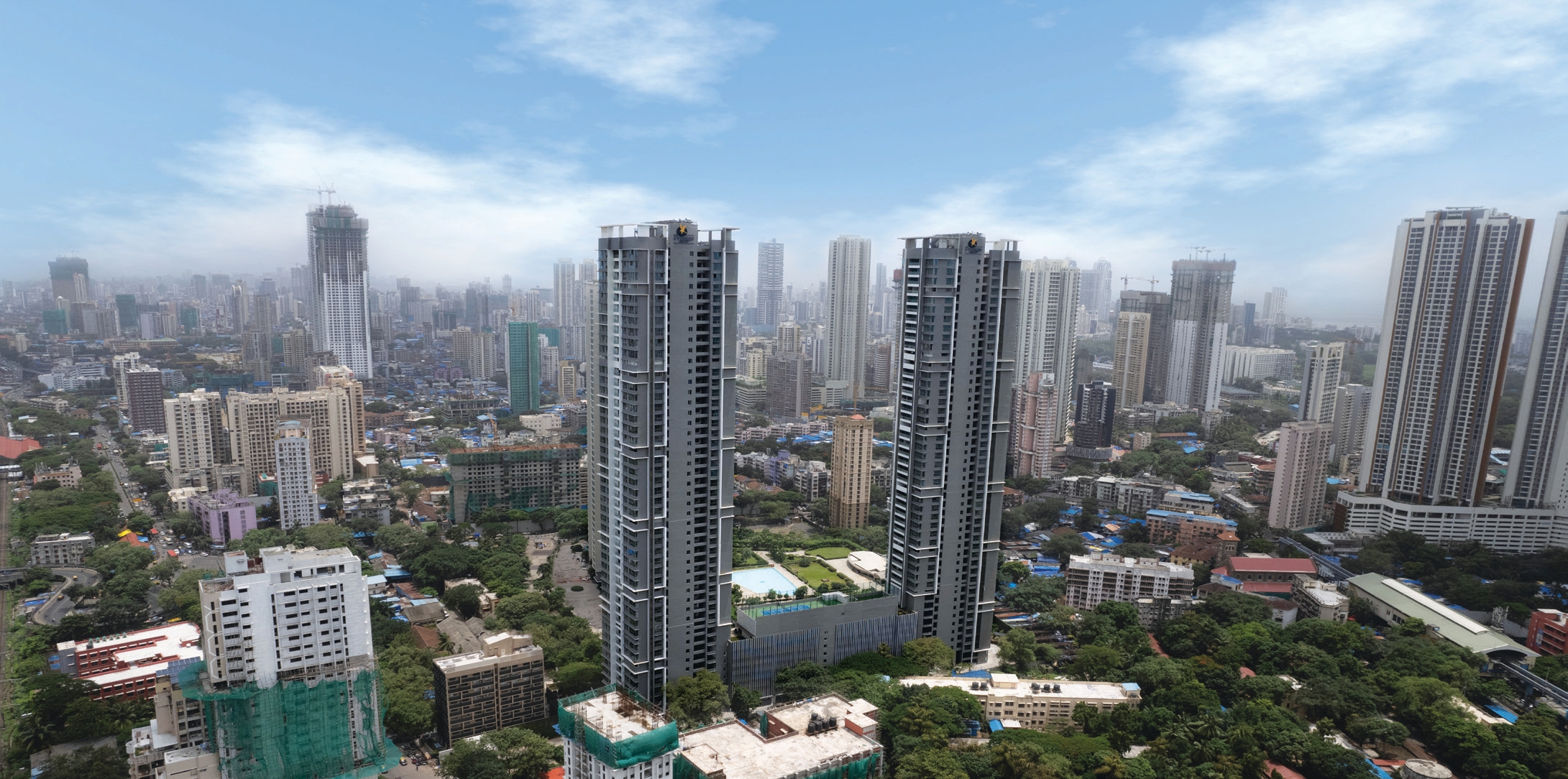
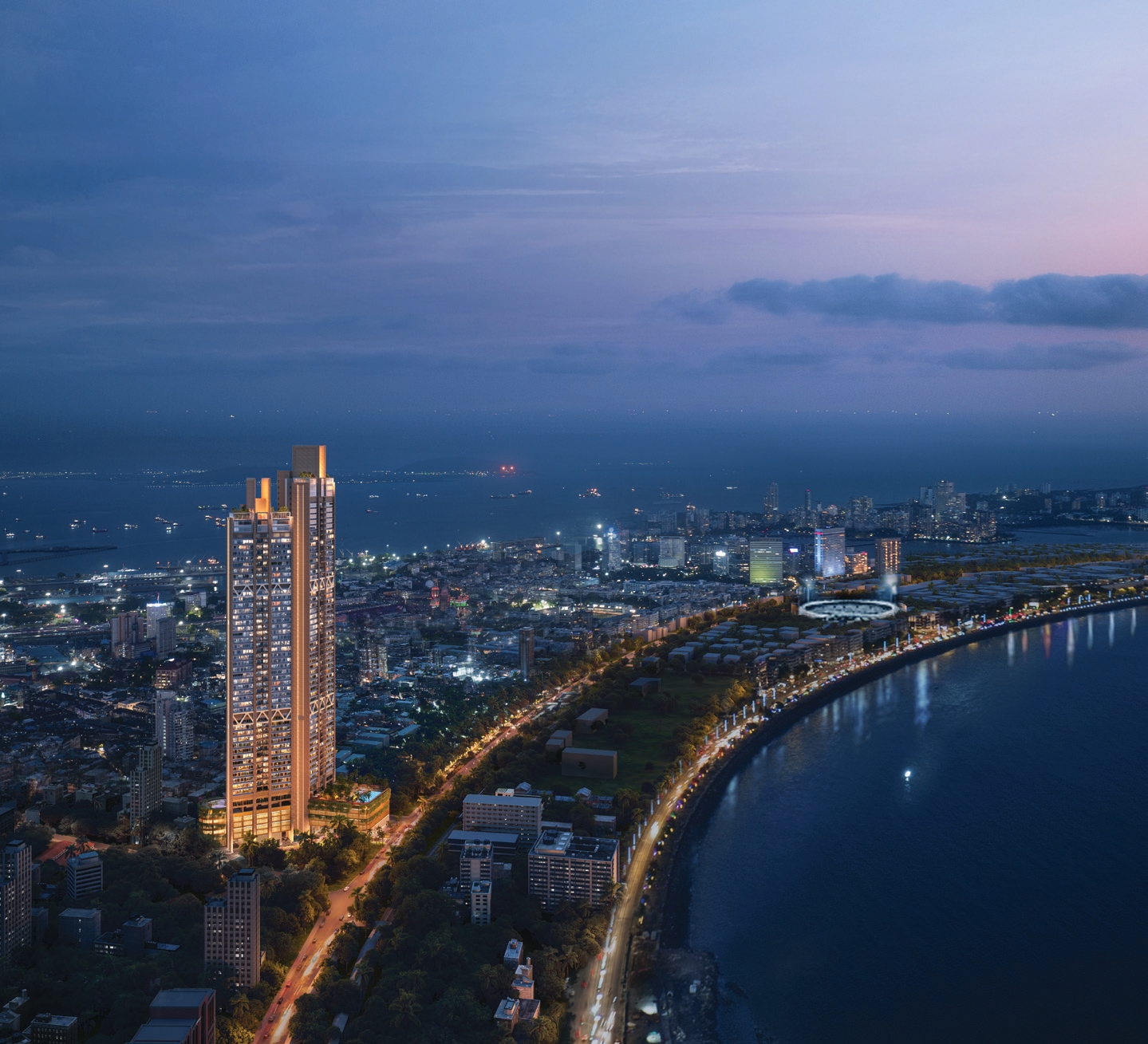
Our intent with Ocean Towers was to introduce a contemporary expression that respects this legacy rather than competing with it. Designed by Foster + Partners, the twin-tower development, with one tower rising close to 300 metres, is deliberately elegant and understated. It doesn’t scream for attention. Instead, it rises calmly, creating a quiet dialogue with the surrounding Art Deco fabric.
We were conscious that at this scale, attempting to replicate historic styles would feel forced. So, we chose a modern, minimal design language that blends into the context while still adding a refined, global dimension to the skyline. There is perhaps a subtle Miami influence manifested in clean lines and ocean-facing homes, yet it is interpreted carefully for Marine Lines.
From a lifestyle standpoint, the project is intentionally boutique. With just 140–150 ocean-facing residences, the focus is on space, views and quality rather than density. The idea was to offer residents of an older neighbourhood the comforts of contemporary living — without overwhelming the precinct with scale or clutter.
Marine Lines is at an inflection point. As older buildings age, sensitive redevelopment can become a force for renewal. Our aspiration is simple: to contribute positively to this evolution, adding modernity without disturbing the emotion that makes Marine Lines so special.
 Q How does this structural reality shape your approach to Mumbai? Additionally, how is Prestige positioning itself within redevelopment and slum rehabilitation, especially amid intense competition in core micro-markets?
Mumbai operates within very defined constraints. A significant portion of the city is occupied by slums, another large segment is under society redevelopment, and a substantial share of land is controlled by government and institutional bodies. Barely 5 to 10 percent of Mumbai offers any scope for true greenfield development. That single fact dictates how developers must think and operate here.
We entered Mumbai fully aware that redevelopment, whether society-led or SRA-driven, would be the primary growth engine. For a developer, land or development rights are the raw material, and in Mumbai those are largely accessed through redevelopment structures. Almost all our projects in the city reflect this reality. Slum Rehabilitation in Mulund and Jijamata Nagar, Integrated Transit Housing in BKC, and Society Redevelopments such as Daffodils and Nautilus.
This approach aligns closely with the government’s broader vision of renewing Mumbai’s ageing building stock while improving urban living conditions. Redevelopment allows the city to modernise itself and, at the same time, makes projects economically viable for developers — though the math has undoubtedly become tighter. Society expectations have risen significantly, and the margin for error has reduced.
That said, redevelopment is unavoidable in Mumbai. The key lies in managing it well. We are comfortable operating in this space because we collaborate closely with strong local partners who bring deep expertise in land clearances and approvals — areas where local knowledge is indispensable.
Q Prestige entered Mumbai later than several national peers, yet scaled up at remarkable speed across multiple micro-markets. From your vantage point, what did Prestige understand about Mumbai that others may have misread?
I joined real estate only about five years ago, so it’s important to acknowledge that this momentum is largely the result of a very deliberate strategy laid down by our chairman and the senior leadership. There was absolute clarity at the outset about what the western region could represent for Prestige, and how we needed to approach it. If I were to distil our success in Mumbai into a few fundamentals, two factors stand out clearly. The first was timing. Despite entering the market at a moment when the broader real estate ecosystem was under strain, Prestige had strong capital visibility due to our liquidity transaction with Blackstone. That balance-sheet strength allowed us to move decisively when opportunities presented themselves.
The second factor was discipline — applying the same core principles that have worked for us over four decades across other markets. We did not try to reinvent ourselves for Mumbai. Instead, we remained clear about what Prestige does exceptionally well: brand credibility, execution capability, customer trust, marketing strength, and delivery discipline. Many of our early Mumbai assets — including Marine Lines, Mahalakshmi, and Mulund — emerged from complex situations such as distressed transactions and NCLT cases. These were not opportunities everyone was willing or able to pursue. Our approach was to form partnerships where roles were clearly defined. Prestige brought capital strength, execution, and brand confidence, while our local partners contributed land access and deep familiarity with Mumbai’s intricate approval environment. That collaboration proved extremely effective. Another important belief for us is that land should not sit idle. We are not in the business of creating passive land banks. Our focus is on quick conversion from land to development, and from development to sales so that capital is released and reinvested efficiently.
This approach has enabled us to scale without over-leveraging. Finally, we invested early in building the right platform — strong local teams, experienced leadership, and systems that reflect the learning Prestige has accumulated over 40 years. We kept the strategy simple: stay true to our strengths, choose partners carefully, and execute with consistency. In a market as complex as Mumbai, that clarity made all the difference.
Q Mumbai is fundamentally different from markets such as Bengaluru — whether it is land economics, regulatory complexity, or the sheer number of authorities and premiums involved. How did Prestige navigate these early challenges, and what were the most important learnings from your first two to three years in the city?
Mumbai demands a very different mindset. The entry barriers are higher, the cost structures are heavier, and the approval ecosystem is far more layered than in most Indian cities. For anyone new to the market, the learning curve can be steep — and it certainly was for us in the initial phase. One of the first things we recognised was that Mumbai cannot be approached with a standardised playbook. What works in Bengaluru or other markets
does not automatically translate here. We recognised that local knowledge is critical for navigating land history, regulatory pathways, and coordination across multiple approving authorities. That understanding shaped our
decision to work closely with experienced local partners who could navigate these complexities far more efficiently.
At the same time, Prestige brought complementary strengths to the table — capital support, execution discipline, institutional processes, and brand credibility. This balance allowed us to absorb the initial friction without losing momentum. Once approvals are secured in Mumbai, speed of
execution becomes crucial, and that is where our delivery capabilities came into play. The challenges here are undeniably higher than in other markets, but so is the scale of opportunity. If you respect the city’s unique dynamics and work collaboratively within its ecosystem, Mumbai can reward you in ways very few markets can.
Q Compared to Bengaluru — where land, FSI and regulatory costs are far more predictable — how different has Mumbai been in terms of approvals, taxation and overall financial viability?
You’ve touched upon what is arguably the most defining difference between Mumbai and other Indian markets. When we first modelled our entry into the city, even with experienced advisors and strong local partners, the complexity of Mumbai’s economics came as a learning in its own right. In markets like Bengaluru, you typically acquire land with a clearly defined FSI, and the cost structure beyond that is relatively straightforward. Hyderabad goes a step further, with virtually no FSI cap. Mumbai, however, operates on a completely different framework. Here, base FSI, premiums, TDR, fungible components and multiple statutory charges all stack up — pushing both costs and density significantly upward.
When you analyse the numbers closely, not every project in Mumbai automatically makes financial sense once all these elements are factored in. The margin for error is very thin. This means developers have to be exceptionally disciplined, both in underwriting deals and in managing approvals and cash flows.
Without getting into exact figures, in Mumbai–land cost, premiums, and approval-related expenses–together can account for nearly 35 to 45 percent of the total project cost for mid-segment housing, typically priced in the ₹20,000–30,000 per sq ft carpet range. In cities like Bengaluru or Hyderabad, this proportion is materially lower, which translates into stronger profitability and healthier cash flows.
As you move up the price curve into mid-luxury and luxury housing, the economics become more forgiving. The relative share of approval and land costs reduces, allowing more room for margins. That reality has played a key role in how we think about product mix in Mumbai.
For mid-segment projects in this city, scale and speed are absolutely critical. You need to execute large developments, secure approvals smartly, and sell through quickly. If a project gets delayed, interest costs alone can erode margins. Timing approvals alongside sales, using deferred payment structures, and avoiding front-loaded costs become essential tools rather than optional strategies.
Mumbai, therefore, demands far sharper financial discipline than most other markets. The rewards are real, but so are the risks. Success here is less about optimism and more about precision — in underwriting, execution, and capital management.
Q You mentioned about Marine Lines, which is not just another micro-market in Mumbai — it is an emotion, layered with heritage, memory and aspiration. As Prestige’s first project in this iconic precinct, what architectural and lifestyle shift are you seeking to introduce here?
Marine Lines is one of those rare parts of Mumbai where real estate goes
beyond economics. As you rightfully said, it carries memory, heritage and emotion. The Queen’s Necklace, the Art Deco buildings, and the rhythm of the promenade— collectively, these define a precinct that demands restraint, not excess.
Our intent with Ocean Towers was to introduce a contemporary expression that respects this legacy rather than competing with it. Designed by Foster + Partners, the twin-tower development, with one tower rising close to 300 metres, is deliberately elegant and understated. It doesn’t scream for attention. Instead, it rises calmly, creating a quiet dialogue with the surrounding Art Deco fabric.
We were conscious that at this scale, attempting to replicate historic styles would feel forced. So, we chose a modern, minimal design language that blends into the context while still adding a refined, global dimension to the skyline. There is perhaps a subtle Miami influence manifested in clean lines and ocean-facing homes, yet it is interpreted carefully for Marine Lines.
From a lifestyle standpoint, the project is intentionally boutique. With just 140–150 ocean-facing residences, the focus is on space, views and quality rather than density. The idea was to offer residents of an older neighbourhood the comforts of contemporary living — without overwhelming the precinct with scale or clutter.
Marine Lines is at an inflection point. As older buildings age, sensitive redevelopment can become a force for renewal. Our aspiration is simple: to contribute positively to this evolution, adding modernity without disturbing the emotion that makes Marine Lines so special.
Q How does this structural reality shape your approach to Mumbai? Additionally, how is Prestige positioning itself within redevelopment and slum rehabilitation, especially amid intense competition in core micro-markets?
Mumbai operates within very defined constraints. A significant portion of the city is occupied by slums, another large segment is under society redevelopment, and a substantial share of land is controlled by government and institutional bodies. Barely 5 to 10 percent of Mumbai offers any scope for true greenfield development. That single fact dictates how developers must think and operate here.
We entered Mumbai fully aware that redevelopment, whether society-led or SRA-driven, would be the primary growth engine. For a developer, land or development rights are the raw material, and in Mumbai those are largely accessed through redevelopment structures. Almost all our projects in the city reflect this reality. Slum Rehabilitation in Mulund and Jijamata Nagar, Integrated Transit Housing in BKC, and Society Redevelopments such as Daffodils and Nautilus.
This approach aligns closely with the government’s broader vision of renewing Mumbai’s ageing building stock while improving urban living conditions. Redevelopment allows the city to modernise itself and, at the same time, makes projects economically viable for developers — though the math has undoubtedly become tighter. Society expectations have risen significantly, and the margin for error has reduced.
That said, redevelopment is unavoidable in Mumbai. The key lies in managing it well. We are comfortable operating in this space because we collaborate closely with strong local partners who bring deep expertise in land clearances and approvals — areas where local knowledge is indispensable.
Q How different is the Mumbai homebuyer compared to buyers in market like Bengaluru, and how has that difference shaped Prestige’s marketing and communication strategy in the city?
At its core, homebuying everywhere involves people putting their life savings behind one of the most emotionally charged decisions they will ever make. What changes from market to market is how that emotion is triggered and how trust is built.
In Bengaluru, marketing tends to be more project-centric. Buyers focus heavily on specifications, layouts, and pricing, and brand familiarity often comes later. Mumbai is different. Here, especially in our early years, the challenge was not just to sell projects but to establish the Prestige brand itself.
We realised early on that trust had to lead the conversation. Mumbai buyers have seen their share of delayed projects and broken promises, so credibility matters more than glossy communication. Our messaging leaned strongly on emotion and reassurance, with ‘Add Prestige to Your Life’ serving as both anchor and demonstrable promise.
Execution and on-time delivery became our most powerful marketing tools. When we delivered three projects on schedule and secured occupation certificates earlier this year, that did more for brand confidence than any campaign could. It validated our claims.
As the portfolio has grown, our communication strategy has also become more nuanced. In the luxury segment, for instance, we did almost no mass advertising. Sales were driven largely by word-of-mouth and highly personalised engagement. Different products demand different conversations, and being flexible in how we communicate has been critical to building resonance with Mumbai’s discerning buyers.
Q With redevelopment accelerating and long-stalled approvals now being unlocked, concerns around oversupply are growing in Mumbai. How do you see this impacting market sentiment and the competitive landscape?
Oversupply is often viewed as a risk, but in reality it tends to favour organised, well-capitalised developers. When consumers are presented with too many choices, behaviour becomes similar to other mature sectors — they gravitate towards brands they trust. In Mumbai, names like Lodha, Godrej, DLF or Prestige represent certainty: the confidence that projects will be executed, delivered on time and supported by strong balance sheets.
In that sense, oversupply leads to consolidation rather than chaos. Tier-one developers gain market share, while many smaller or under-capitalised players increasingly opt to
monetise land instead of developing projects themselves. Regulatory reforms like RERA have further accelerated this shift by raising compliance and execution standards across the industry.There will inevitably be some friction in the system, given that real estate is cyclical, and periods of adjustment are natural. But structurally, this phase strengthens organised players and improves overall market discipline. For credible developers with execution capability, oversupply is less a threat and more an opportunity to deepen trust and expand responsibly.
Q Does this ongoing consolidation naturally push established brands like Prestige towards more joint ventures and partnerships with local developers or landowners?
Absolutely. Consolidation does encourage greater collaboration, and joint ventures are an increasingly important part of our growth strategy. They allow us to remain capital-light while expanding our footprint. However, for us, the quality of the partner is non-negotiable.
Counterparty diligence often matters more than the deal itself. We are comfortable exploring both outright acquisitions and partnership structures, but only where there is clear alignment on values, quality benchmarks and execution capability. In a market like Mumbai, partnerships work best when responsibilities are clearly defined and both sides bring complementary strengths to the table.
Q As part of your western India strategy, how do you view markets like Pune and Ahmedabad in terms of growth potential and strategic fit?
Pune is a market we have evaluated far more closely at this stage. In many ways, it mirrors Bengaluru. This is evident in the similar buyer behaviour, IT-driven economic foundations, and price sensitivity found in both cities. That familiarity makes Pune a more immediate and natural extension of our portfolio. Ahmedabad is also a compelling market, but it requires deeper on-ground understanding. We have spent time studying the city and see strong long-term potential. It is vibrant, entrepreneurial and structurally very different from Mumbai or Pune, with a flatter development profile and lower vertical intensity.
Q As we look ahead to 2030, how do you see the Mumbai real estate market evolving — and where will Prestige stand within that future landscape?
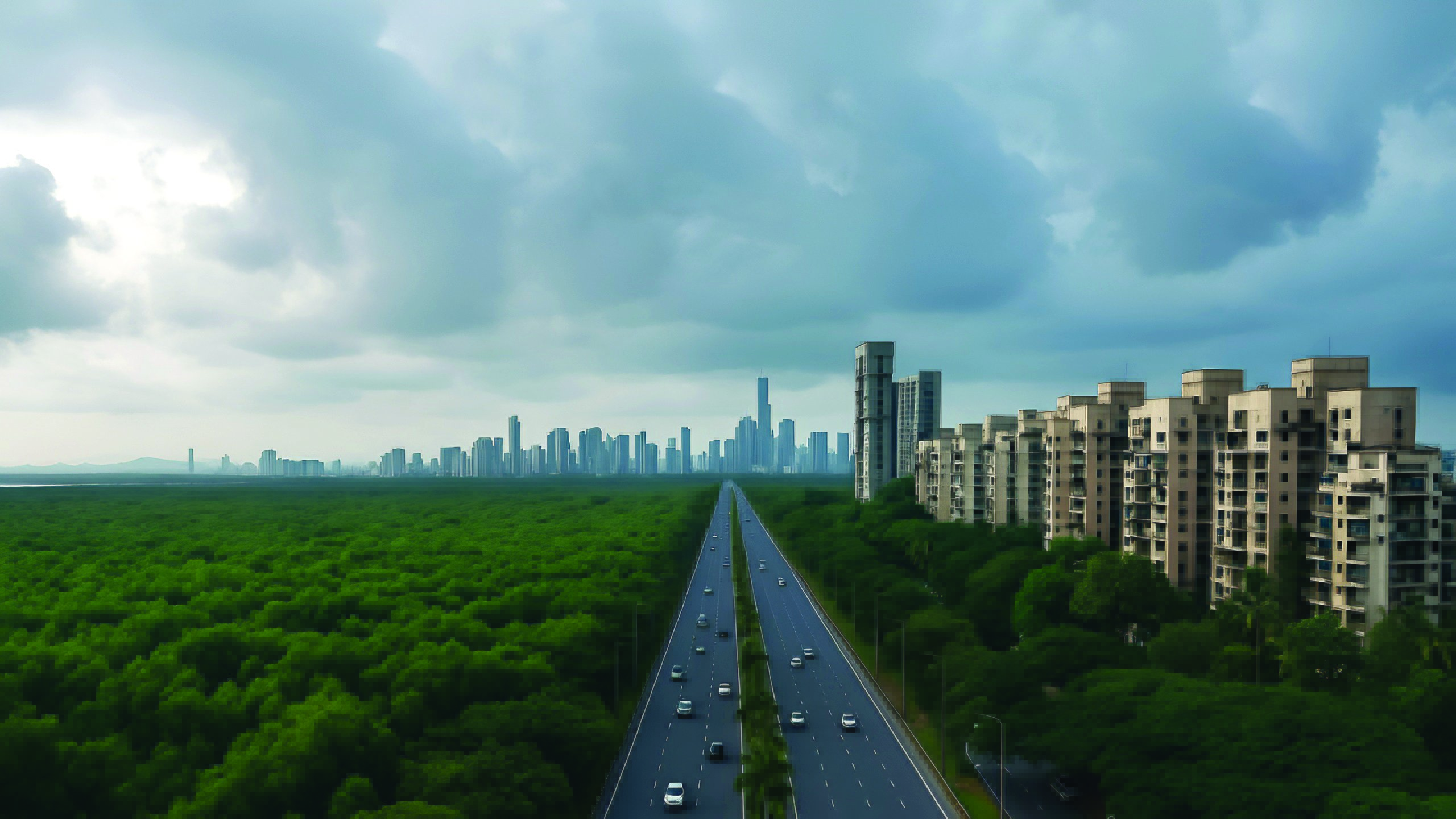
Mumbai will continue to be one of India’s most dynamic and complex real estate markets. The skyline has already undergone a dramatic transformation over the past decade, and I believe that pace will only accelerate. What we are witnessing is the emergence of a more global urban form, akin to a New York–style city, with a dense, high-rise core surrounded by lifestyle-driven residential and mixed-use zones. I see Mumbai evolving as a broader metropolitan ecosystem rather than a single, congested island. Navi Mumbai will play a far more prominent role, Alibaug will increasingly function as a lifestyle extension of the city, and destinations like Lonavala could emerge as primary or secondary residential hubs. As a result, improved connectivity will allow people to live across this wider geography while remaining closely linked to the city’s economic core.
By 2030, Mumbai will be more spread out, better connected, and structurally more mature. Prestige intends to be present across this entire spectrum — from urban homes and commercial spaces to hospitality and lifestyle-led developments — shaping communities that reflect how the city itself is evolving.
At its core, homebuying everywhere involves people putting their life savings behind one of the most emotionally charged decisions they will ever make. What changes from market to market is how that emotion is triggered and how trust is built.
In Bengaluru, marketing tends to be more project-centric. Buyers focus heavily on specifications, layouts, and pricing, and brand familiarity often comes later. Mumbai is different. Here, especially in our early years, the challenge was not just to sell projects but to establish the Prestige brand itself.
We realised early on that trust had to lead the conversation. Mumbai buyers have seen their share of delayed projects and broken promises, so credibility matters more than glossy communication. Our messaging leaned strongly on emotion and reassurance, with ‘Add Prestige to Your Life’ serving as both anchor and demonstrable promise.
Execution and on-time delivery became our most powerful marketing tools. When we delivered three projects on schedule and secured occupation certificates earlier this year, that did more for brand confidence than any campaign could. It validated our claims.
As the portfolio has grown, our communication strategy has also become more nuanced. In the luxury segment, for instance, we did almost no mass advertising. Sales were driven largely by word-of-mouth and highly personalised engagement. Different products demand different conversations, and being flexible in how we communicate has been critical to building resonance with Mumbai’s discerning buyers.
Q With redevelopment accelerating and long-stalled approvals now being unlocked, concerns around oversupply are growing in Mumbai. How do you see this impacting market sentiment and the competitive landscape?
Oversupply is often viewed as a risk, but in reality it tends to favour organised, well-capitalised developers. When consumers are presented with too many choices, behaviour becomes similar to other mature sectors — they gravitate towards brands they trust. In Mumbai, names like Lodha, Godrej, DLF or Prestige represent certainty: the confidence that projects will be executed, delivered on time and supported by strong balance sheets.
In that sense, oversupply leads to consolidation rather than chaos. Tier-one developers gain market share, while many smaller or under-capitalised players increasingly opt to
monetise land instead of developing projects themselves. Regulatory reforms like RERA have further accelerated this shift by raising compliance and execution standards across the industry.There will inevitably be some friction in the system, given that real estate is cyclical, and periods of adjustment are natural. But structurally, this phase strengthens organised players and improves overall market discipline. For credible developers with execution capability, oversupply is less a threat and more an opportunity to deepen trust and expand responsibly.
Q Does this ongoing consolidation naturally push established brands like Prestige towards more joint ventures and partnerships with local developers or landowners?
Absolutely. Consolidation does encourage greater collaboration, and joint ventures are an increasingly important part of our growth strategy. They allow us to remain capital-light while expanding our footprint. However, for us, the quality of the partner is non-negotiable.
Counterparty diligence often matters more than the deal itself. We are comfortable exploring both outright acquisitions and partnership structures, but only where there is clear alignment on values, quality benchmarks and execution capability. In a market like Mumbai, partnerships work best when responsibilities are clearly defined and both sides bring complementary strengths to the table.
Q As part of your western India strategy, how do you view markets like Pune and Ahmedabad in terms of growth potential and strategic fit?
Pune is a market we have evaluated far more closely at this stage. In many ways, it mirrors Bengaluru. This is evident in the similar buyer behaviour, IT-driven economic foundations, and price sensitivity found in both cities. That familiarity makes Pune a more immediate and natural extension of our portfolio. Ahmedabad is also a compelling market, but it requires deeper on-ground understanding. We have spent time studying the city and see strong long-term potential. It is vibrant, entrepreneurial and structurally very different from Mumbai or Pune, with a flatter development profile and lower vertical intensity.
Q As we look ahead to 2030, how do you see the Mumbai real estate market evolving — and where will Prestige stand within that future landscape?
Mumbai will continue to be one of India’s most dynamic and complex real estate markets. The skyline has already undergone a dramatic transformation over the past decade, and I believe that pace will only accelerate. What we are witnessing is the emergence of a more global urban form, akin to a New York–style city, with a dense, high-rise core surrounded by lifestyle-driven residential and mixed-use zones. I see Mumbai evolving as a broader metropolitan ecosystem rather than a single, congested island. Navi Mumbai will play a far more prominent role, Alibaug will increasingly function as a lifestyle extension of the city, and destinations like Lonavala could emerge as primary or secondary residential hubs. As a result, improved connectivity will allow people to live across this wider geography while remaining closely linked to the city’s economic core.
By 2030, Mumbai will be more spread out, better connected, and structurally more mature. Prestige intends to be present across this entire spectrum — from urban homes and commercial spaces to hospitality and lifestyle-led developments — shaping communities that reflect how the city itself is evolving.