HomeBricks & MortarIndia Steel Boom Puts Downstream Costs Under Focus

India Steel Boom Puts Downstream Costs Under Focus

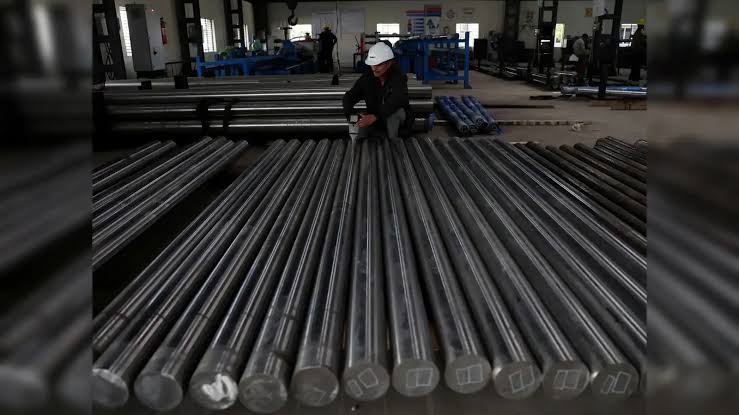
India’s steel industry has expanded rapidly to become the world’s second-largest crude steel producer, but questions are emerging over how much of that growth reflects underlying efficiency. A recent economic policy study points to low domestic iron ore prices and trade barriers as factors supporting profitability, raising wider concerns for construction, infrastructure and manufacturing costs.

India produced 152.18 million tonnes of crude steel in FY2024-25, according to the Ministry of Steel. The country’s production has risen sharply over the past two decades as infrastructure investment, construction activity and industrial demand expanded. The Centre for Social and Economic Progress (CSEP) working paper published in September 2026 examines whether the sector’s strong financial performance can be sustained under greater competition. It reports average EBITDA margins of about 15% for the steel industry between 2000 and 2025, several percentage points above the rest of Indian manufacturing. A key issue identified by the researchers is the pricing of iron ore. India uses most of its domestically produced ore within the steel industry and has maintained restrictions on exports, including a 30% export duty on high-grade ore. The study estimates that domestic ore prices are about 30–40% below international levels.

That structure can reduce input costs for steel producers, but it also has implications for mining returns and the wider allocation of a finite natural resource. The paper argues that the resulting benefit is particularly significant because much of the iron ore supply comes from the public sector, while steel production is dominated by private companies.Trade protection is another part of the debate. The study points to import tariffs and Quality Control Orders covering steel products as barriers that limit external competition. While such measures can support domestic capacity and supply security, the researchers argue that prolonged protection may reduce pressure to improve productivity and contain prices. The impact extends well beyond steel plants. Steel is a major input for buildings, bridges, transport networks, vehicles and industrial equipment. Higher input prices can therefore feed into construction budgets and infrastructure costs, potentially affecting housing affordability and the cost of expanding urban services.

The working paper proposes a gradual reduction in tariffs towards levels seen in ASEAN economies, wider removal of selected Quality Control Orders, changes to iron ore export policy and reforms to mining exploration. It also recommends phased government disinvestment in Steel Authority of India Ltd while retaining strategic oversight. These are policy recommendations from the researchers, rather than announced government decisions. For India’s expanding cities, the competitiveness question has a practical dimension. Future roads, rail systems, housing and climate-resilient infrastructure will require large quantities of steel. The next phase of growth will therefore depend not only on producing more steel, but on ensuring that the material reaches downstream industries at costs that support broader economic efficiency and responsible urban expansion.

Also Read : India Steel Growth Raises Stakes For Greener Cities
India Steel Boom Puts Downstream Costs Under Focus
RELATED ARTICLES

LEAVE A REPLY

Please enter your comment!
Please enter your name here

- Advertisment -spot_img

Most Popular

Recent Comments

Pune Homebuyers Shift Towards Emerging Housing Corridors

Pune Homebuyers Shift Towards Emerging Housing Corridors

Rising housing costs are pushing more Pune buyers to examine neighbourhoods beyond the city’s established residential belts. Punawale, Mahalunge, Hinjewadi-Maan, Wagholi and parts of...

Coal India Target Raised As Thermal Demand Recovers

Coal India Target Raised As Thermal Demand Recovers

Coal India’s shares rose sharply on Tuesday after Morgan Stanley upgraded the stock and lifted its target price, reflecting expectations of stronger thermal power...

Sambhv Steel Tubes Raipur Plant Visit Draws Investor Focus

Sambhv Steel Tubes Raipur Plant Visit Draws Investor Focus

Sambhv Steel Tubes is set to bring 14 institutional investors and analysts to its manufacturing facilities in Raipur on September 24, putting production efficiency,...
India Coal Stocks Tighten as Power Demand Climbs

India Coal Stocks Tighten as Power Demand Climbs

India’s electricity system is facing renewed pressure as coal inventories at thermal power plants fall sharply while demand remains elevated. Central Electricity Authority data...
Cement Production Price Hikes Impact Urban Infrastructure Growth

Cement Production Price Hikes Impact Urban Infrastructure Growth

MUMBAI — Rising global energy prices, fueled by ongoing Middle East conflicts, are driving a surge in fuel costs for India’s primary cement manufacturers....