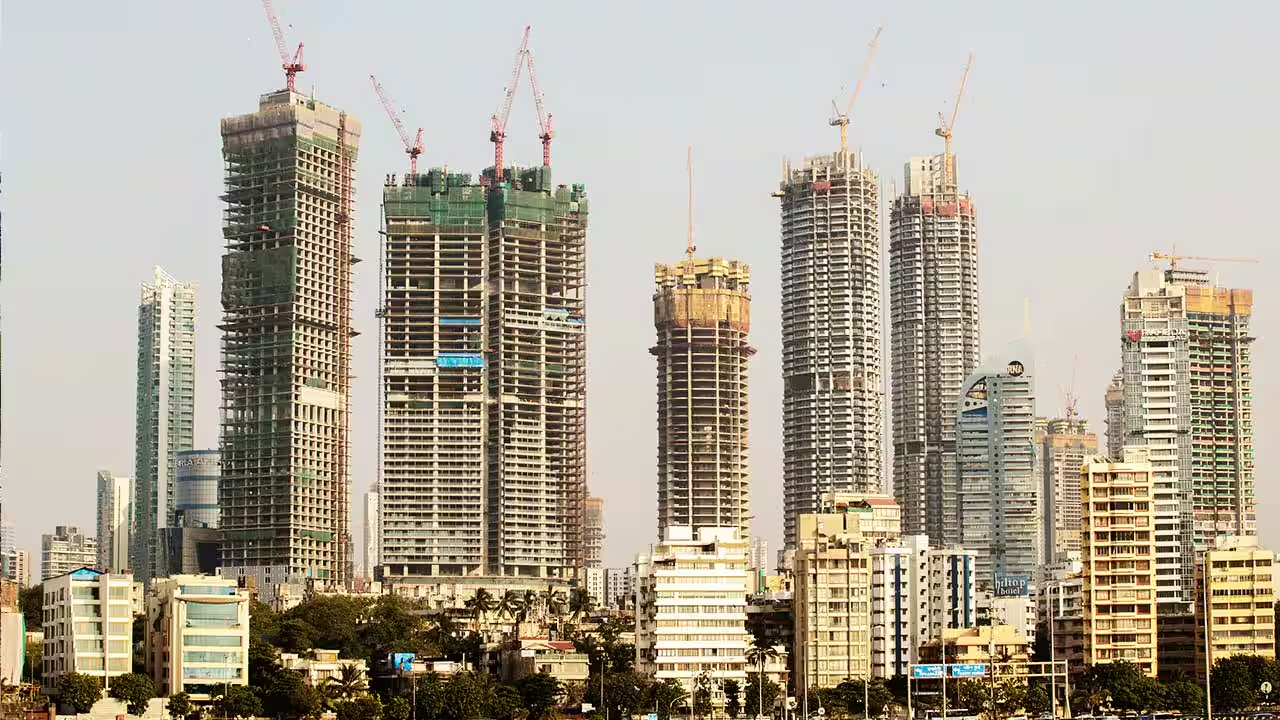
Aditya Birla Real Estate Bets On Future Housing Demand
Aditya Birla Real Estate is entering a fresh project-acquisition cycle as its balance sheet strengthens and redevelopment opportunities expand across major urban markets. The company completed the sale of its Century Pulp and Paper business to ITC on August 1, 2026, receiving most of the ₹3,498-crore consideration. The move gives it greater financial flexibility as it builds a new residential pipeline, although stronger sales are expected only from FY28.
The shift is significant for cities because redevelopment is becoming an increasingly important route for adding housing without continually opening new peripheral land. In Navi Mumbai, the company has secured a 3.06-acre Vashi redevelopment project with an estimated revenue potential of about ₹2,600 crore. The project involves the redevelopment of Shiv Sai Co-operative Housing Society with a local development partner. For existing residents, however, the success of such projects depends on more than the value of the proposed homes. Rehabilitation arrangements, construction timelines, access to essential services and compliance with applicable RERA requirements can determine whether redevelopment translates into a better living environment. Urban planners note that larger redevelopment schemes also need to account for drainage, traffic, open space and public transport capacity rather than treating housing as an isolated real estate product.
The company’s financial position has changed materially following the paper-business divestment. The transaction was agreed in March 2025 and completed this month, with ₹3,300 crore of the consideration already received according to the latest brokerage assessment. Ongoing projects are also expected to generate substantial cash flows, giving the developer greater capacity to pursue new sites. Yet the near-term sales picture remains relatively subdued. Brokerage estimates indicate that pre-sales could remain around ₹8,000 crore in FY27 because available inventory and project additions are still limited. The expected improvement from FY28 will depend on how quickly newly acquired projects move through approvals, construction and launch stages.
The company is also evaluating opportunities in Mumbai, Noida, Bengaluru, Gurugram and Pune. A larger development pipeline could support future housing supply, but the urban impact will depend on where projects are located and how well new density is matched with mobility, water, waste management and climate-resilient infrastructure. For now, the key test is execution. A stronger balance sheet can accelerate land and redevelopment acquisitions, but sustainable urban growth will ultimately depend on timely delivery, transparent rehabilitation and infrastructure that keeps pace with new residents.