HomeAluminiumIndia Aluminium Prices Test Downstream Industry Margins

India Aluminium Prices Test Downstream Industry Margins

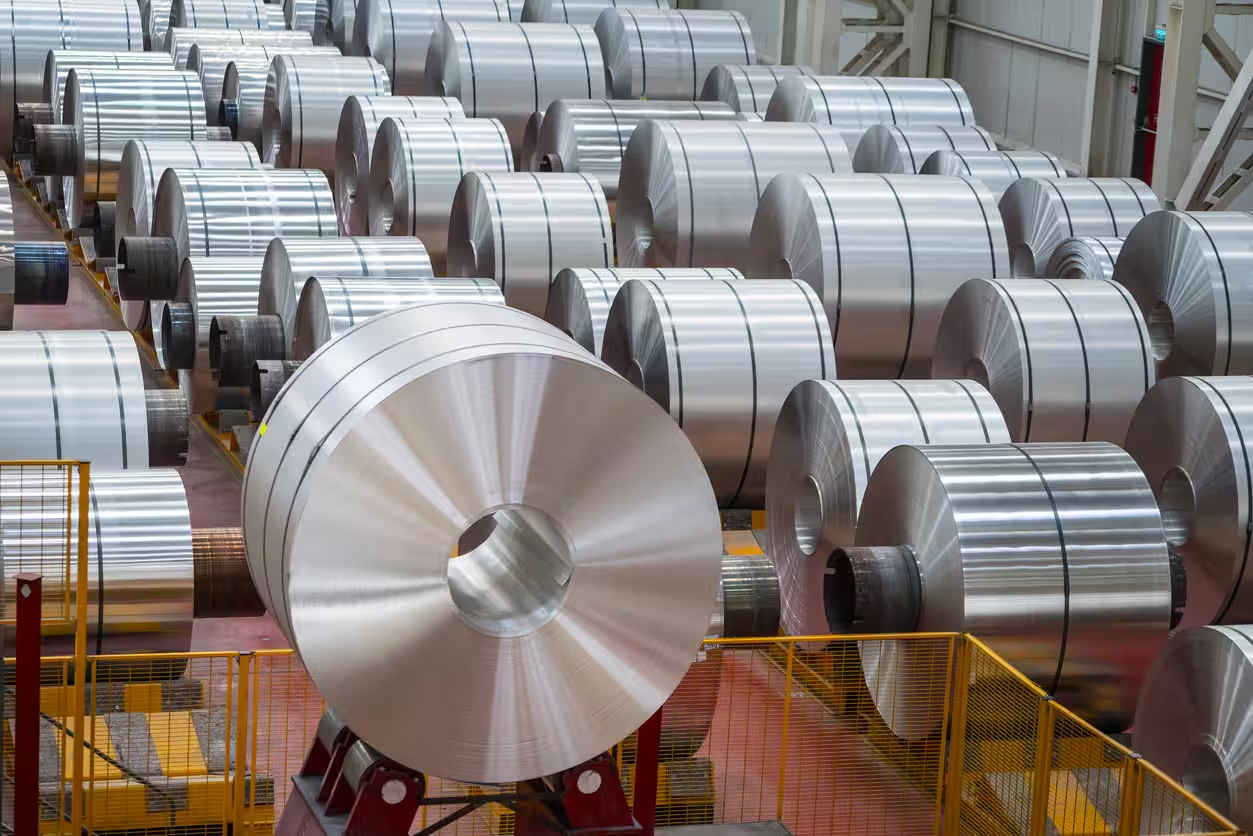
India’s aluminium market is facing a sharper cost squeeze as global supply risks, currency movements and energy expenses combine to push metal prices higher. The pressure is particularly significant for downstream manufacturers, many of which operate on thin margins. With aluminium increasingly important to power networks, transport, construction and renewable infrastructure, prolonged price volatility could also influence the cost and pace of urban development.

The domestic benchmark has moved substantially higher in 2026, with MCX aluminium contracts trading around ₹345–350 per kg in early August. Official exchange data confirms the elevated price levels. The immediate pressure is not coming from a single source. Geopolitical instability has affected global metals markets, while earlier disruptions to alumina supplies in major producing regions added to raw-material costs. China’s production controls, trade measures and a weaker rupee can further affect the price paid by Indian buyers. For manufacturers, the concern is less about the headline commodity price and more about predictability. Aluminium processors supplying cables, automobile components, packaging and construction products often have limited room to absorb sudden increases. Industry estimates cited in the discussion indicate that thousands of downstream MSMEs are operating below full capacity, with margins of roughly 5%. India aluminium prices therefore have implications beyond commodity exchanges. Higher input costs can eventually filter into electrical equipment, building materials, transport components and other products used across growing cities.

This is particularly relevant as India expands power transmission, mobility networks and renewable-energy infrastructure, all of which depend heavily on aluminium. Energy is another structural concern. Aluminium smelting requires large quantities of electricity, making power costs a major component of production economics. The exchange has introduced electricity futures, creating a domestic mechanism for managing exposure to power-price movements. The contracts are linked to India’s day-ahead electricity market and are influenced by fuel costs, weather, renewable generation, transmission constraints and industrial demand. The broader challenge is balancing affordability with rising demand. Government policy aims to expand domestic aluminium capacity and increase per-capita consumption, which remains well below global levels. The Ministry of Mines has identified higher aluminium use as an important part of strengthening the domestic industry.

For businesses, better hedging can reduce uncertainty, but it cannot remove underlying supply and energy pressures. India aluminium prices will ultimately depend on how effectively producers, manufacturers and policymakers address energy security, raw-material availability and domestic processing capacity. For cities and consumers, the key issue is whether higher commodity costs remain temporary or become embedded in infrastructure and manufacturing expenses. The next phase of India’s aluminium growth will therefore depend not only on expanding supply, but also on keeping the wider value chain competitive and resilient.

Also Read: India Construction Boom Raises Demand for Cleaner Materials
India Aluminium Prices Test Downstream Industry Margins
RELATED ARTICLES

LEAVE A REPLY

Please enter your comment!
Please enter your name here

- Advertisment -spot_img

Most Popular

Recent Comments

India Steel Boom Redraws The Raw Material Map

India Steel Boom Redraws The Raw Material Map

India’s accelerating steel capacity build-out is beginning to reshape international trade in coking coal and metallurgical coke, with overseas supplies becoming increasingly important to...

Delhi NCR Home Prices Reach New Q3 Highs

Delhi NCR Home Prices Reach New Q3 Highs

Delhi-NCR has emerged as India’s fastest-rising major housing market by average primary-market prices, with values climbing 12% year on year in the July-September quarter....

India Housing Boom Could Reshape Daily City Life

India Housing Boom Could Reshape Daily City Life

India’s next phase of housing growth is likely to be shaped not only by new homes, but by how easily residents can access work,...

Karnataka Logistics Growth Gets Fresh Leadership Push

Karnataka Logistics Growth Gets Fresh Leadership Push

Karnataka’s industrial and logistics property market is getting a new leadership focus as a senior real estate professional takes charge of industrial, land and...

Kolkata Real Estate Sector Faces Skills Challenge

Kolkata Real Estate Sector Faces Skills Challenge

India’s real estate industry is seeking a larger place in economic policymaking as its market expands and construction activity supports millions of jobs. The...