HomeReal EstateCommercialIndia Construction Boom Raises Demand for Cleaner Materials

India Construction Boom Raises Demand for Cleaner Materials

India’s construction economy is entering a new phase in which the scale of building activity is increasingly being matched by demands for speed, resource efficiency and quality. The building materials market was valued at $44.4 billion in 2025 and is projected to reach $64.5 billion by 2034, according to market research estimates.

The expansion is being supported by housing, infrastructure and industrial construction, but the composition of demand is changing. Materials that reduce construction time, waste or environmental impact are gaining relevance as cities face rising land, labour, energy and climate-related pressures. Affordable housing is an important part of this transition. PMAY-U 2.0 aims to support one crore additional eligible urban families over five years. Its Technology and Innovation Sub-Mission promotes modern, green and disaster-resilient construction methods, while financial support is available for eligible projects using innovative technologies. For urban residents, the shift matters beyond construction costs. Faster building systems can reduce disruption around project sites, while climate-responsive materials can improve the resilience and energy performance of homes and public buildings. However, wider adoption will depend on consistent standards, local availability and affordability rather than technology alone.

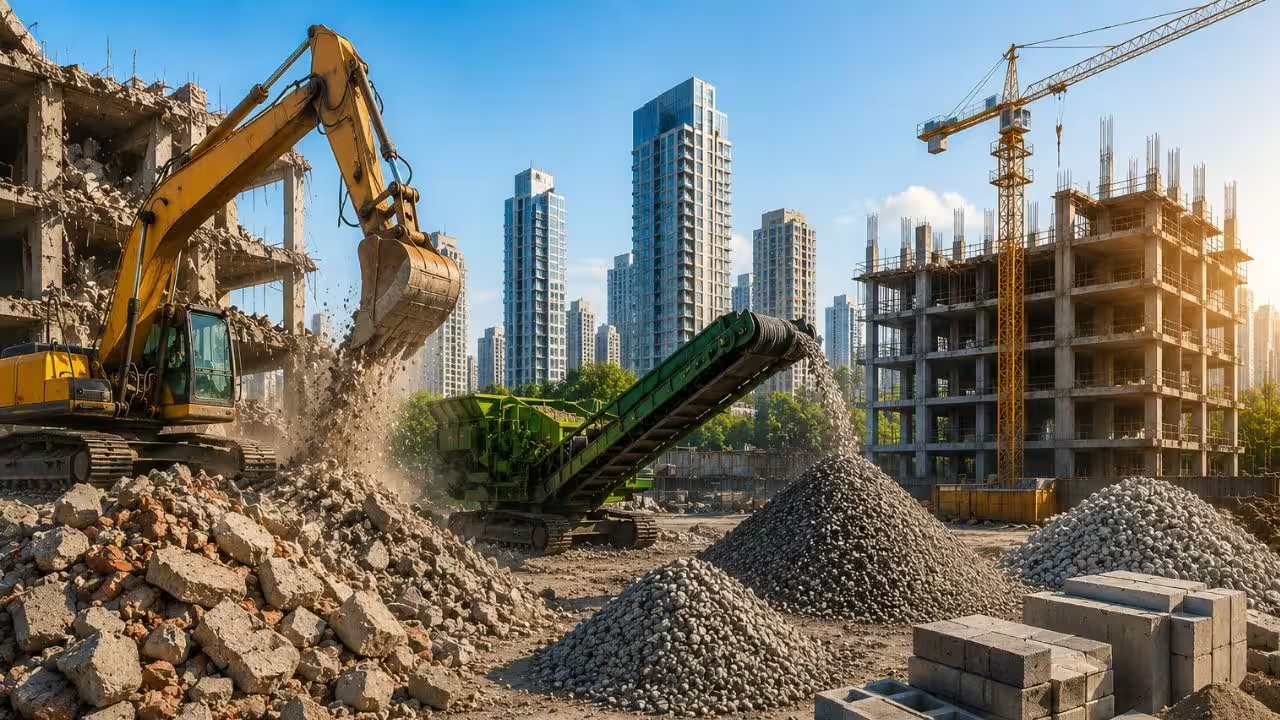
Waste is emerging as another major pressure point. The Environment (Construction and Demolition) Waste Management Rules, 2025 came into force on April 1, 2026 and apply to construction, demolition, renovation and repair activities. The framework strengthens the formal management of construction waste, creating greater scope for recycling and the use of recovered materials in new projects. RERA also has a role in keeping construction quality tied to the growth story. Under Section 14(3) of the Real Estate (Regulation and Development) Act, promoters have a five-year responsibility to rectify structural or workmanship defects reported after possession. This makes material quality and construction practices relevant not only to developers, but directly to homebuyers and long-term building safety. At the same time, conventional materials remain indispensable. India produced about 453 million tonnes of cement in FY2024-25, while crude steel output reached about 168.4 million tonnes in FY2025-26. These figures underline the continuing scale of demand generated by roads, housing, railways, manufacturing and urban infrastructure.

The challenge now is to make this growth less wasteful and more reliable. Rising fuel, power, freight and raw-material costs could limit adoption of newer products if their upfront prices remain high. Smaller cities may also face gaps in supply, testing and skilled installation. The building materials market is therefore likely to grow on two tracks: large volumes of conventional products alongside a gradual move towards recycled, low-carbon, prefabricated and energy-efficient alternatives. For India’s expanding cities, the next test will be whether this transition can deliver buildings that are not only faster to construct, but safer, more affordable and better suited to a changing climate.

Also Read: India Steel Prices Put RERA Projects Under Watch
India Construction Boom Raises Demand for Cleaner Materials
RELATED ARTICLES

LEAVE A REPLY

Please enter your comment!
Please enter your name here

- Advertisment -spot_img

Most Popular

Recent Comments

Berger Paints Recasts Colour For Changing Urban Lives

Berger Paints Recasts Colour For Changing Urban Lives

New Delhi: Berger Paints India has introduced a refreshed brand identity through its new Rang Bana Rahe campaign, shifting its communication from paint performance...
India Aluminium Prices Test Downstream Industry Margins

India Aluminium Prices Test Downstream Industry Margins

India’s aluminium market is facing a sharper cost squeeze as global supply risks, currency movements and energy expenses combine to push metal prices higher....
UltraTech Cement Joins Global Industrial Decarbonisation Drive

UltraTech Cement Joins Global Industrial Decarbonisation Drive

UltraTech Cement’s entry into the Leadership Group for Industry Transition (LeadIT) puts one of India’s largest building-material producers into a global platform focused on...
India Steel Prices Put RERA Projects Under Watch

India Steel Prices Put RERA Projects Under Watch

India’s steel market is showing a split pattern across major trading centres, with rebar and billet prices moving in different directions. Mumbai and Mandi...
India Steel Transition Needs Stronger MSME Support

India Steel Transition Needs Stronger MSME Support

India’s proposed ₹5,000-crore programme for sustainable secondary steel could become an important test of whether smaller manufacturers can participate in the country’s industrial decarbonisation...