HomeBricks & MortarChemicalIndia Chemical MSMEs Face Global Trade Pressures

India Chemical MSMEs Face Global Trade Pressures

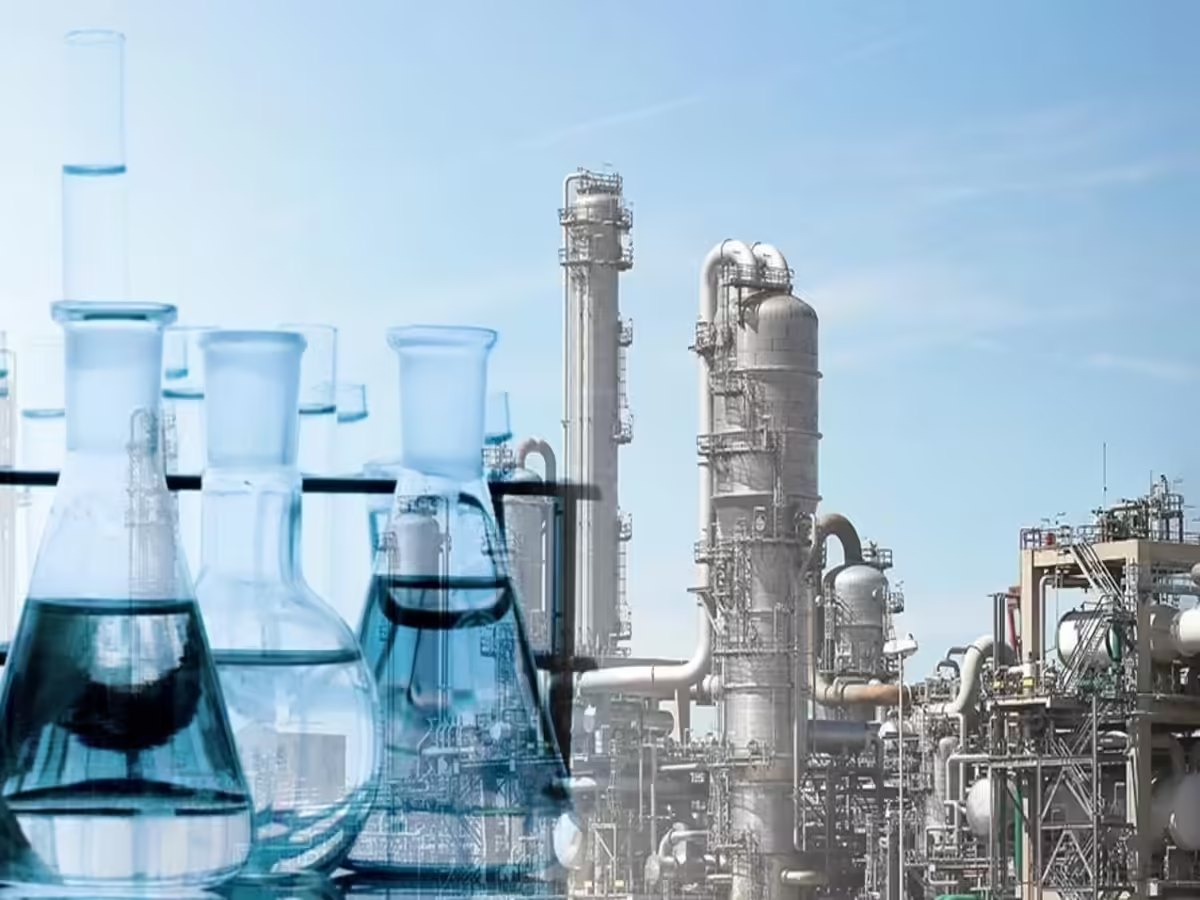
India’s small and medium sized chemical manufacturers are calling for a stronger policy framework to help them navigate rising global trade uncertainties,arguing that improved competitiveness will be essential as international supply chains undergo structural changes.

The demand comes at a time when the sector is expected to play a larger role in supporting domestic manufacturing,urban infrastructure, clean technologies and employment generation.The chemical industry forms the backbone of several urban and industrial value chains, supplying inputs for construction materials,water treatment,pharmaceuticals,electric vehicles, renewable energy equipment, paints, packaging and advanced manufacturing.Industry observers believe that strengthening the resilience of Chemical MSMEs has become increasingly important as geopolitical tensions, shifting trade policies and changing environmental regulations alter global sourcing patterns.Manufacturers say higher logistics costs,uneven access to finance, volatile raw material prices and compliance burdens continue to limit the ability of smaller enterprises to compete internationally. While India’s chemical exports have expanded over the past decade, experts note that many small businesses remain constrained by limited investment in technology, research, quality certification and sustainable manufacturing practices.Economic analysts argue that supporting Chemical MSMEs goes beyond industrial policy.

The sector contributes significantly to employment across industrial clusters and supplies essential materials for affordable housing, public infrastructure, urban sanitation and renewable energy projects.Improving the productivity of these enterprises could therefore strengthen supply chains that underpin sustainable urban development while creating opportunities for regional economic growth.Industry specialists also point to the growing importance of environmental compliance in international trade.Overseas buyers are increasingly demanding products manufactured with lower emissions,improved waste management and transparent environmental standards.Smaller chemical manufacturers may struggle to meet these expectations without targeted investment in cleaner technologies,energy efficient production systems and modern pollution control infrastructure.Urban planners suggest that strengthening domestic chemical manufacturing should be accompanied by greater emphasis on industrial sustainability.Modern chemical clusters equipped with common effluent treatment facilities,circular resource management systems and renewable energy integration can reduce environmental impacts while improving operational efficiency.Such investments also contribute to healthier urban environments by lowering industrial pollution and improving resource efficiency.

Policy experts believe future competitiveness will depend not only on financial incentives but also on improving logistics infrastructure,expanding export facilitation,simplifying regulatory procedures and supporting innovation.Digital manufacturing, advanced process technologies and workforce skill development are expected to become increasingly important as global markets place greater value on quality,traceability and environmental performance.At the same time, economists caution that policy support should encourage long term competitiveness rather than dependence on subsidies.Strengthening domestic research capabilities,promoting value added speciality chemicals and expanding access to sustainable industrial infrastructure could enable smaller manufacturers to participate more effectively in global supply chains while maintaining environmental responsibility.As international trade continues to evolve,India’s chemical sector faces an opportunity to reposition itself as a reliable supplier of sustainable industrial inputs.The future resilience of Chemical MSMEs will depend on balancing export competitiveness with cleaner production,innovation and infrastructure that supports inclusive,climate conscious industrial growth.

Also Read : India Aluminium Manufacturing Seeks Policy Recalibration
India Chemical MSMEs Face Global Trade Pressures
RELATED ARTICLES

LEAVE A REPLY

Please enter your comment!
Please enter your name here

- Advertisment -spot_img

Most Popular

Recent Comments

Sagar Cements AGM Reviews Infrastructure Outlook

Sagar Cements AGM Reviews Infrastructure Outlook

Sagar Cements has concluded its 45th Annual General Meeting,with shareholders approving the company’s financial statements and other statutory resolutions for the previous financial year. While...
JK Cement Dividend Marks Shareholder Payout

JK Cement Dividend Marks Shareholder Payout

JK Cement has confirmed the record date for its recently approved final dividend,providing clarity for shareholders while reflecting the company’s continued confidence in its...
India Coal Gasification Shapes Industrial Regions

India Coal Gasification Shapes Industrial Regions

India is accelerating plans to establish integrated industrial clusters centred on coal gasification,signalling a shift in how mineral rich regions could contribute to manufacturing,chemicals...
India Electrical Steel Probe Tests Clean Energy

India Electrical Steel Probe Tests Clean Energy

India has launched a trade investigation into imports of specialised electrical steel and amorphous metal products from several major exporting nations,marking a significant step...
India Recycled Metal Supply Risks Urban Growth

India Recycled Metal Supply Risks Urban Growth

India’s manufacturing sector is assessing the implications of Europe’s tightening controls on metal scrap exports,with industry stakeholders warning that new environmental compliance requirements could...