HomeReal EstateCommercialIndia Steel Prices Put RERA Projects Under Watch

India Steel Prices Put RERA Projects Under Watch

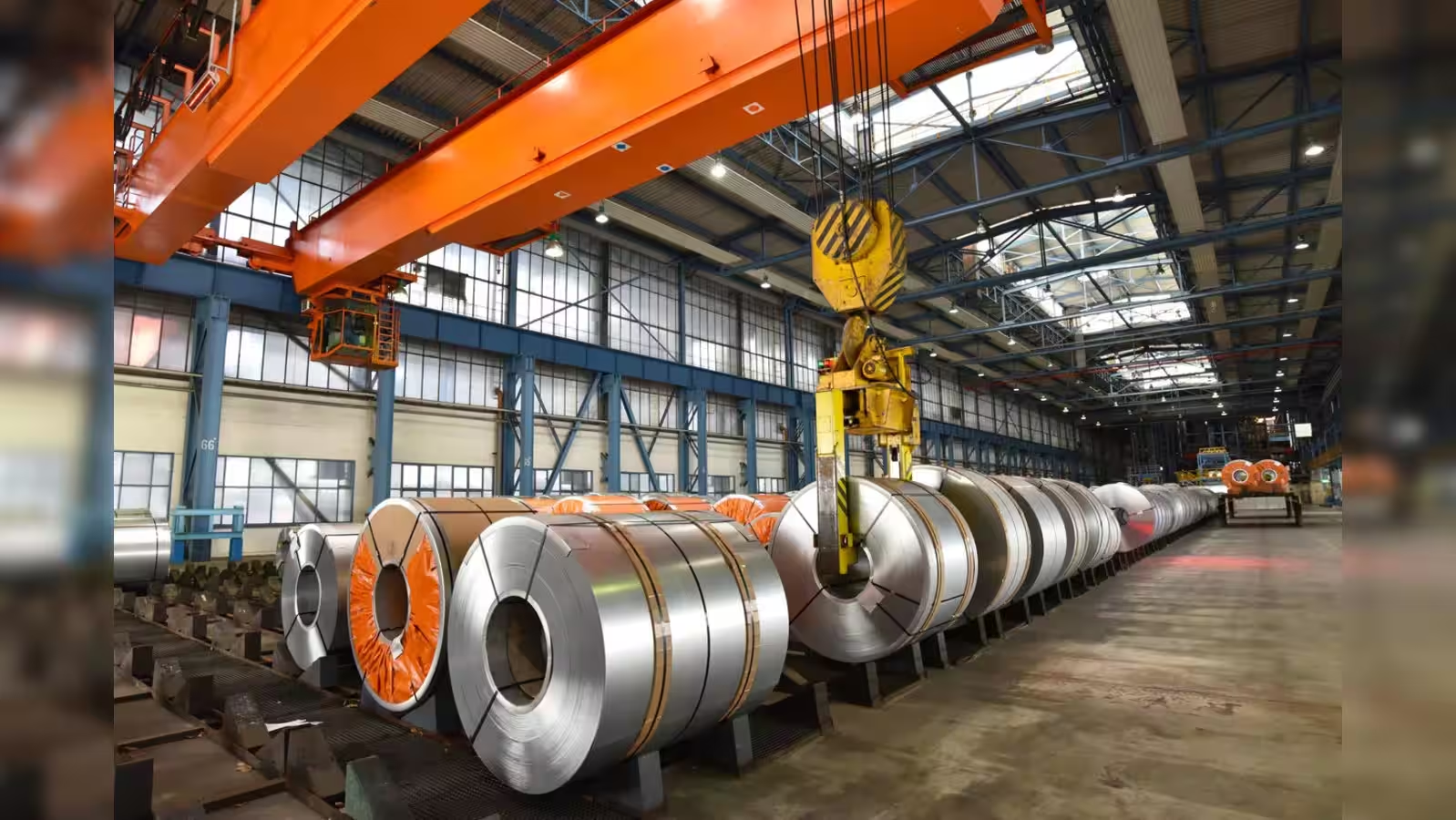
India’s steel market is showing a split pattern across major trading centres, with rebar and billet prices moving in different directions. Mumbai and Mandi recorded gains, while Raipur remained unchanged and Durgapur slipped. The uneven movement matters for construction because steel is a core input for housing, roads and urban infrastructure, making local price changes relevant to project budgets and delivery schedules.

Mumbai rebar prices rose by $3.14 per tonne to about $500 per tonne, equivalent to ₹47,800 per tonne on an ex-works basis. The increase points to some firmness in finished steel demand, although buying remains selective rather than broad-based. Billet, a semi-finished steel product used to manufacture items such as reinforcement bars, also moved differently across markets. Prices in Mandi increased by $2.09 per tonne to ₹43,200 per tonne on a delivered basis. In Raipur, billet prices held at ₹39,600 per tonne, while Durgapur recorded a modest decline of $1.05 per tonne to ₹40,200 per tonne. The divergence suggests that India steel prices are being shaped by local trading conditions rather than a uniform national demand cycle. Transport costs, inventory levels, mill availability and regional construction activity can all influence what buyers are willing to pay. For developers and contractors, that makes procurement planning more important, particularly when projects operate on tightly controlled budgets.

The impact extends beyond the steel trade. Higher reinforcement costs can increase construction expenses for residential buildings, commercial projects and public infrastructure if price increases persist. For homebuyers, the effect may not immediately appear in property prices, but sustained increases in construction inputs can influence project feasibility and future pricing decisions. RERA-registered projects also have a particular need for cost discipline. The Real Estate (Regulation and Development) framework requires developers to provide greater transparency around project commitments, making unexpected input-cost movements an important consideration in financial planning. However, a short-term rise in steel prices does not automatically translate into higher property prices or changes in RERA obligations.

The current market therefore offers a mixed signal rather than a clear upward trend. Moderate demand and selective purchasing could limit further price gains, while stronger infrastructure and construction activity could provide support if buying improves. For cities expanding housing, transport networks and essential infrastructure, the next phase of steel pricing will be important. Stable input markets can help projects remain financially predictable, while sharp regional swings may require closer procurement monitoring to protect construction timelines and affordability.

Also Read: India Steel Transition Needs Stronger MSME Support
India Steel Prices Put RERA Projects Under Watch
RELATED ARTICLES

LEAVE A REPLY

Please enter your comment!
Please enter your name here

- Advertisment -spot_img

Most Popular

Recent Comments

Berger Paints Recasts Colour For Changing Urban Lives

Berger Paints Recasts Colour For Changing Urban Lives

New Delhi: Berger Paints India has introduced a refreshed brand identity through its new Rang Bana Rahe campaign, shifting its communication from paint performance...
India Aluminium Prices Test Downstream Industry Margins

India Aluminium Prices Test Downstream Industry Margins

India’s aluminium market is facing a sharper cost squeeze as global supply risks, currency movements and energy expenses combine to push metal prices higher....
India Construction Boom Raises Demand for Cleaner Materials

India Construction Boom Raises Demand for Cleaner Materials

India’s construction economy is entering a new phase in which the scale of building activity is increasingly being matched by demands for speed, resource...
UltraTech Cement Joins Global Industrial Decarbonisation Drive

UltraTech Cement Joins Global Industrial Decarbonisation Drive

UltraTech Cement’s entry into the Leadership Group for Industry Transition (LeadIT) puts one of India’s largest building-material producers into a global platform focused on...
India Steel Transition Needs Stronger MSME Support

India Steel Transition Needs Stronger MSME Support

India’s proposed ₹5,000-crore programme for sustainable secondary steel could become an important test of whether smaller manufacturers can participate in the country’s industrial decarbonisation...