
HomeIndustriesIndia Steel Industry Signals Climate Policy Shift

India Steel Industry Signals Climate Policy Shift

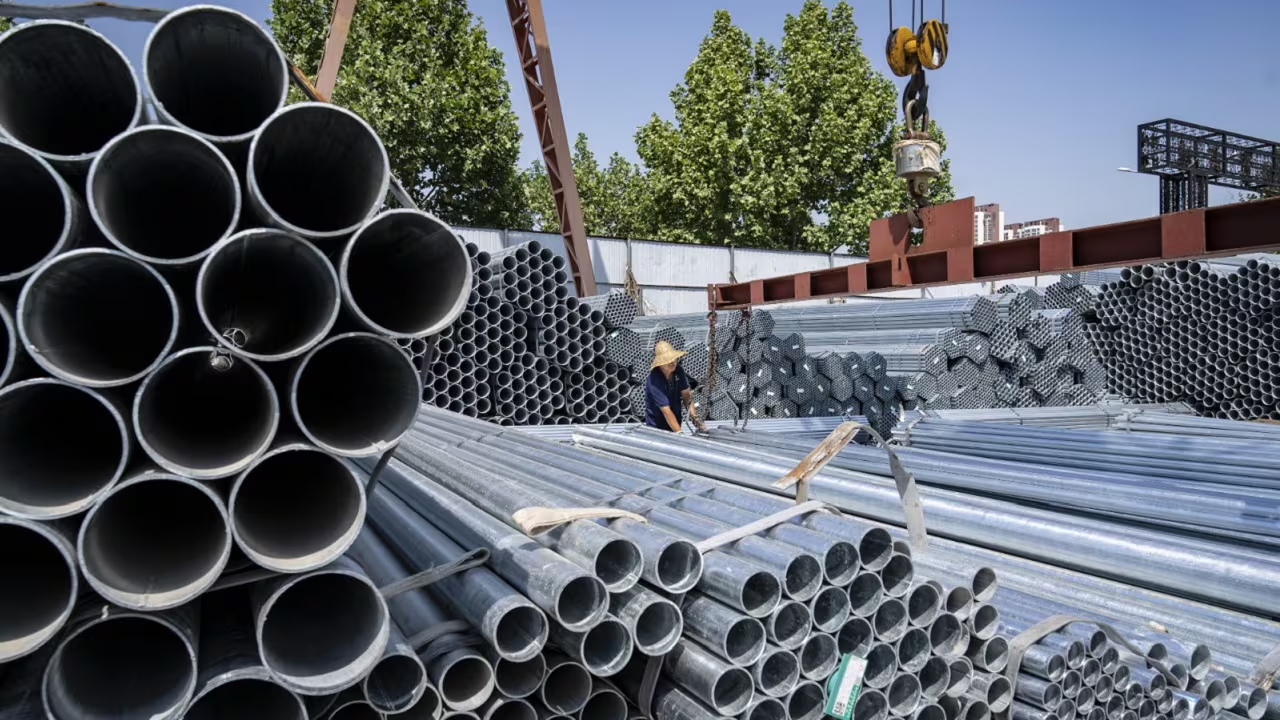
India’s steel industry is showing growing willingness to align with stronger climate regulations, signalling a shift that could influence the future of urban infrastructure,real estate construction and industrial competitiveness.

A recent international assessment indicates that Indian steel producers appear more receptive to policy measures supporting decarbonisation than many of their global counterparts, reflecting changing business priorities as governments and markets demand lower-emission building materials.The findings arrive at a critical stage for India’s infrastructure expansion.Steel remains one of the most essential inputs for transport networks, affordable housing, commercial buildings and industrial facilities, yet it is also among the country’s largest industrial sources of greenhouse gas emissions.As cities continue to expand, reducing emissions from steel production is increasingly viewed as central to achieving climate resilient urban development without slowing economic growth.According to researchers, the industry’s comparatively positive outlook towards climate regulation reflects growing recognition that environmental policies can also create long-term commercial opportunities. Rather than treating emission standards solely as compliance costs,many manufacturers increasingly view cleaner technologies, energy efficiency and low carbon production methods as pathways to strengthen competitiveness in both domestic and export markets.The transition,however, presents significant economic and technological challenges.Much of India’s steel production continues to rely on coal-based processes,making decarbonisation both capital-intensive and technically complex.

Industry specialists suggest that achieving meaningful reductions will require a combination of renewable electricity,green hydrogen,higher quality scrap recycling, carbon capture technologies and greater resource efficiency throughout the manufacturing chain.The evolution of the steel climate policy debate is particularly relevant for India’s cities.Urban planners note that future infrastructure projects will increasingly be assessed not only on cost and engineering performance but also on the embodied carbon associated with construction materials. Lower-emission steel could therefore become an important component of sustainable transport systems, public buildings and housing developments, particularly as governments strengthen environmental procurement standards.Policy experts argue that supportive regulation will be as important as technological innovation. Clear long-term policy signals, access to green finance, incentives for industrial modernisation and investment in clean energy infrastructure could help manufacturers accelerate the transition while protecting employment and industrial output. At the same time, predictable regulations would provide developers and infrastructure agencies with greater confidence to integrate lower-carbon materials into large public projects.

International trade considerations are also becoming increasingly significant.With several economies introducing carbon related border measures and sustainability reporting requirements,Indian producers may face growing pressure to demonstrate lower lifecycle emissions in exported steel products.Strengthening domestic climate policies could therefore improve the sector’s resilience in evolving global markets while supporting national manufacturing ambitions.Looking ahead,experts believe the industry’s openness towards steel climate policy provides an opportunity to align industrial growth with environmental objectives.For rapidly urbanising India,the next phase of development will depend not only on expanding steel production but also on ensuring that the materials shaping future cities contribute to a more resilient,resource efficient and low carbon built environment.

Also Read : India Green Steel Push Targets Cleaner Industry
India Steel Industry Signals Climate Policy Shift
RELATED ARTICLES

LEAVE A REPLY

Please enter your comment!
Please enter your name here

- Advertisment -spot_img

Most Popular

Recent Comments

Ladakh Farming Transition Targets Chemical Free Future

Ladakh Farming Transition Targets Chemical Free Future

Ladakh has moved to prohibit the use of chemical fertilisers across the Union Territory as part of a broader strategy to expand organic farming...
Odisha Chemical Investments Reshape Manufacturing Growth

Odisha Chemical Investments Reshape Manufacturing Growth

Odisha has emerged as one of India’s fastest growing destinations for chemical and petrochemical manufacturing,attracting investment commitments of nearly ₹2 lakh crore over the...
India Steel Financing Supports Industrial Expansion Plans

India Steel Financing Supports Industrial Expansion Plans

Vedanta has disclosed the creation of a share encumbrance involving its iron and steel business as part of arrangements linked to a US$1 billion...
Panyam Cements Corporate Governance Enters Transition Phase

Panyam Cements Corporate Governance Enters Transition Phase

Panyam Cements has announced a change in its compliance leadership following the resignation of its Company Secretary and Compliance Officer,effective 18 July 2026. While the...
India Aluminium Import Duty Debate Intensifies

India Aluminium Import Duty Debate Intensifies

Industry groups representing India’s downstream aluminium manufacturers have renewed calls for a reduction in import duties on primary aluminium,arguing that lower raw material costs...
