HomeLatestIndia’s steel industry seeks cleaner power at scale

India’s steel industry seeks cleaner power at scale

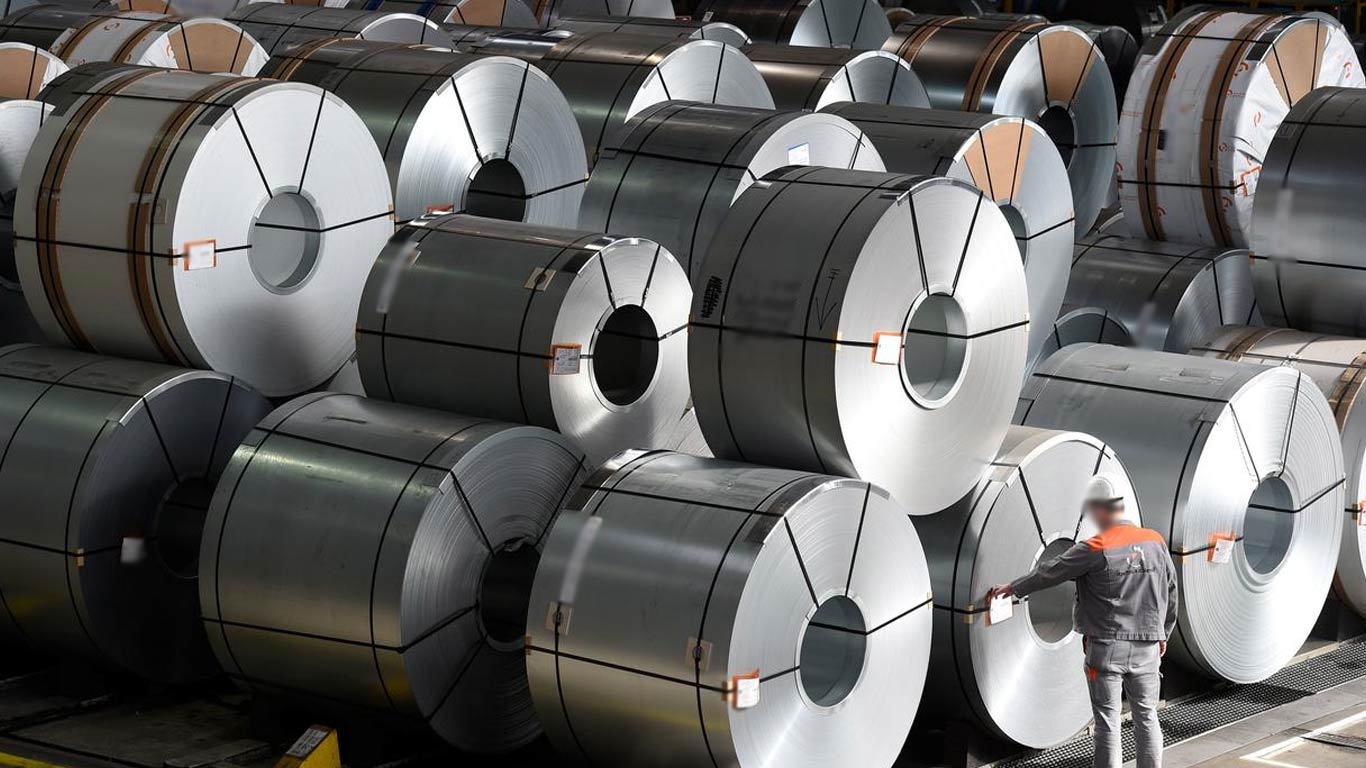
India’s smaller steel producers are emerging as an important test for the country’s industrial decarbonisation strategy, with renewable electricity offering the potential to lower power costs while cutting emissions. A new industry analysis estimates that switching to clean power could reduce annual electricity expenditure by up to 34% for individual secondary steel units, but financing, grid capacity and regulatory hurdles remain significant barriers.

Secondary steelmakers account for nearly 40% of India’s crude steel production, giving the segment an outsized role in determining whether the country can decarbonise steel without placing the transition burden only on large integrated producers. Electricity can represent as much as 40% of operating costs for smaller plants, making power procurement both a competitiveness issue and a climate concern.The analysis estimates that renewable electricity could save roughly ₹2.2 crore to ₹2.4 crore annually per unit, depending on the operating profile. Those savings could become increasingly important as energy prices remain volatile and international markets introduce stronger carbon-related trade requirements. European carbon pricing measures also increase the commercial incentive for Indian producers to demonstrate lower emissions across their supply chains.Yet renewable power for steel remains relatively underused. The report estimates that only about 11% of smaller steelmakers currently use renewable electricity, compared with roughly 22% for the wider electricity system.

India’s rapid expansion of renewable generation has therefore not automatically translated into equivalent industrial adoption.
One proposed solution is collective procurement. Steelmakers operating within the same industrial cluster could jointly develop or invest in renewable projects, spreading capital requirements and creating sufficient demand to make larger installations commercially viable. Such models could be particularly relevant for clusters dominated by small and medium-sized enterprises that cannot independently absorb the financing and technical risks of dedicated clean-energy projects.The obstacles, however, extend beyond capital. Industry participants have reported transmission constraints and curtailment in renewable-rich regions, meaning installed solar capacity does not always translate into usable electricity. This exposes a wider weakness in India’s energy transition: generation capacity can expand quickly, but transmission networks, storage, market rules and industrial access must develop alongside it.

For urban development, the implications reach well beyond steel mills. Steel underpins housing, bridges, railways, renewable-energy infrastructure and public works. Cleaner and more predictable industrial power could therefore reduce the embedded carbon of future construction while protecting the competitiveness of smaller manufacturers.India’s steel roadmap already identifies renewable energy as a key decarbonisation lever and targets greater clean-energy penetration in the sector. The next challenge is turning that policy direction into affordable, reliable electricity for industrial clusters. Renewable power for steel will deliver meaningful climate gains only when financing, grids and access advance together.

Also Read : Coal India and AMNS assess lower carbon steelmaking
India’s steel industry seeks cleaner power at scale
RELATED ARTICLES

LEAVE A REPLY

Please enter your comment!
Please enter your name here

- Advertisment -spot_img

Most Popular

Recent Comments

JSW Steel investment tests India’s low carbon path

JSW Steel investment tests India’s low carbon path

JSW Steel has updated investors on its expansion pipeline, operating priorities and decarbonisation programme as India’s steel demand continues to grow. The company’s roadmap...
India’s aluminium producers navigate a volatile supply chain

India’s aluminium producers navigate a volatile supply chain

Indian aluminium producers are gaining from a renewed squeeze in global metal supplies, as production problems in Brazil, disrupted Middle East trade and historically...
Asian Paints targets easier home renovation for consumers

Asian Paints targets easier home renovation for consumers

Asian Paints is using a new advertising campaign to reposition home painting as a more organised, technology-enabled service rather than a periodic household chore....
AMNS India targets stronger steel for critical infrastructure

AMNS India targets stronger steel for critical infrastructure

ArcelorMittal Nippon Steel India has expanded its portfolio of specialised heavy steel plates for applications ranging from bridges and cranes to mining equipment and...
Coal India and AMNS assess lower carbon steelmaking

Coal India and AMNS assess lower carbon steelmaking

Coal India and ArcelorMittal Nippon Steel India have signed a non-binding agreement to examine the use of synthetic gas from a proposed coal-gasification facility...