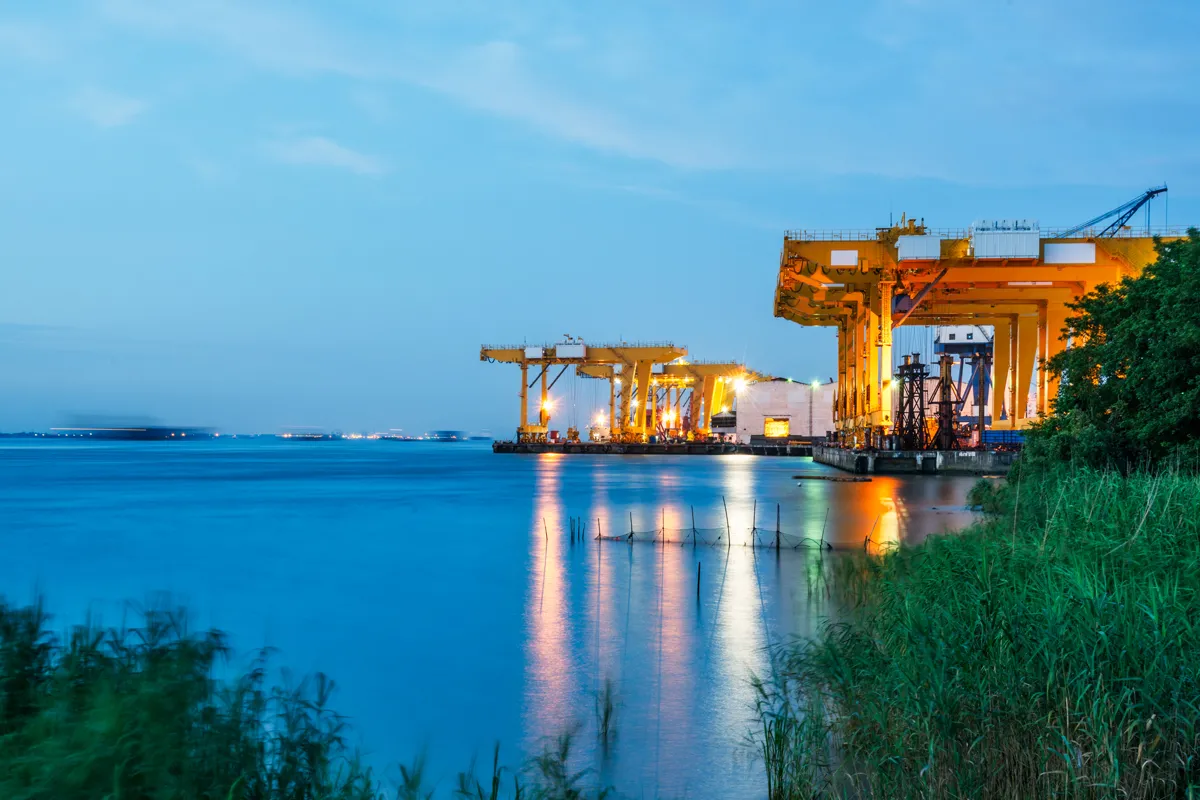
Kamarajar Port Limited (KPL) is set to submit the Detailed Project Report (DPR) for India’s ambitious International Container Transshipment Port (ICTP) at Galathea Bay, Great Nicobar Island a development poised to transform the nation’s maritime logistics landscape. Estimated at nearly ₹1 trillion, the project represents one of India’s largest port investments and is seen as a critical step towards reducing dependence on foreign transshipment hubs such as Colombo, Singapore, and Port Klang.
According to senior officials, the DPR will be presented to the Union Ministry of Ports, Shipping and Waterways for approval in the coming weeks. Once sanctioned, tendering under a public–private partnership (PPP) framework is expected to begin within six to eight months. The first two phases, with an investment of around ₹400 billion, will target a handling capacity of 11 million twenty-foot equivalent units (TEUs) within the next three to four years, ultimately scaling up to 16.2 million TEUs.
The port’s strategic location just 40 nautical miles from key global shipping lanes gives it a competitive edge in attracting transshipment traffic that currently bypasses India. Experts note that with appropriate connectivity, infrastructure, and policy support, Great Nicobar could emerge as a vital node in the Indo-Pacific maritime network, strengthening India’s role in global trade flows.
Environmental clearance for the ICTP was granted in November 2022, and Kamarajar Port has been designated as the nodal agency for its execution. Officials highlighted that sustainability principles have been integrated into the project design, including measures for coastal zone management, biodiversity protection, and low-emission port operations. These align with India’s commitment to develop ports that balance economic growth with ecological responsibility.Industry observers say the Great Nicobar project could redefine India’s maritime strategy by decentralising port capacity and easing congestion at existing gateways like Jawaharlal Nehru Port and Chennai Port. Moreover, its development is expected to create significant employment opportunities and attract ancillary industries, including ship repair, logistics, and renewable energy-linked port services.
The ICTP is part of a larger vision to position India as a global maritime hub under the Sagarmala programme. Once operational, the project could reduce India’s transshipment dependency by up to 75%, saving foreign exchange and improving shipping turnaround times.s India expands its blue economy initiatives, the Great Nicobar Port stands as a landmark investment blending strategic foresight, engineering ambition, and environmental stewardship a project that could define the next phase of the country’s maritime self-reliance and sustainable growth.
Kamarajar Port To Submit DPR For ₹1 Trillion Great Nicobar Transshipment Project Soon